

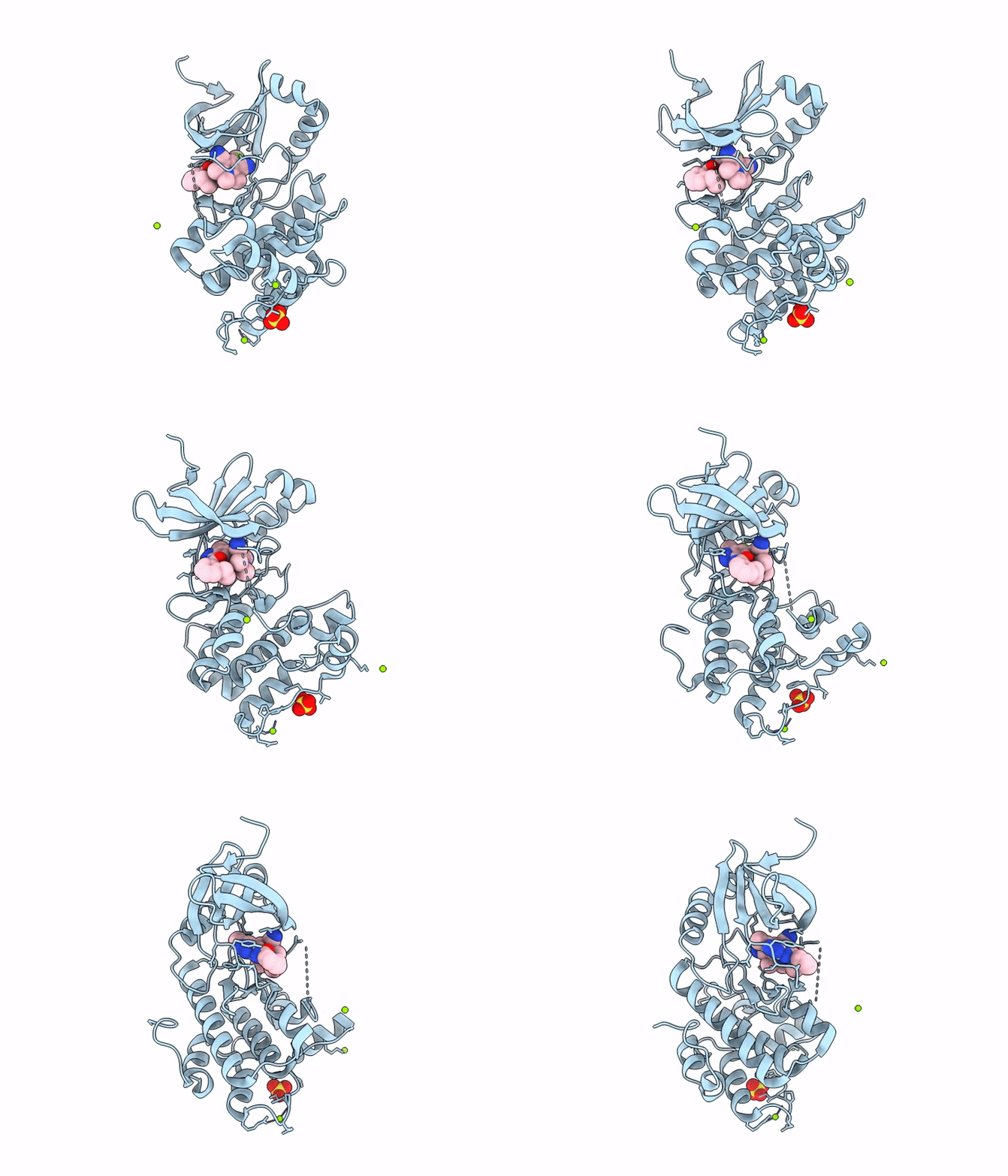
9IC2 image
Deposition Date 2025-02-14
Release Date 2025-09-03
Last Version Date 2026-03-18
Entry Detail
PDB ID:
9IC2
Title:
Structure of AMPK-alpha2-kinase domain bound to BAY-3827
Biological Source:
Source Organism(s):
Homo sapiens (Taxon ID: 9606)
Expression System(s):
Method Details:
Experimental Method:
Resolution:
2.50 Å
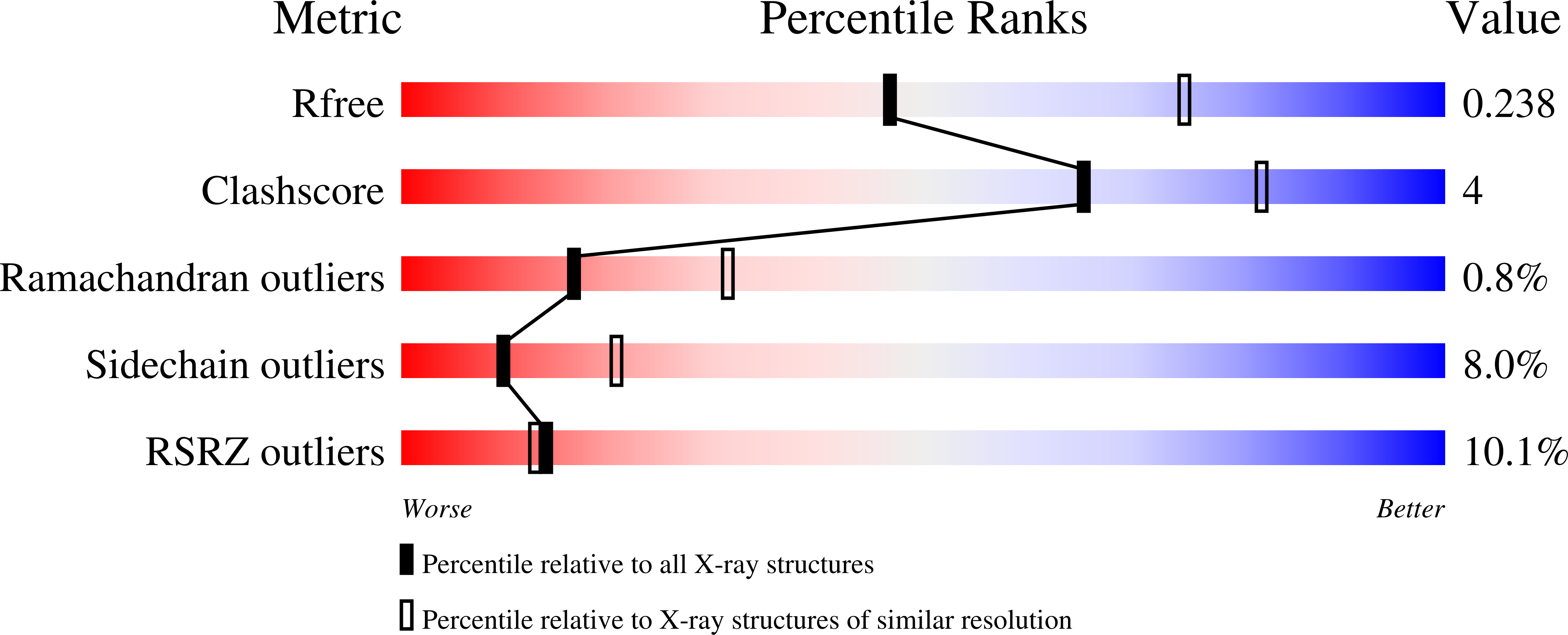
R-Value Free:
0.23
R-Value Work:
0.19
R-Value Observed:
0.19
Space Group:
P 21 21 2
Macromolecular Entities
Structures with similar UniProt ID
Protein Blast
Polymer Type:polypeptide(L)
Molecule:5'-AMP-activated protein kina
Gene (Uniprot):PRKAA2
Chain IDs:A
Chain Length:276
Number of Molecules:1
Biological Source:Homo sapiens
Primary Citation
Mechanism and cellular actions of the potent AMPK inhibitor BAY-3827.
Sci Adv 11 eadx2434 eadx2434 (2025)
PMID: 40845097 DOI: 10.1126/sciadv.adx2434

Abstact

Inhibition of adenosine 5'-monophosphate (AMP)-activated protein kinase (AMPK) is under increasing investigation for its therapeutic potential in many diseases. Existing AMPK inhibitors are however limited, with poor selectivity and substantial off-target effects. Here, we provide mechanistic insights and describe the cellular selectivity of the recently identified AMPK inhibitor BAY-3827. A 2.5-A cocrystal structure of the AMPK kinase domain with BAY-3827 revealed distinct features including a disulfide bridge between the alphaD helix Cys(106) and the activation loop residue Cys(174). This bridge appears to stabilize the activation loop such that Asn(162) repositions the Asp-Phe-Gly (DFG) motif Phe(158) toward the C-terminal lobe, displacing His(137) and disrupting the regulatory spine, promoting an inactive kinase state. In hepatocytes, BAY-3827 blocked AMPK activator (MK-8722)-mediated phosphorylation of ACC1 and corresponding inhibition of lipogenesis. Transcriptome analysis revealed that BAY-3827 down-regulated ~30% of MK-8722-stimulated AMPK-dependent genes. We establish the molecular and cellular basis of BAY-3827's selectivity and utility for delineating AMPK functions while highlighting its limitations.

Legend

Protein

Chemical

Disease

Primary Citation of related structures
Feedback Form
Name
Email
Institute
Feedback