

9HQP image
Deposition Date 2024-12-16
Release Date 2025-11-26
Last Version Date 2025-12-24
Entry Detail
PDB ID:
9HQP
Title:
Cryo-EM structure of mouse TMEM16F-YFP purified and plunged using MISO (microfluidic isolation)
Biological Source:
Source Organism(s):
Mus musculus (Taxon ID: 10090)
Aequorea victoria (Taxon ID: 6100)
Expression System(s):
Method Details:
Experimental Method:
Resolution:
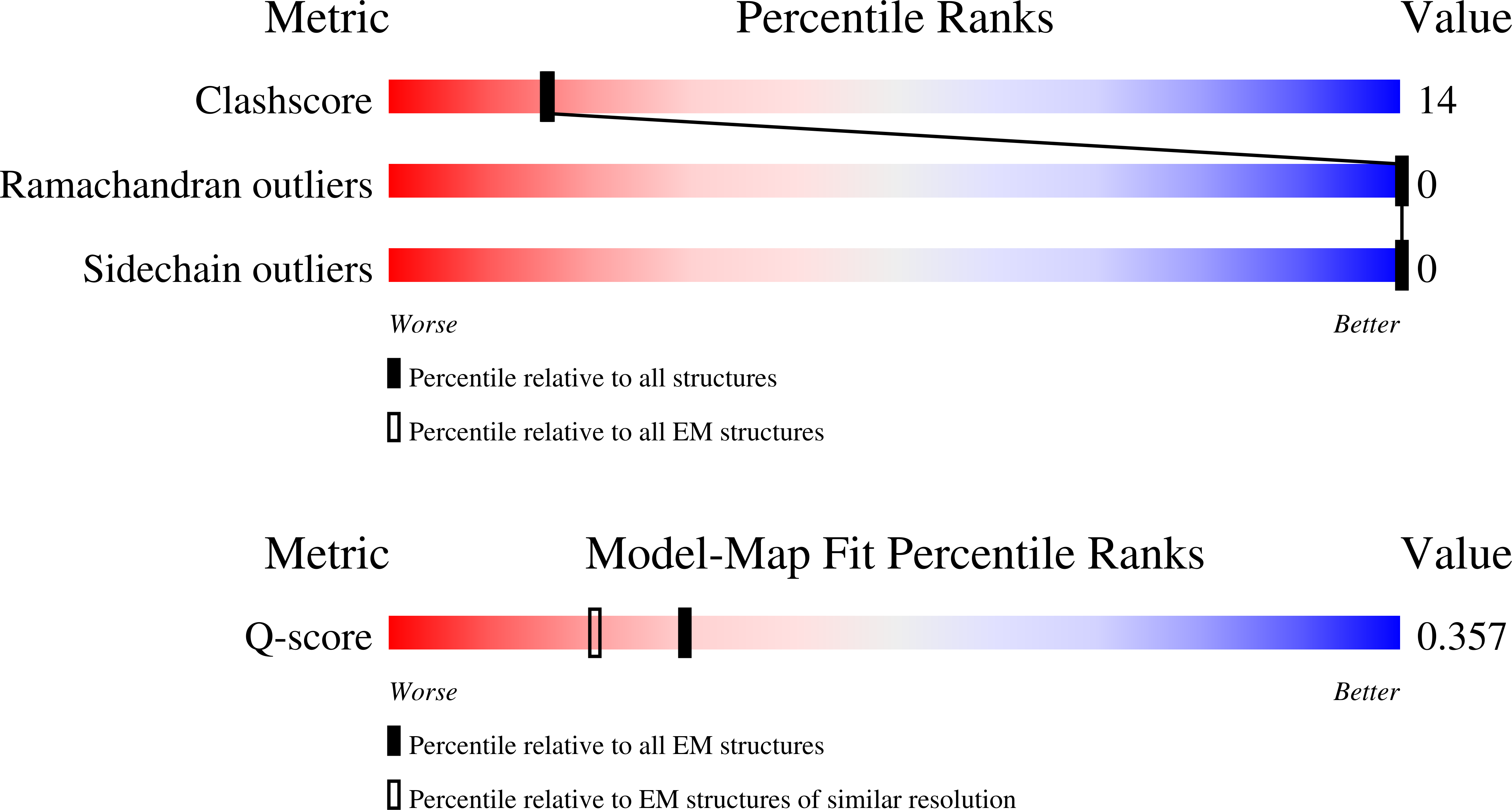
3.51 Å
Aggregation State:
PARTICLE
Reconstruction Method:
SINGLE PARTICLE
Macromolecular Entities
Structures with similar UniProt ID
Protein Blast
Polymer Type:polypeptide(L)
Molecule:Anoctamin-6,Yellow Fluorescen
Gene (Uniprot):Ano6
Chain IDs:A, B
Chain Length:1217
Number of Molecules:2
Biological Source:Mus musculus, Aequorea victoria
Ligand Molecules
Primary Citation
MISO: microfluidic protein isolation enables single-particle cryo-EM structure determination from a single cell colony.
Nat. Methods 22 2563 2573 (2025)
PMID: 41233542 DOI: 10.1038/s41592-025-02894-x

Abstact

Single-particle cryogenic electron microscopy (cryo-EM) enables reconstruction of atomic-resolution 3D maps of proteins by visualizing thousands to millions of purified protein particles embedded in vitreous ice. This corresponds to picograms of purified protein, which can potentially be isolated from a few thousand cells. Hence, cryo-EM holds the potential of a very sensitive analytical method for delivering high-resolution protein structure as a readout. In practice, millions of times more starting biological material is required to prepare cryo-EM grids. Here we show that using a micro isolation (MISO) method, which combines microfluidics-based protein purification with cryo-EM grid preparation, cryo-EM structures of soluble bacterial and eukaryotic membrane proteins can be solved starting from less than 1 µg of a target protein and progressing from cells to cryo-EM grids within a few hours. This scales down the amount of starting biological material hundreds to thousands of times, opening possibilities for the structural characterization of hitherto inaccessible proteins.

Legend

Protein

Chemical

Disease

Primary Citation of related structures
Feedback Form
Name
Email
Institute
Feedback