

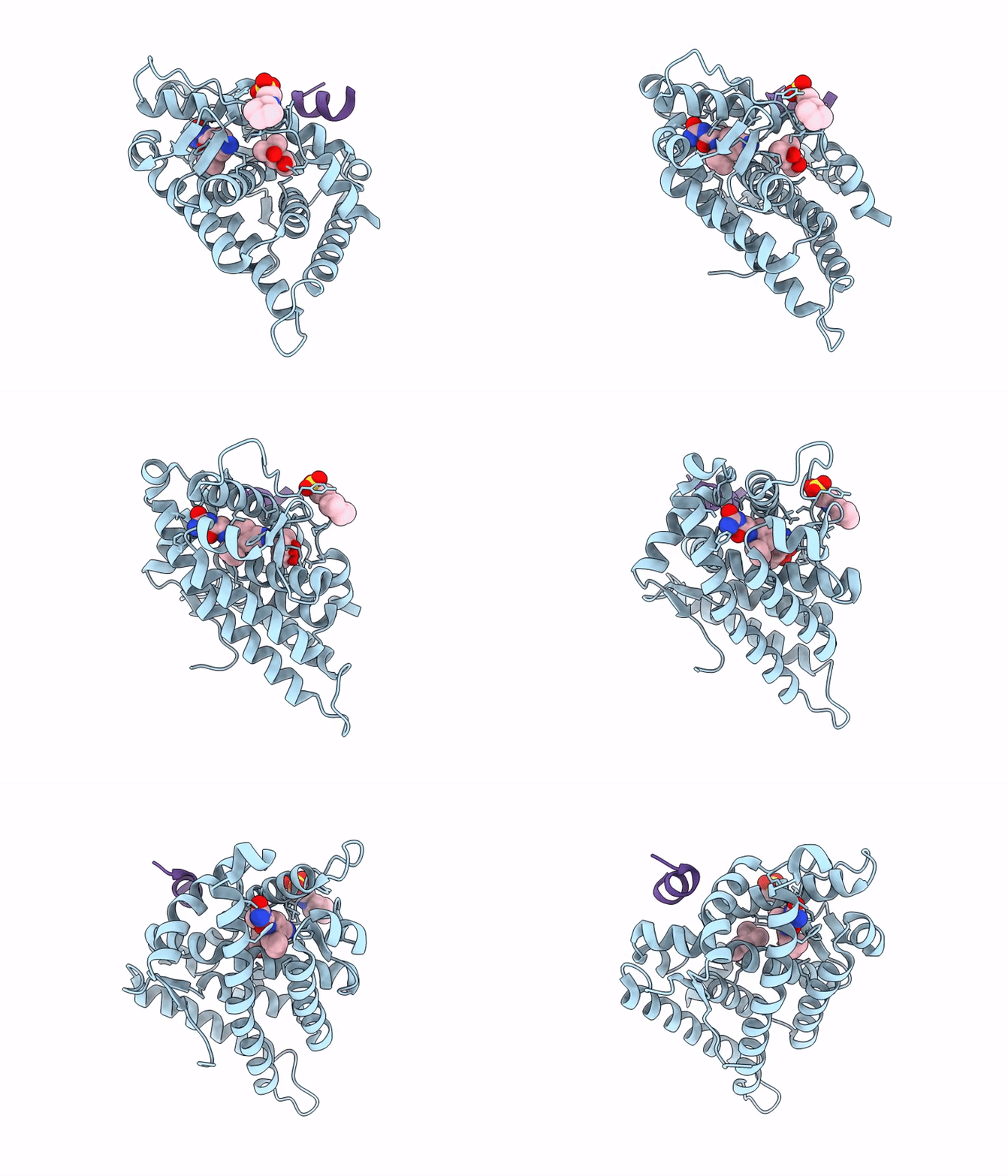
9GC7 image
Deposition Date 2024-08-01
Release Date 2026-02-18
Last Version Date 2026-05-13
Entry Detail
PDB ID:
9GC7
Keywords:
Title:
Mineralocorticoid receptor in complex with acylurea antagonists.
Biological Source:
Source Organism(s):
Homo sapiens (Taxon ID: 9606)
Expression System(s):
Method Details:
Experimental Method:
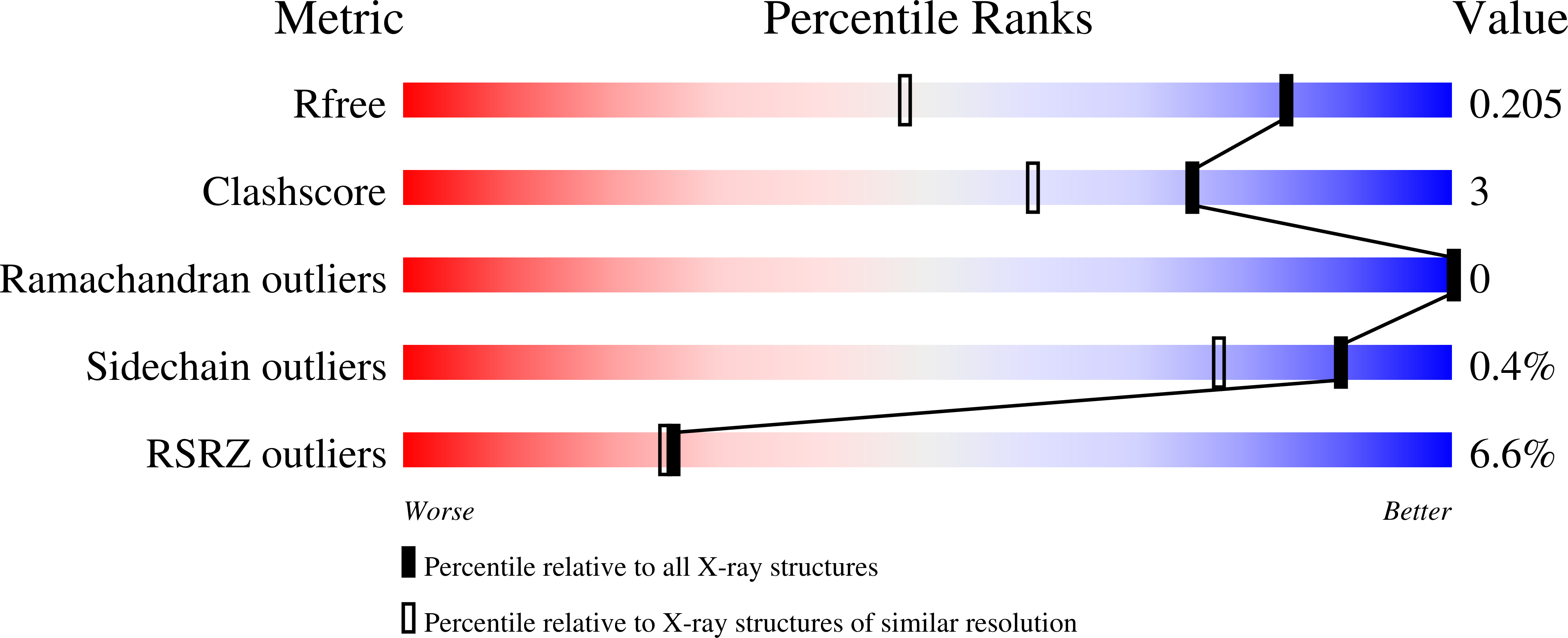
Resolution:
1.46 Å
R-Value Free:
0.20
R-Value Work:
0.18
R-Value Observed:
0.18
Space Group:
P 21 21 21
Macromolecular Entities
Structures with similar UniProt ID
Protein Blast
Polymer Type:polypeptide(L)
Molecule:Mineralocorticoid receptor
Gene (Uniprot):NR3C2
Mutagens:C808S, S810L, C910S
Chain IDs:A
Chain Length:305
Number of Molecules:1
Biological Source:Homo sapiens
Structures with similar UniProt ID
Protein Blast
Polymer Type:polypeptide(L)
Molecule:Nuclear receptor coactivator
Gene (Uniprot):NCOA1
Chain IDs:B
Chain Length:12
Number of Molecules:1
Biological Source:Homo sapiens
Primary Citation
Mineralocorticoid Receptor Antagonists With an Acylurea as a Key Polar Interaction Motif.
Chemmedchem 21 e202501047 e202501047 (2026)
PMID: 42060830 DOI: 10.1002/cmdc.202501047

Abstact

Mineralocorticoid receptor (MR) antagonists play a vital role in the management of conditions such as heart failure and hypertension. The recent approval of finerenone for diabetic kidney disease, along with expanding opportunities to treat chronic kidney disease and heart failure with preserved ejection fraction has led to a continued interest in MR antagonism. This article describes the identification and initial optimization of MR antagonists based on a phenylglycine scaffold containing an acylurea motif. Optimization efforts aimed at enhancing MR potency and DMPK properties revealed that replacing the phenylglycine scaffold with l-alanine avoided a risk of racemization at the stereocenter. The most potent compound exhibited an MR binding affinity of pK(i) = 9.3 and a potency in human MR reporter gene assay of pIC(50) = 8.4. X-ray crystallography of a protein-ligand complex structure with an l-alanine based compound revealed an internal hydrogen bond imposing a cyclic conformation on the acylurea, which in turn formed a bidentate hydrogen bond interaction with the side chain of Asn770, a key polar interaction site in MR for endogenous as well as synthetic ligands. Further lead generation efforts identified two compounds with suitable in vivo PK properties allowing assessment of their effect on acute urinary electrolyte excretion.

Legend

Protein

Chemical

Disease

Primary Citation of related structures
Feedback Form
Name
Email
Institute
Feedback