

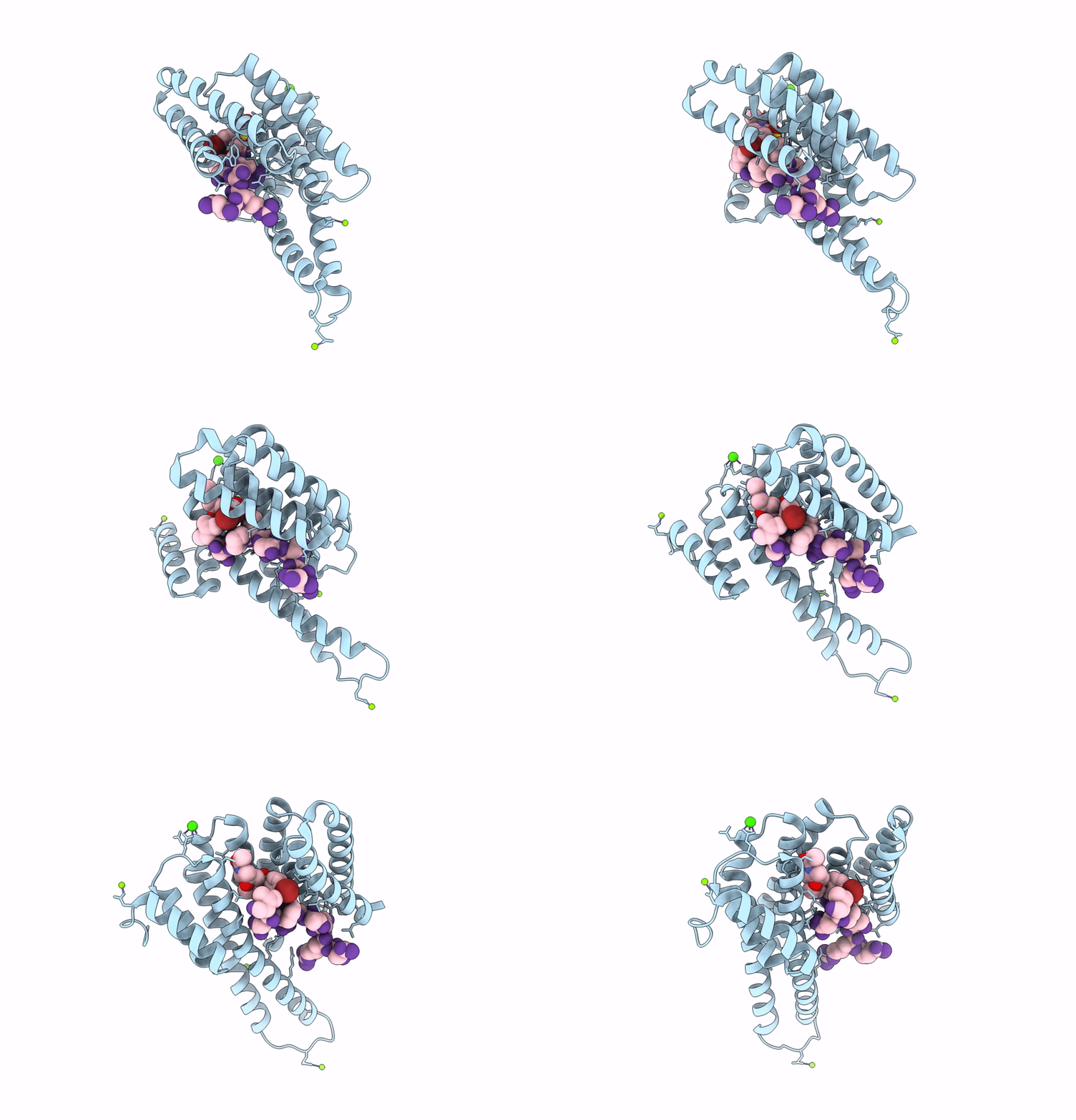
9EW3 image
Deposition Date 2024-04-03
Release Date 2025-04-16
Last Version Date 2026-03-04
Entry Detail
PDB ID:
9EW3
Title:
Ternary structure of 14-3-3s, C-RAF phosphopeptide 12-mer (pS259) and compound 78 (1084378)
Biological Source:
Source Organism(s):
Homo sapiens (Taxon ID: 9606)
Expression System(s):
Method Details:
Experimental Method:
Resolution:
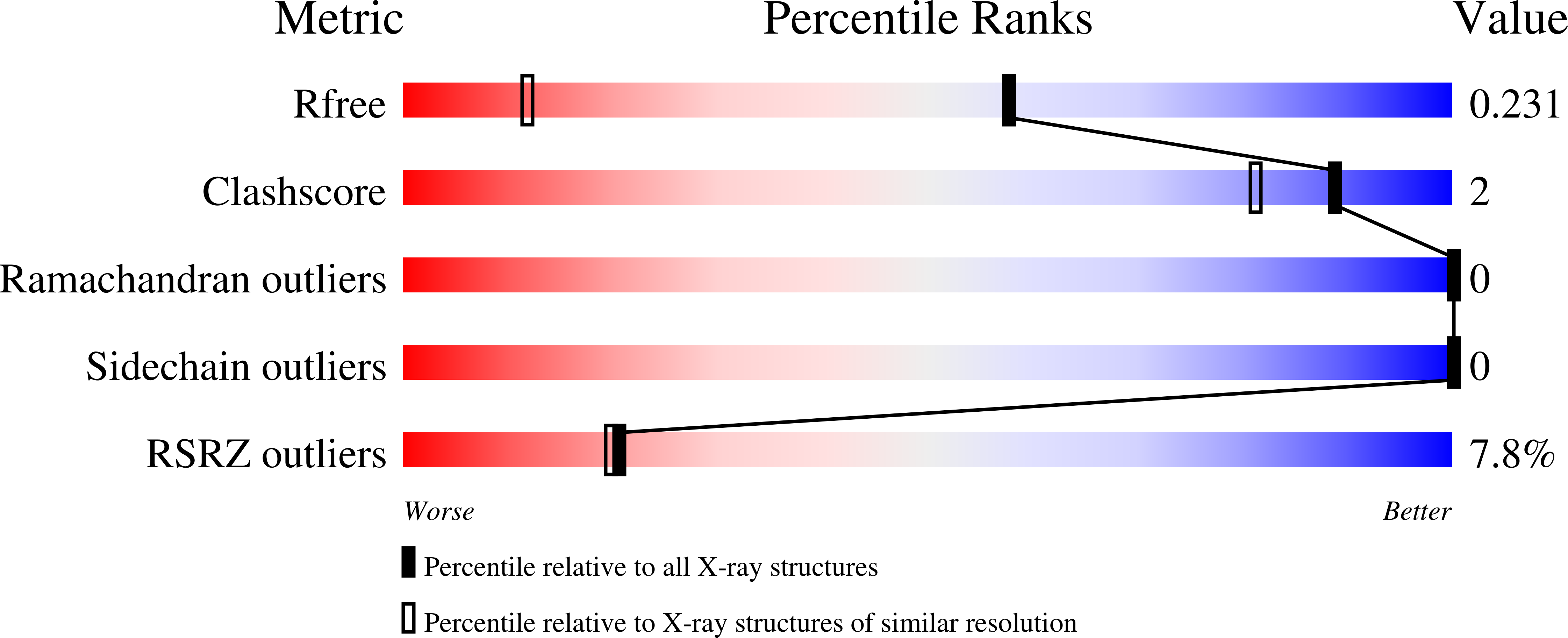
1.40 Å
R-Value Free:
0.22
R-Value Work:
0.19
R-Value Observed:
0.20
Space Group:
C 2 2 21
Macromolecular Entities
Structures with similar UniProt ID
Protein Blast
Polymer Type:polypeptide(L)
Molecule:14-3-3 protein sigma
Gene (Uniprot):SFN
Chain IDs:A
Chain Length:236
Number of Molecules:1
Biological Source:Homo sapiens
Structures with similar UniProt ID
Protein Blast
Polymer Type:polypeptide(L)
Molecule:RAF proto-oncogene serine/thr
Gene (Uniprot):RAF1
Chain IDs:B (auth: P)
Chain Length:9
Number of Molecules:1
Biological Source:Homo sapiens
Modified Residue
Compound ID Chain ID Parent Comp ID Details 2D Image
SEP B SER modified residue
Primary Citation
Modulation of the 14-3-3 sigma /C-RAF "Auto"inhibited Complex by Molecular Glues.
J. Am. Chem. Soc. 148 4951 4965 (2026)
PMID: 41617210 DOI: 10.1021/jacs.5c12622

Abstact

Molecular glues, compounds that bind cooperatively at protein-protein interfaces (PPIs), are revolutionizing chemical biology and drug discovery, allowing the modulation of traditional "undruggable" targets. Here, we focus on a native regulatory PPI between the scaffolding protein 14-3-3 and C-RAF, a key component of the MAPK signaling pathway. Extensive drug discovery efforts have focused on the MAPK pathway due to its central role in oncology and developmental disorders (RASopathies). However, the modulation of its protein complexes is underexplored. C-RAF activity is regulated on multiple levels including dimerization, phosphorylation, and complex formation with 14-3-3, which prevents C-RAF activation by binding to a C-RAF sequence centered on phospho-serine 259. We used a fragment-merging approach to design molecular glues that bound to the composite surface of this 14-3-3/C-RAFpS259 complex. Molecular glues stabilized the inhibitory complex up to 300-fold; their glue-based mechanism of action was confirmed by crystallography and biophysical studies. Selectivity among the other RAF isoforms and other RAF phosphorylation sites was evaluated. The best compounds showed excellent selectivity among a broad panel of 80 14-3-3 clients. Cellular assays demonstrated on-target engagement, enhanced phosphorylation levels of C-RAFpS259, and reduced levels of RAF dimerization and ERK phosphorylation. Overall, this approach enabled chemical biology studies for a C-RAF site that was intrinsically disordered prior to 14-3-3 binding and had not been targeted previously. These molecular glues will be useful chemical probes and starting points for drug discovery efforts to modulate native PPI stabilization in the MAPK pathway with applications in oncology and RASopathies.

Legend

Protein

Chemical

Disease

Primary Citation of related structures
Feedback Form
Name
Email
Institute
Feedback