

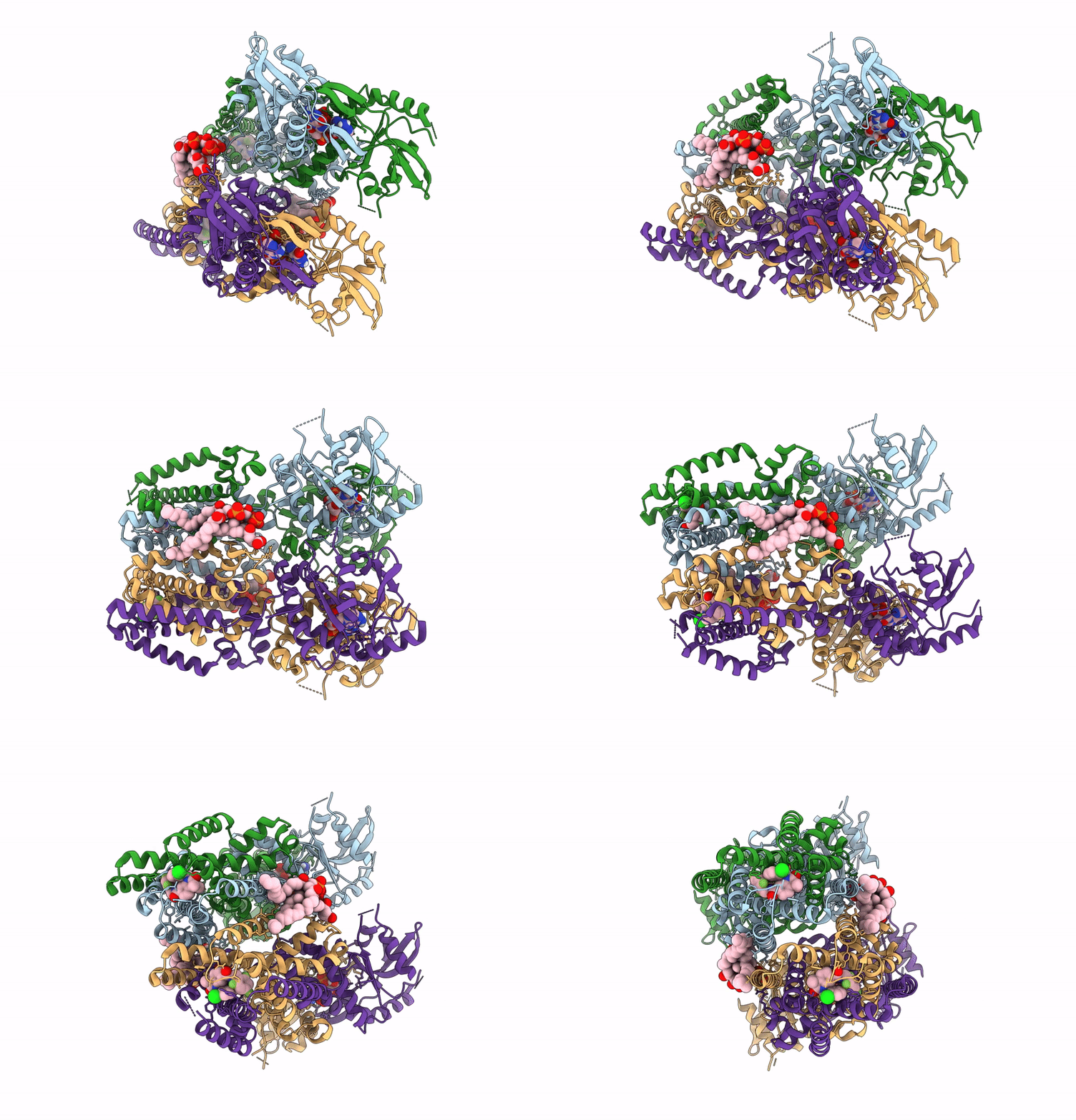
9DAW image
Deposition Date 2024-08-22
Release Date 2025-12-17
Last Version Date 2026-02-18
Entry Detail
PDB ID:
9DAW
Title:
STING oligomer bound to cGAMP, C53 and PI(3,5)P2
Biological Source:
Source Organism(s):
Homo sapiens (Taxon ID: 9606)
Expression System(s):
Method Details:
Experimental Method:
Resolution:
2.90 Å
Aggregation State:
PARTICLE
Reconstruction Method:
SINGLE PARTICLE
Macromolecular Entities
Structures with similar UniProt ID
Protein Blast
Polymer Type:polypeptide(L)
Molecule:Stimulator of interferon gene
Gene (Uniprot):STING1
Chain IDs:A, B, C, D
Chain Length:354
Number of Molecules:4
Biological Source:Homo sapiens
Primary Citation
Regulation of STING activation by phosphoinositide and cholesterol.
Nature ? ? ? (2026)
PMID: 41639452 DOI: 10.1038/s41586-025-10076-0

Abstact

Stimulator of interferon genes (STING) is an essential adaptor in the cytosolic DNA-sensing innate immune pathway1. STING is activated by cyclic GMP-AMP (cGAMP) produced by the DNA sensor cGAMP synthase (cGAS)2-5. cGAMP-induced high-order oligomerization and translocation of STING from the endoplasmic reticulum to the Golgi and post-Golgi vesicles are critical for STING activation6-11. Other studies have shown that phosphatidylinositol phosphates (PtdInsPs) and cholesterol also have important roles in STING activation, but the underlying mechanisms remain unclear12-17. Here we demonstrate that cGAMP-induced high-order oligomerization of STING is enhanced strongly by phosphatidylinositol 3,5-bisphosphate (PtdIns(3,5)P2 and PtdIns(4,5)P2, and by PtdIns4P to a lesser extent. Our cryo-electron microscopy structures reveal that PtdInsPs together with cholesterol bind at the interface between STING dimers, directly promoting the high-order oligomerization. The structures also provide an explanation for the preference of the STING oligomer to different PtdInsPs. Mutational and biochemical analyses confirm the binding modes of PtdInsPs and cholesterol and their roles in STING activation. Our findings shed light on the regulatory mechanisms of STING mediated by specific lipids, which may underlie the role of intracellular trafficking in dictating STING signalling.

Legend

Protein

Chemical

Disease

Primary Citation of related structures
Feedback Form
Name
Email
Institute
Feedback