

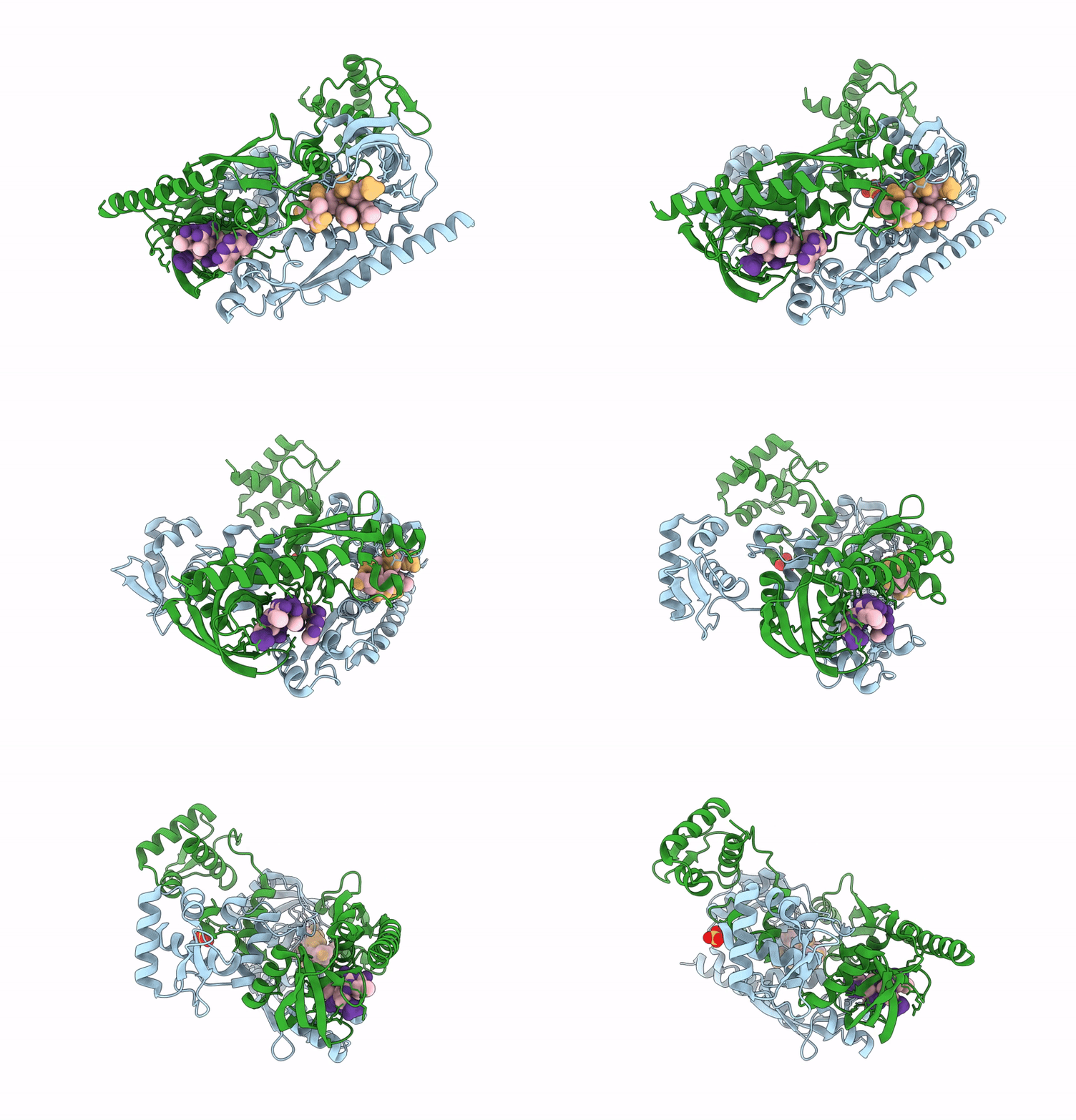
9C5G image
Deposition Date 2024-06-06
Release Date 2024-10-30
Last Version Date 2025-01-01
Entry Detail
PDB ID:
9C5G
Title:
Structure of R. leguminosarum CapW bound to single-stranded DNA
Biological Source:
Source Organism(s):
Expression System(s):
Method Details:
Experimental Method:
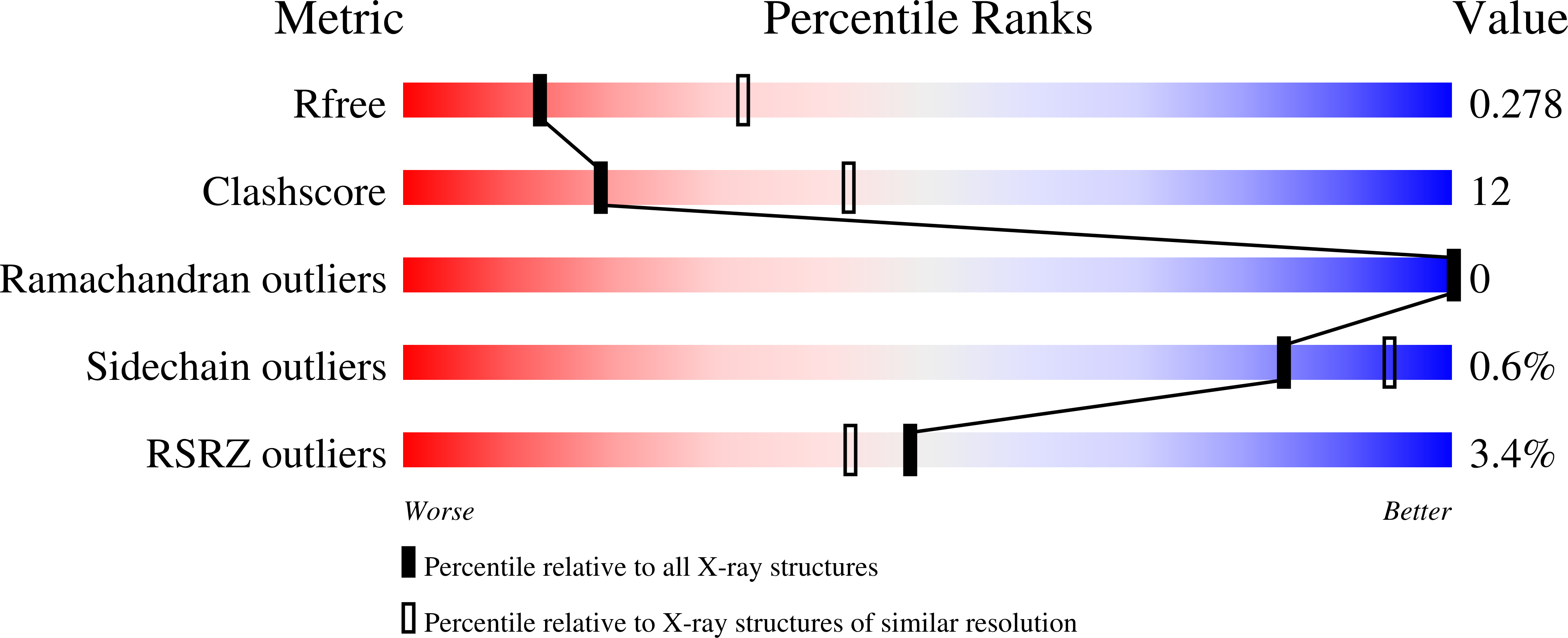
Resolution:
2.77 Å
R-Value Free:
0.27
R-Value Work:
0.23
R-Value Observed:
0.23
Space Group:
P 1 21 1
Macromolecular Entities
Structures with similar UniProt ID
Protein Blast
Polymer Type:polypeptide(L)
Molecule:CapW
Chain IDs:A, B
Chain Length:299
Number of Molecules:2
Biological Source:Rhizobium leguminosarum
Polymer Type:polydeoxyribonucleotide
Molecule:DNA (5'-D(P*TP*TP*T)-3')
Chain IDs:C, D
Chain Length:7
Number of Molecules:2
Biological Source:Escherichia coli
Ligand Molecules
Primary Citation
Bacterial WYL domain transcriptional repressors sense single-stranded DNA to control gene expression.
Nucleic Acids Res. 52 13723 13732 (2024)
PMID: 39588753 DOI: 10.1093/nar/gkae1101

Abstact

Bacteria encode a wide array of immune systems to protect themselves against ubiquitous bacteriophages and foreign DNA elements. While these systems' molecular mechanisms are becoming increasingly well known, their regulation remains poorly understood. Here, we show that an immune system-associated transcriptional repressor of the wHTH-WYL-WCX family, CapW, directly binds single-stranded DNA to sense DNA damage and activate expression of its associated immune system. We show that CapW mediates increased expression of a reporter gene in response to DNA damage in a host cell. CapW directly binds single-stranded DNA by-products of DNA repair through its WYL domain, causing a conformational change that releases the protein from double-stranded DNA. In an Escherichia coli CBASS system with an integrated capW gene, we find that CapW-mediated transcriptional activation is important for this system's ability to prevent induction of a λ prophage. Overall, our data reveal the molecular mechanisms of WYL-domain transcriptional repressors, and provide an example of how bacteria can balance the protective benefits of carrying anti-phage immune systems against the inherent risk of these systems' aberrant activation.

Legend

Protein

Chemical

Disease

Primary Citation of related structures
Feedback Form
Name
Email
Institute
Feedback