

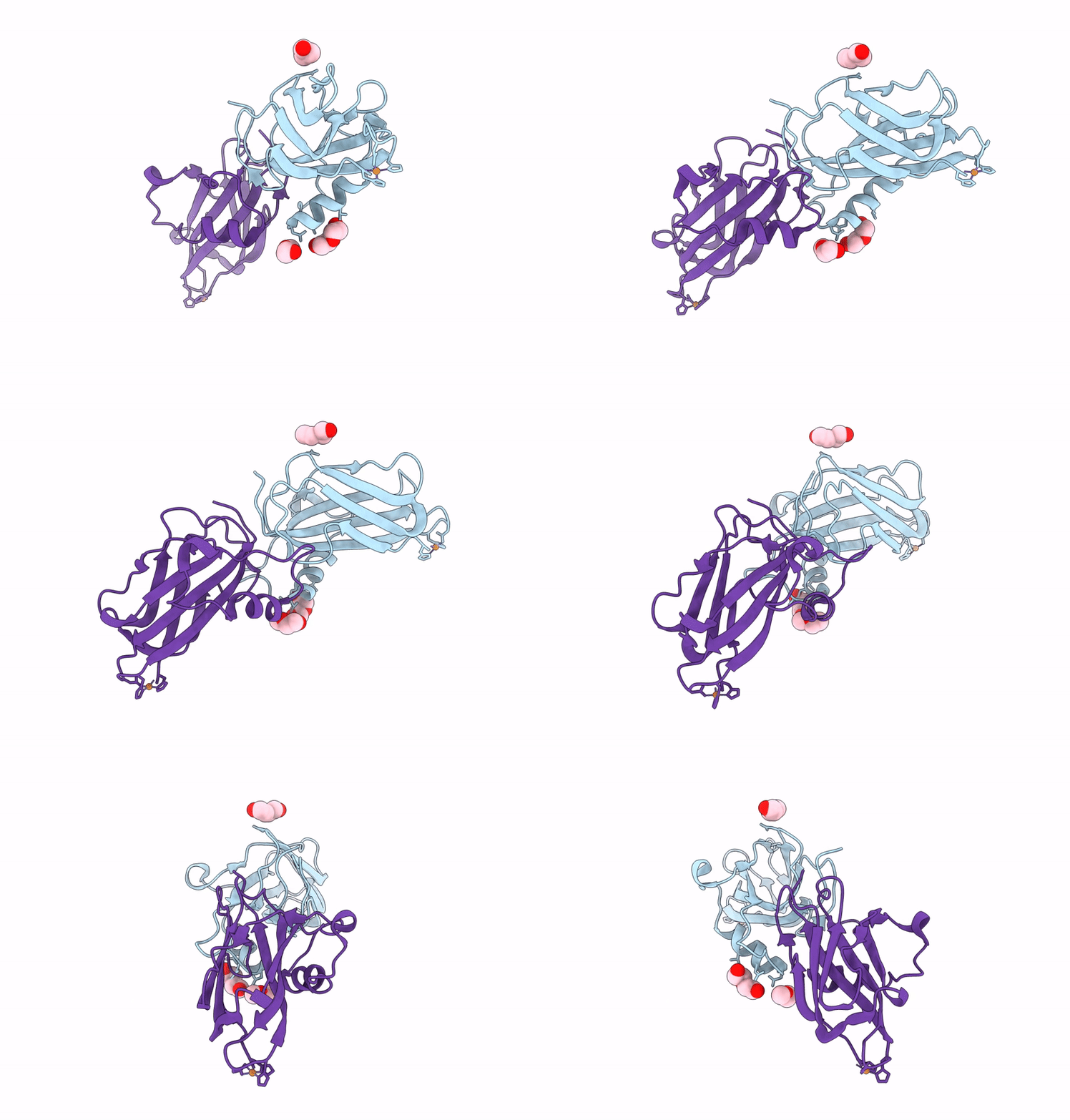
8YTR image
Deposition Date 2024-03-26
Release Date 2024-04-24
Last Version Date 2025-08-27
Entry Detail
PDB ID:
8YTR
Title:
The structure of Cu(II)-CopC from Thioalkalivibrio paradoxus
Biological Source:
Source Organism(s):
Expression System(s):
Method Details:
Experimental Method:
Resolution:
1.80 Å
R-Value Free:
0.22
R-Value Work:
0.18
R-Value Observed:
0.18
Space Group:
P 1 21 1

Macromolecular Entities
Structures with similar UniProt ID
Protein Blast
Polymer Type:polypeptide(L)
Molecule:CopC domain-containing protei
Gene (Uniprot):THITH_13340
Chain IDs:A, B
Chain Length:130
Number of Molecules:2
Biological Source:Thioalkalivibrio paradoxus ARh 1
Primary Citation
CopC as a potential metallochaperone delivering copper ions to the active site of a thiocyanate dehydrogenase.
Int. J. Biol. Macromol. 322 146801 146801 (2025)
PMID: 40812657 DOI: 10.1016/j.ijbiomac.2025.146801

Abstact

The CopC proteins are periplasmic copper binding proteins involved in bacterial copper homeostasis. One of the supposed functions of СopСs is to deliver copper ions for incorporation into the active sites of copper-containing oxidoreductases. In the sulfur oxidizing bacterium Thiolkalivibrio paradoxus, the genes encoding the CopCD proteins are located near the gene encoding the enzyme thiocyanate dehydrogenase (TcDH) containing three copper ions in the active site. The biochemical characterization demonstrated that CopC from Tv. paradoxus (tpCopC) has a high affinity for copper ions in both oxidation states (log KD = -16.3 ± 0.6 for Cu(II) and -11.1 ± 0.2 for Cu(I)). The protein Cu(II)-tpCopC forms a transient complex with TcDH, in which a copper ion could be transferred from tpCopC to the active site of TcDH. In the absence of a reducing agent, the transfer of 0.5 ± 0.2 copper ions is observed; under reducing conditions, the transfer of 2.4 ± 0.1 copper ions takes place followed by the activation of TcDH. Thus, CopC can act as a metallochaperone, providing the incorporation of copper ions into the active site of TcDH. The mechanism is proposed for the copper ion transfer from Cu(II)-tpCopC to TcDH through the intermediate reduction to form Cu(I)-tpCopC.

Legend

Protein

Chemical

Disease

Primary Citation of related structures
Feedback Form
Name
Email
Institute
Feedback