

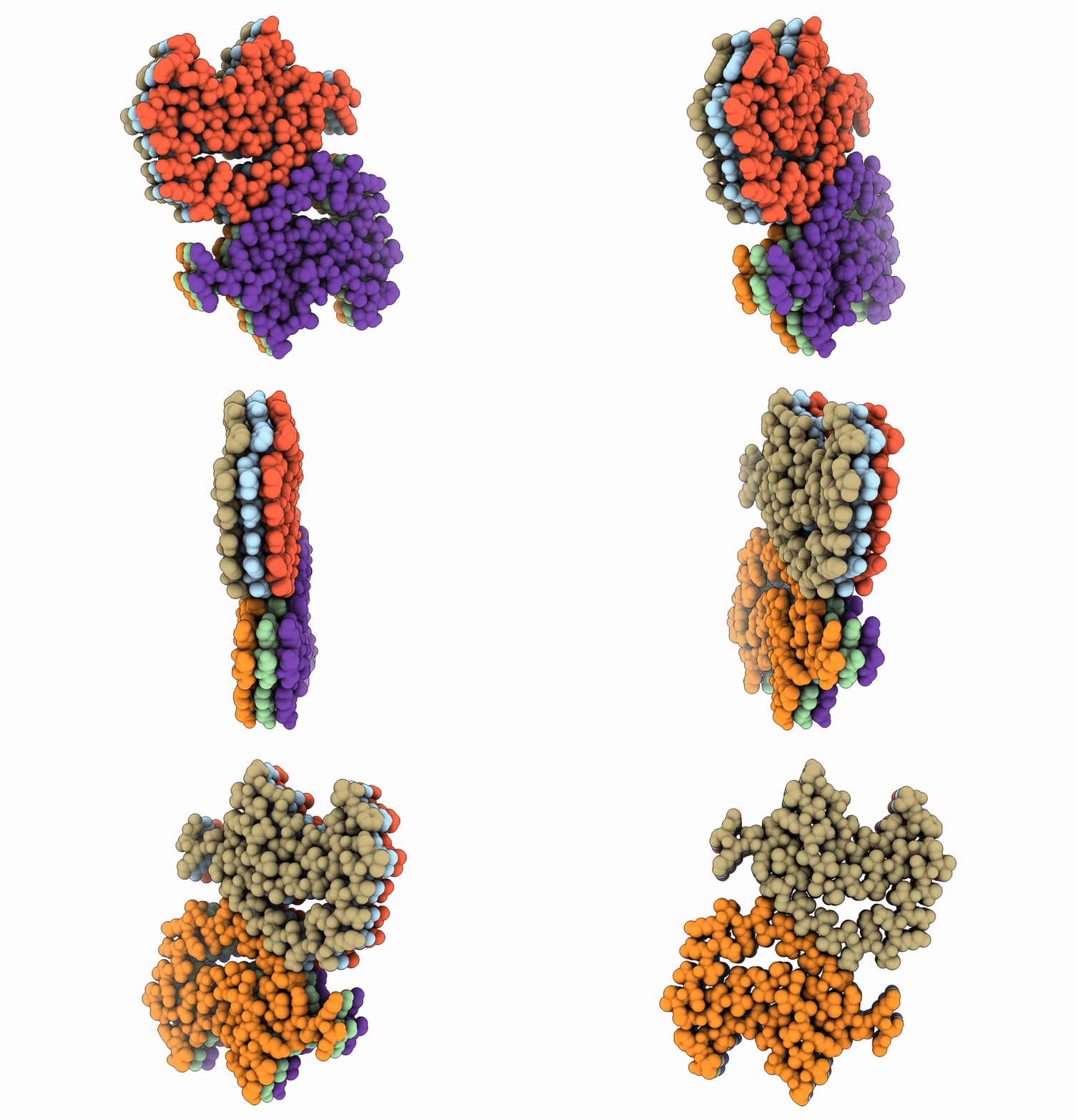
8Y2Q image
Deposition Date 2024-01-27
Release Date 2025-01-29
Last Version Date 2026-02-18
Entry Detail
PDB ID:
8Y2Q
Keywords:
Title:
The cryo-EM structure of spermine induced a-synuclein fibril in Tris buffer.
Biological Source:
Source Organism(s):
Homo sapiens (Taxon ID: 9606)
Expression System(s):
Method Details:
Experimental Method:
Resolution:
2.80 Å
Aggregation State:
FILAMENT
Reconstruction Method:
HELICAL
Macromolecular Entities
Structures with similar UniProt ID
Protein Blast
Polymer Type:polypeptide(L)
Molecule:Alpha-synuclein
Gene (Uniprot):SNCA
Chain IDs:A, B, C, D (auth: E), E (auth: D), F
Chain Length:140
Number of Molecules:6
Biological Source:Homo sapiens
Ligand Molecules
Primary Citation
Different charged biopolymers induce alpha-synuclein to form fibrils with distinct structures.
J. Biol. Chem. 300 107862 107862 (2024)
PMID: 39374778 DOI: 10.1016/j.jbc.2024.107862

Abstact

The aggregation of α-synuclein (α-syn) into amyloid fibrils, a key process in the development of Parkinson's disease (PD) and other synucleinopathies, is influenced by a range of factors such as charged biopolymers, chaperones, and metabolites. However, the specific impacts of different biopolymers on α-syn fibril structure are not well understood. In our work, we found that different polyanions and polycations, such as polyphosphate (polyP), polyuridine (polyU), and polyamines (including putrescine, spermidine, and spermine), markedly altered the fibrillation kinetics of α-syn in vitro. Furthermore, the seeding assay revealed distinct cross-seeding capacities across different biopolymer-induced α-syn fibrils, suggesting the formation of structurally distinct strains under different conditions. Utilizing cryo-electron microscopy (cryo-EM), we further examined the detailed structural configuration of α-syn fibrils formed in the presence of these biopolymers. Notably, we found that while polyamines do not change the atomic structure of α-syn fibrils, polyU and polyP induce the formation of distinct amyloid fibrils, exhibiting a range of structural polymorphs. Our work offers valuable insights into how various charged biopolymers affect the aggregation process and the resultant structures of α-syn fibrils, thereby enhancing our understanding of the structural variations in α-syn fibrils across different pathological conditions.

Legend

Protein

Chemical

Disease

Primary Citation of related structures
Feedback Form
Name
Email
Institute
Feedback