

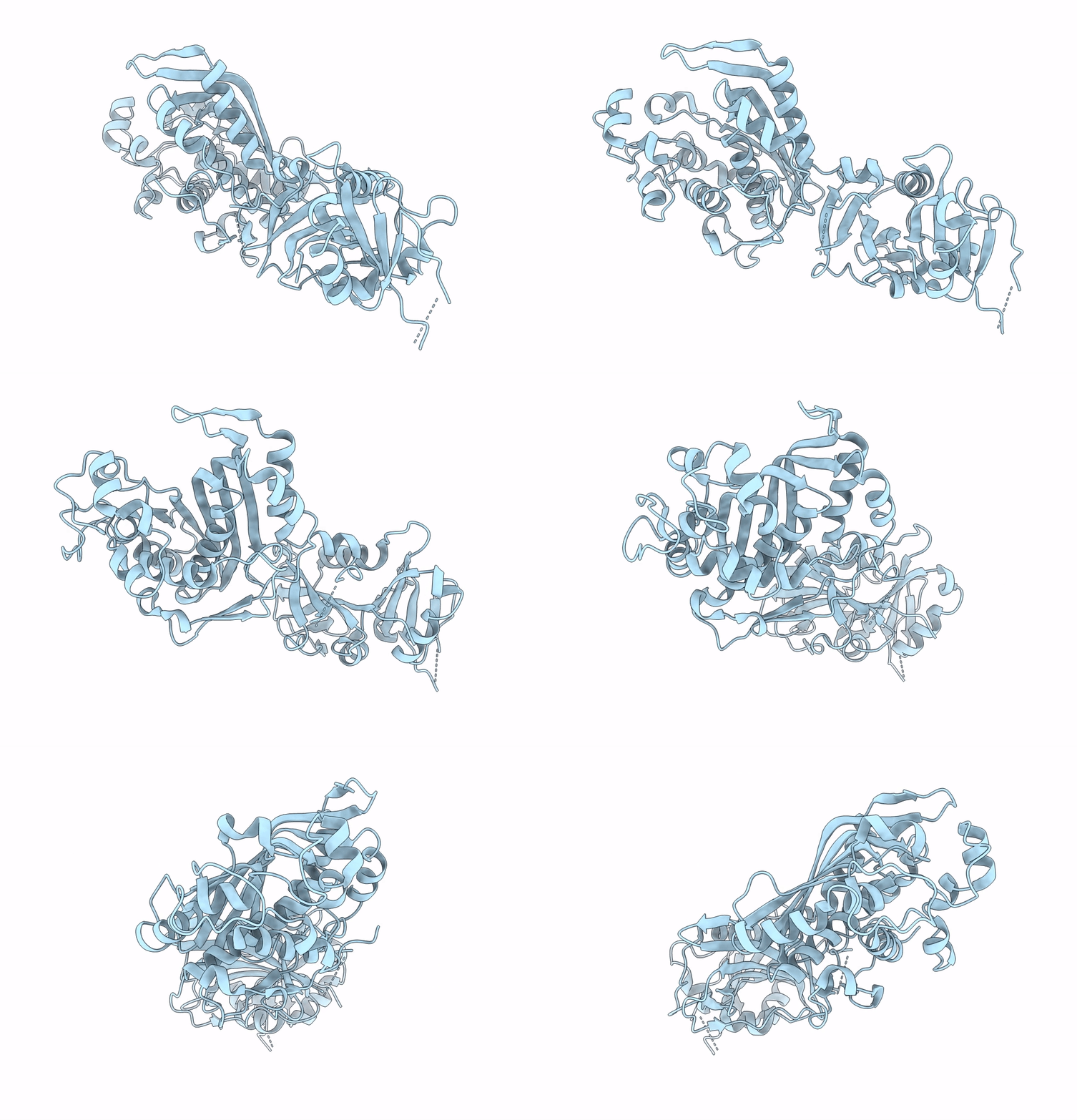
8DAE image
Deposition Date 2022-06-13
Release Date 2023-06-21
Last Version Date 2026-02-04
Entry Detail
PDB ID:
8DAE
Title:
Arabidopsis thaliana bifunctional dihydrofolate reductase-thymidylate synthase
Biological Source:
Source Organism(s):
Expression System(s):
Method Details:
Experimental Method:
Resolution:
2.00 Å
R-Value Free:
0.23
R-Value Work:
0.20
Space Group:
P 42 21 2

Macromolecular Entities
Structures with similar UniProt ID
Protein Blast
Polymer Type:polypeptide(L)
Molecule:Bifunctional dihydrofolate re
Gene (Uniprot):THY-1
Chain IDs:A
Chain Length:536
Number of Molecules:1
Biological Source:Arabidopsis thaliana
Primary Citation
Structural insights into a plant-conserved DHFR-TS reveal a selective herbicide target.
Mol Plant 18 1294 1309 (2025)
PMID: 40598768 DOI: 10.1016/j.molp.2025.06.016

Abstact

Modern agricultural practices rely on herbicides to reduce yield losses. Herbicide-resistant weeds threaten herbicide utility and, hence, food security. New herbicide modes of action and integrated pest-management practices are vital to mitigate this threat. As the antimalarials that target the bifunctional enzyme dihydrofolate reductase-thymidylate synthase (DHFR-TS) have been shown to be herbicidal, DHFR-TS might represent a mode-of-action target for the development of herbicides. Here, we present the crystal structure of a DHFR-TS (AtDHFR-TS1) from the model dicot Arabidopsis thaliana. It shows a divergent DHFR active site and a linker domain that challenges previous classifications of bifunctional DHFR-TS proteins. This plant-conserved architecture enabled us to develop highly selective herbicidal inhibitors of AtDHFR-TS1 over human DHFR and identify inhibitors with unique scaffolds via a large-library virtual screen. These results suggest that DHFR-TS is a viable herbicide target.

Legend

Protein

Chemical

Disease

Primary Citation of related structures
Feedback Form
Name
Email
Institute
Feedback