

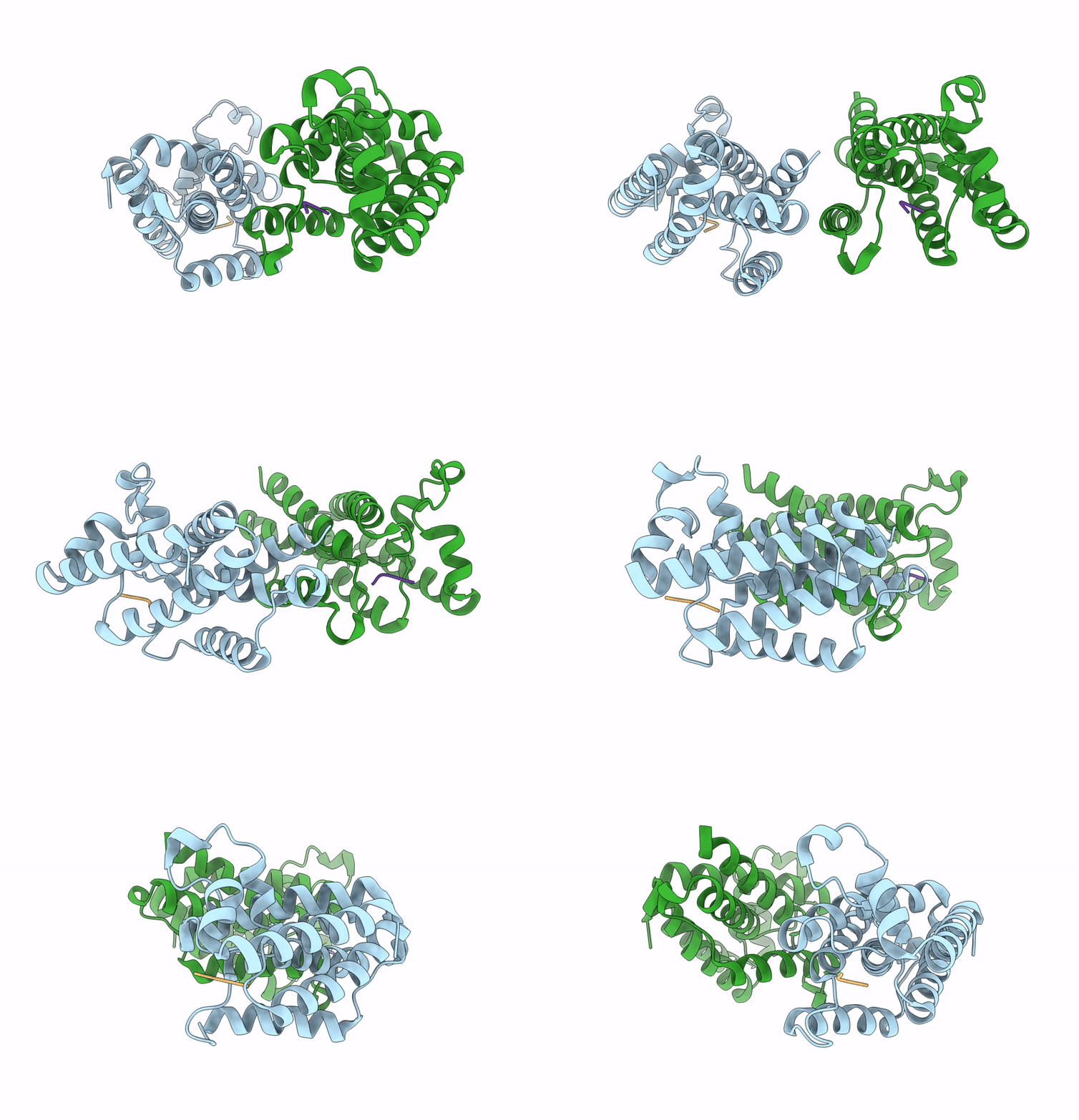
8AB5 image
Deposition Date 2022-07-04
Release Date 2023-10-25
Last Version Date 2026-03-04
Entry Detail
PDB ID:
8AB5
Keywords:
Title:
Structure of E. coli GlpG in complex with peptide derived inhibitor Ac-VRHA-conh-[4-(4-butyl)-phenoxy-1-phenyl-2-butyl]
Biological Source:
Source Organism(s):
Expression System(s):
Method Details:
Experimental Method:
Resolution:
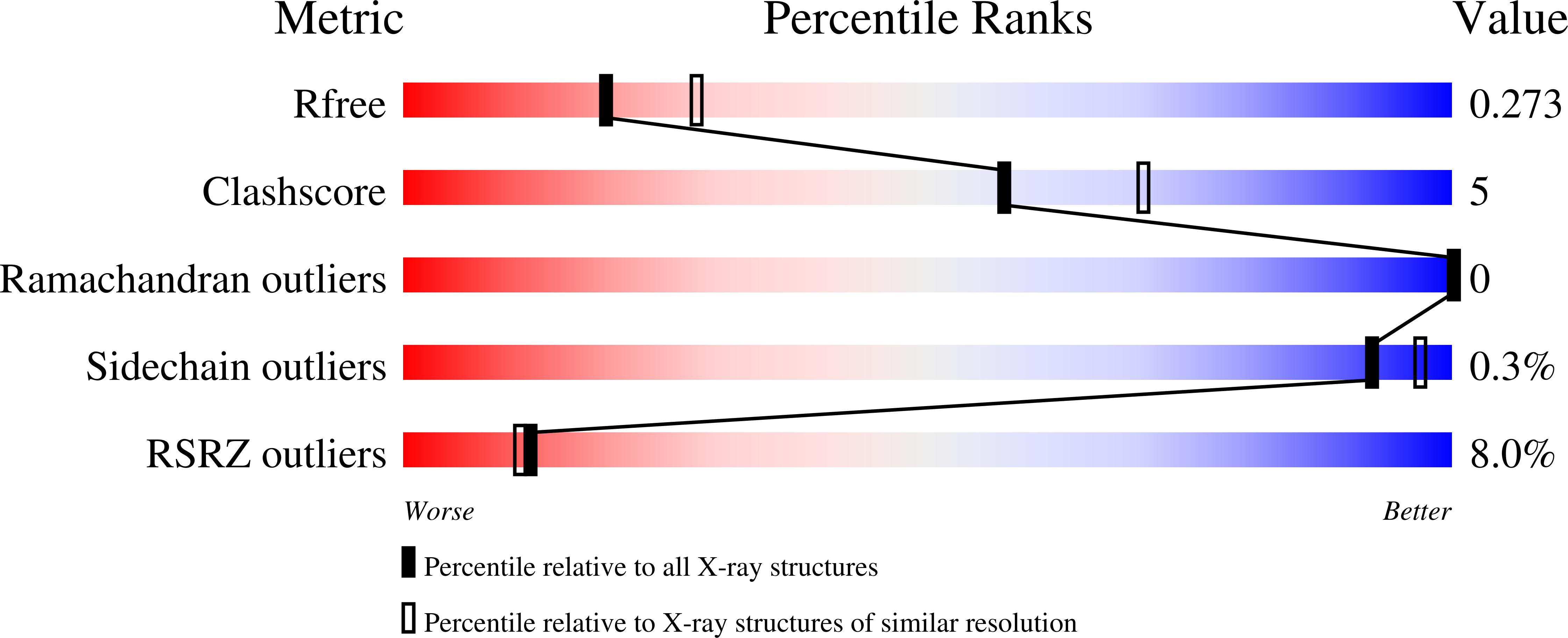
2.40 Å
R-Value Free:
0.27
R-Value Work:
0.21
R-Value Observed:
0.22
Space Group:
P 1 21 1
Macromolecular Entities
Structures with similar UniProt ID
Protein Blast
Polymer Type:polypeptide(L)
Molecule:Rhomboid protease GlpG
Gene (Uniprot):glpG
Chain IDs:A, B
Chain Length:180
Number of Molecules:2
Biological Source:Escherichia coli K-12
Polymer Type:polypeptide(L)
Molecule:Ac-VRHA-conh-[4-(4-butyl)-phe
Chain IDs:C, D
Chain Length:5
Number of Molecules:2
Biological Source:Providencia stuartii
Peptide-like Molecules
PRD_002417
Primary Citation
Extensive targeting of chemical space at the prime side of ketoamide inhibitors of rhomboid proteases by branched substituents empowers their selectivity and potency.
Eur.J.Med.Chem. 275 116606 116606 (2024)
PMID: 38901105 DOI: 10.1016/j.ejmech.2024.116606

Abstact

Rhomboid intramembrane serine proteases have been implicated in several pathologies, and emerge as attractive pharmacological target candidates. The most potent and selective rhomboid inhibitors available to date are peptidyl α-ketoamides, but their selectivity for diverse rhomboid proteases and strategies to modulate it in relevant contexts are poorly understood. This gap, together with the lack of suitable in vitro models, hinders ketoamide development for relevant eukaryotic rhomboid enzymes. Here we explore the structure-activity relationship principles of rhomboid inhibiting ketoamides by medicinal chemistry and enzymatic in vitro and in-cell assays with recombinant rhomboid proteases GlpG, human mitochondrial rhomboid PARL and human RHBDL2. We use X-ray crystallography in lipidic cubic phase to understand the binding mode of one of the best ketoamide inhibitors synthesized here containing a branched terminal substituent bound to GlpG. In addition, to extend the interpretation of the co-crystal structure, we use quantum mechanical calculations and quantify the relative importance of interactions along the inhibitor molecule. These combined experimental analyses implicates that more extensive exploration of chemical space at the prime side is unexpectedly powerful for the selectivity of rhomboid inhibiting ketoamides. Together with variations in the peptide sequence at the non-prime side, or its non-peptidic alternatives, this strategy enables targeted tailoring of potent and selective ketoamides towards diverse rhomboid proteases including disease-relevant ones such as PARL and RHBDL2.

Legend

Protein

Chemical

Disease

Primary Citation of related structures
Feedback Form
Name
Email
Institute
Feedback