

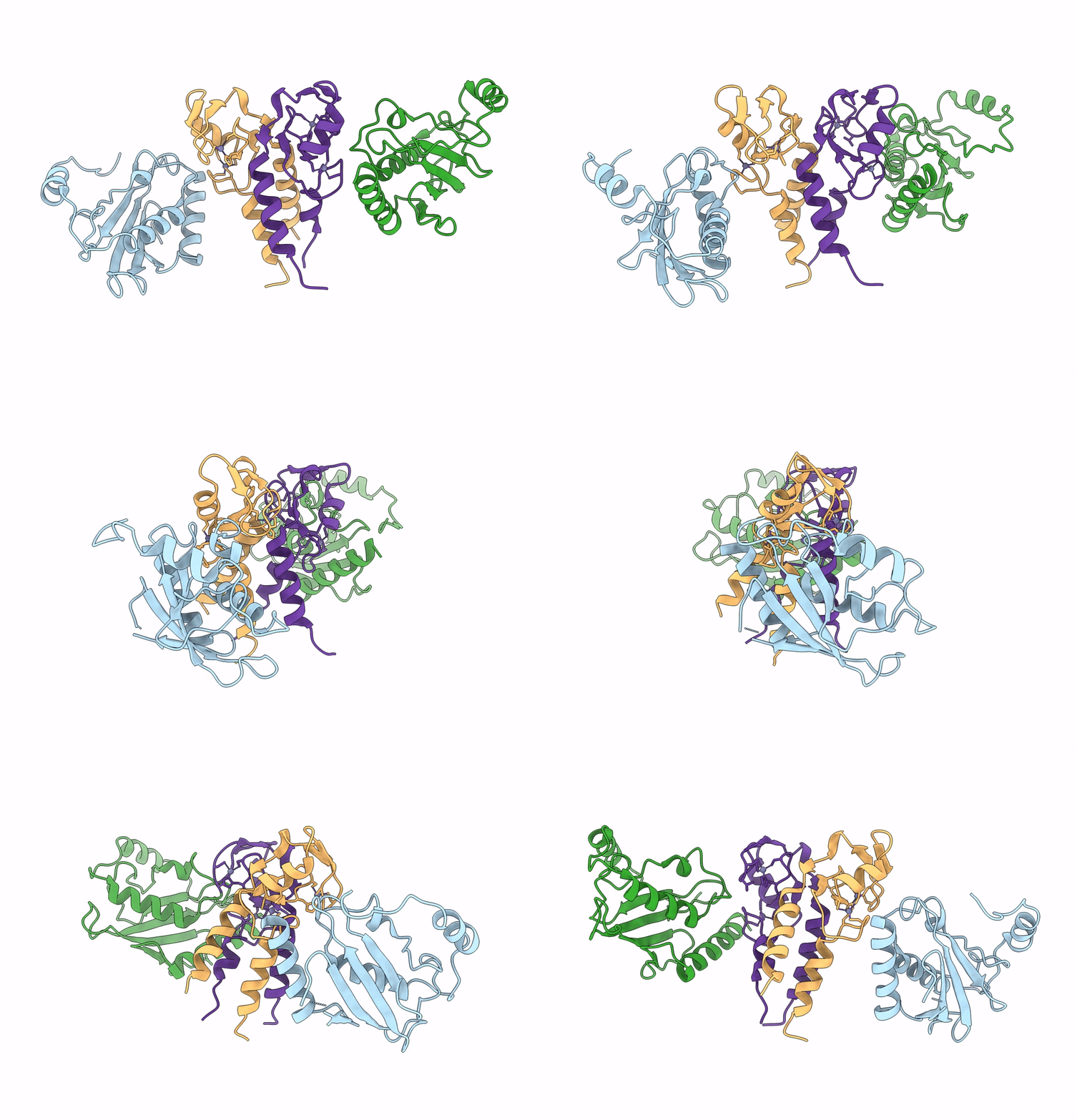
8A58 image
Deposition Date 2022-06-14
Release Date 2023-04-26
Last Version Date 2024-02-07
Entry Detail
PDB ID:
8A58
Keywords:
Title:
X-ray structure of TRIM21 RING E3 ligase in complex with E2 enzyme Ube2W
Biological Source:
Source Organism(s):
Homo sapiens (Taxon ID: 9606)
Expression System(s):
Method Details:
Experimental Method:
Resolution:
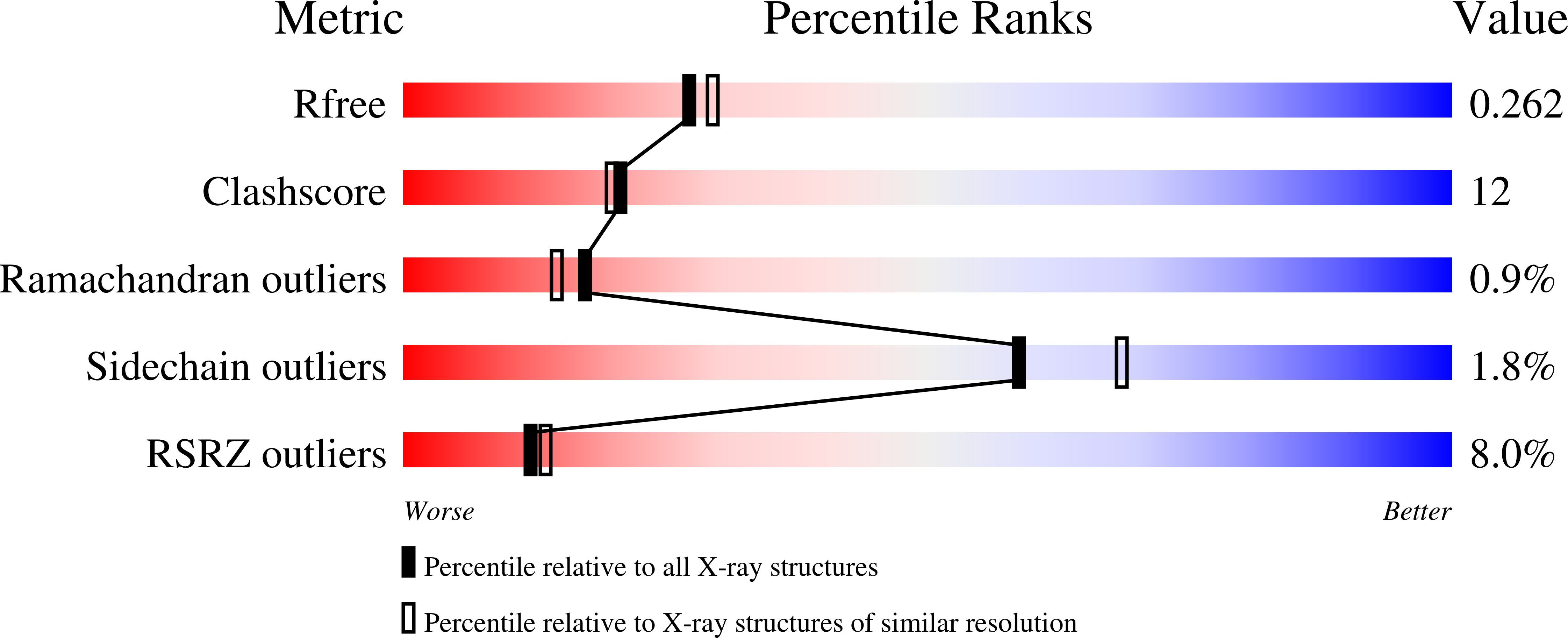
2.25 Å
R-Value Free:
0.25
R-Value Work:
0.21
R-Value Observed:
0.21
Space Group:
P 1 21 1
Macromolecular Entities
Structures with similar UniProt ID
Protein Blast
Polymer Type:polypeptide(L)
Molecule:Ubiquitin-conjugating enzyme
Gene (Uniprot):UBE2W
Chain IDs:A, D (auth: B)
Chain Length:153
Number of Molecules:2
Biological Source:Homo sapiens
Structures with similar UniProt ID
Protein Blast
Polymer Type:polypeptide(L)
Molecule:E3 ubiquitin-protein ligase T
Gene (Uniprot):TRIM21
Chain IDs:B (auth: C), C (auth: D)
Chain Length:85
Number of Molecules:2
Biological Source:Homo sapiens
Ligand Molecules
Primary Citation
Trim-Away ubiquitinates and degrades lysine-less and N-terminally acetylated substrates.
Nat Commun 14 2160 2160 (2023)
PMID: 37061529 DOI: 10.1038/s41467-023-37504-x

Abstact

TRIM proteins are the largest family of E3 ligases in mammals. They include the intracellular antibody receptor TRIM21, which is responsible for mediating targeted protein degradation during Trim-Away. Despite their importance, the ubiquitination mechanism of TRIM ligases has remained elusive. Here we show that while Trim-Away activation results in ubiquitination of both ligase and substrate, ligase ubiquitination is not required for substrate degradation. N-terminal TRIM21 RING ubiquitination by the E2 Ube2W can be inhibited by N-terminal acetylation, but this doesn't prevent substrate ubiquitination nor degradation. Instead, uncoupling ligase and substrate degradation prevents ligase recycling and extends functional persistence in cells. Further, Trim-Away degrades substrates irrespective of whether they contain lysines or are N-terminally acetylated, which may explain the ability of TRIM21 to counteract fast-evolving pathogens and degrade diverse substrates.

Legend

Protein

Chemical

Disease

Primary Citation of related structures
Feedback Form
Name
Email
Institute
Feedback