

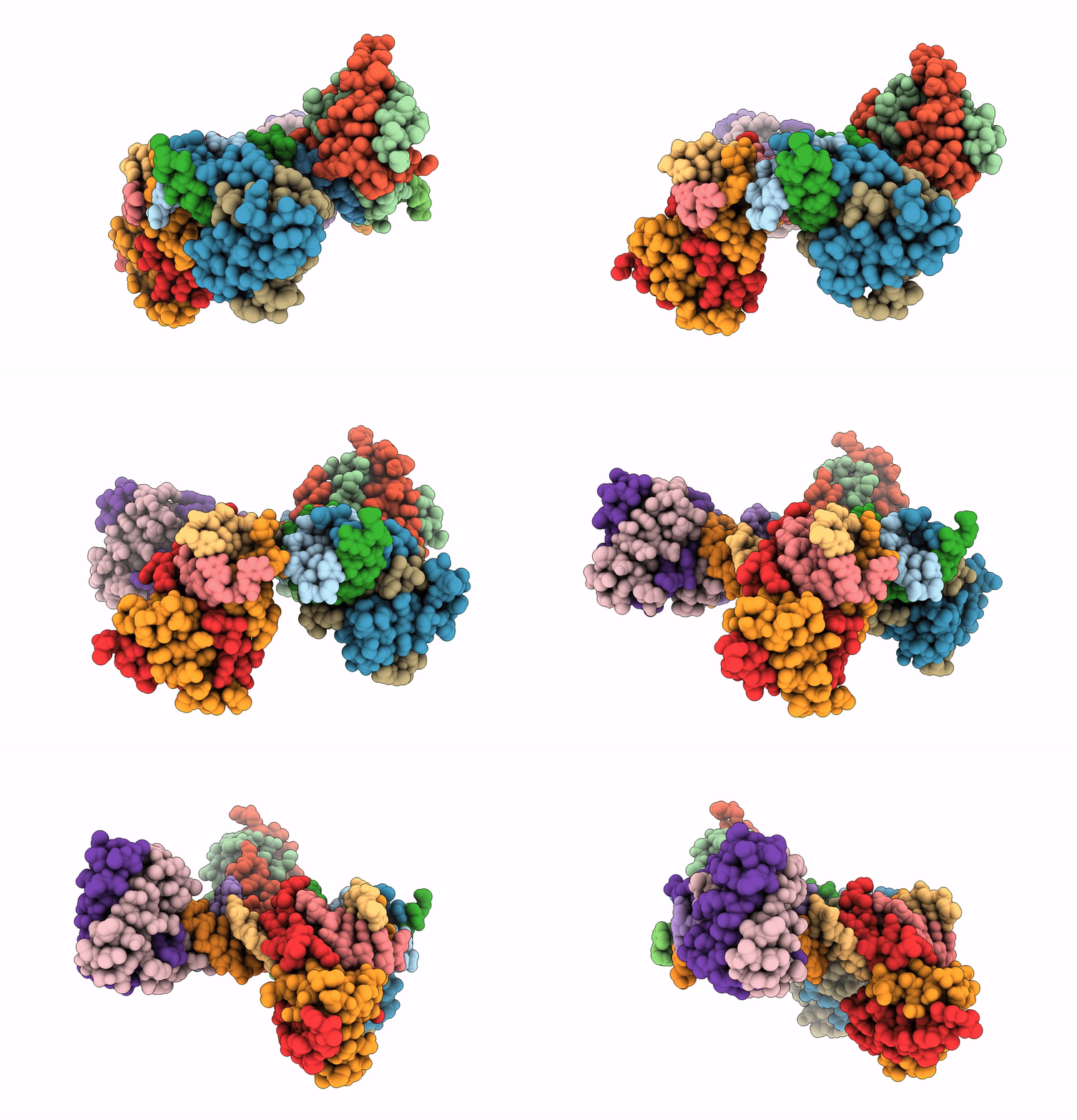
7VP3 image
Deposition Date 2021-10-15
Release Date 2022-10-19
Last Version Date 2026-02-11
Entry Detail
PDB ID:
7VP3
Title:
Structure of a transcription factor and DNA complex
Biological Source:
Source Organism(s):
Expression System(s):
Method Details:
Experimental Method:
Resolution:
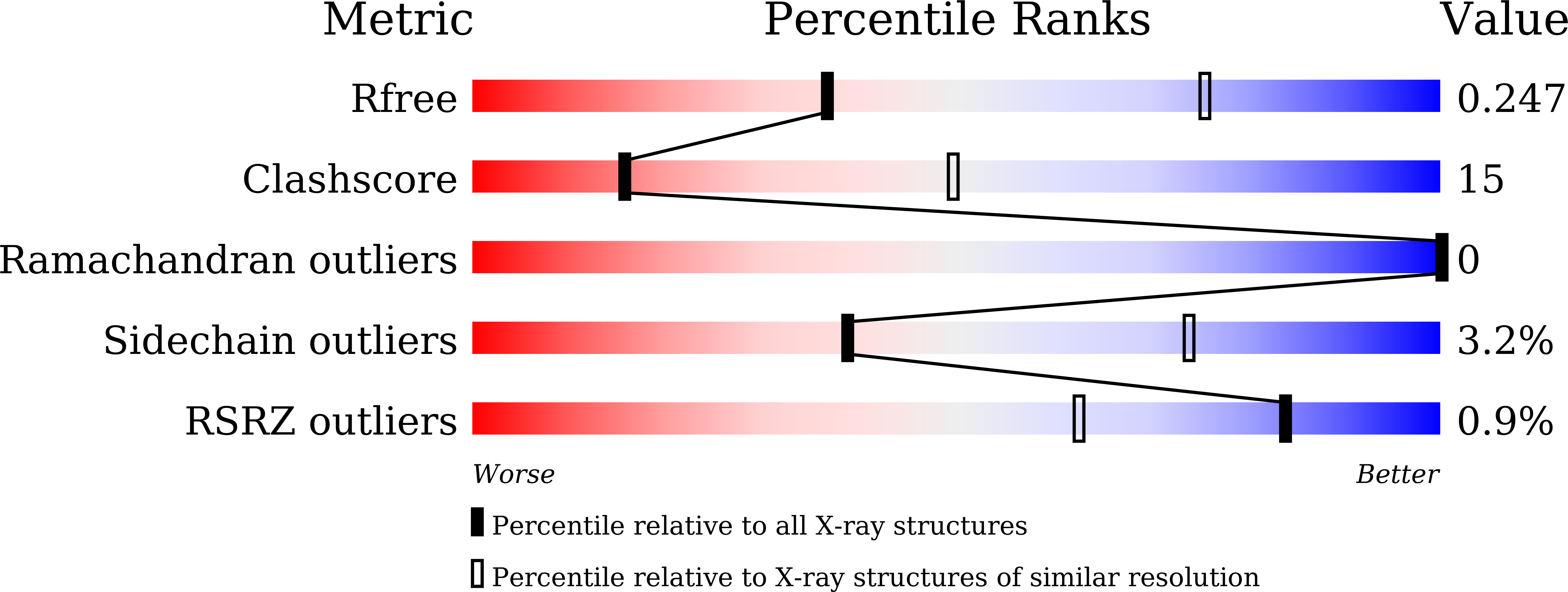
3.00 Å
R-Value Free:
0.24
R-Value Work:
0.19
Space Group:
P 21 21 21
Macromolecular Entities
Polymer Type:polydeoxyribonucleotide
Molecule:DNA (5'-D(*TP*GP*GP*GP*GP*AP*
Chain IDs:A (auth: B), E (auth: A), I (auth: H), N (auth: O)
Chain Length:12
Number of Molecules:4
Biological Source:synthetic construct
Structures with similar UniProt ID
Protein Blast
Polymer Type:polypeptide(L)
Molecule:Transcription factor TCP15
Gene (Uniprot):TCP15
Chain IDs:B (auth: D), D (auth: J), F (auth: C), H (auth: G), J (auth: I), L, O (auth: N), P
Chain Length:72
Number of Molecules:8
Biological Source:Arabidopsis thaliana
Polymer Type:polydeoxyribonucleotide
Molecule:DNA (5'-D(*AP*TP*GP*TP*GP*GP*
Chain IDs:C (auth: E), G (auth: F), K, M
Chain Length:12
Number of Molecules:4
Biological Source:synthetic construct
Ligand Molecules
Primary Citation
DNA-TCP complex structures reveal a unique recognition mechanism for TCP transcription factor families.
Nucleic Acids Res. 51 434 448 (2023)
PMID: 36546761 DOI: 10.1093/nar/gkac1171

Abstact

Plant-specific TCP transcription factors are key regulators of diverse plant functions. TCP transcription factors have long been annotated as basic helix-loop-helix (bHLH) transcription factors according to remote sequence homology without experimental validation, and their consensus DNA-binding sequences and protein-DNA recognition mechanisms have remained elusive. Here, we report the crystal structures of the class I TCP domain from AtTCP15 and the class II TCP domain from AtTCP10 in complex with different double-stranded DNA (dsDNA). The complex structures reveal that the TCP domain is a distinct DNA-binding motif and the homodimeric TCP domains adopt a unique three-site recognition mode, binding to dsDNA mainly through a central pair of β-strands formed by the dimer interface and two basic flexible loops from each monomer. The consensus DNA-binding sequence for class I TCPs is a perfectly palindromic 11 bp (GTGGGNCCCAC), whereas that for class II TCPs is a near-palindromic 11 bp (GTGGTCCCCAC). The unique DNA binding mode allows the TCP domains to display broad specificity for a range of DNA sequences even shorter than 11 bp, adding further complexity to the regulatory network of plant TCP transcription factors.

Legend

Protein

Chemical

Disease

Primary Citation of related structures
Feedback Form
Name
Email
Institute
Feedback