

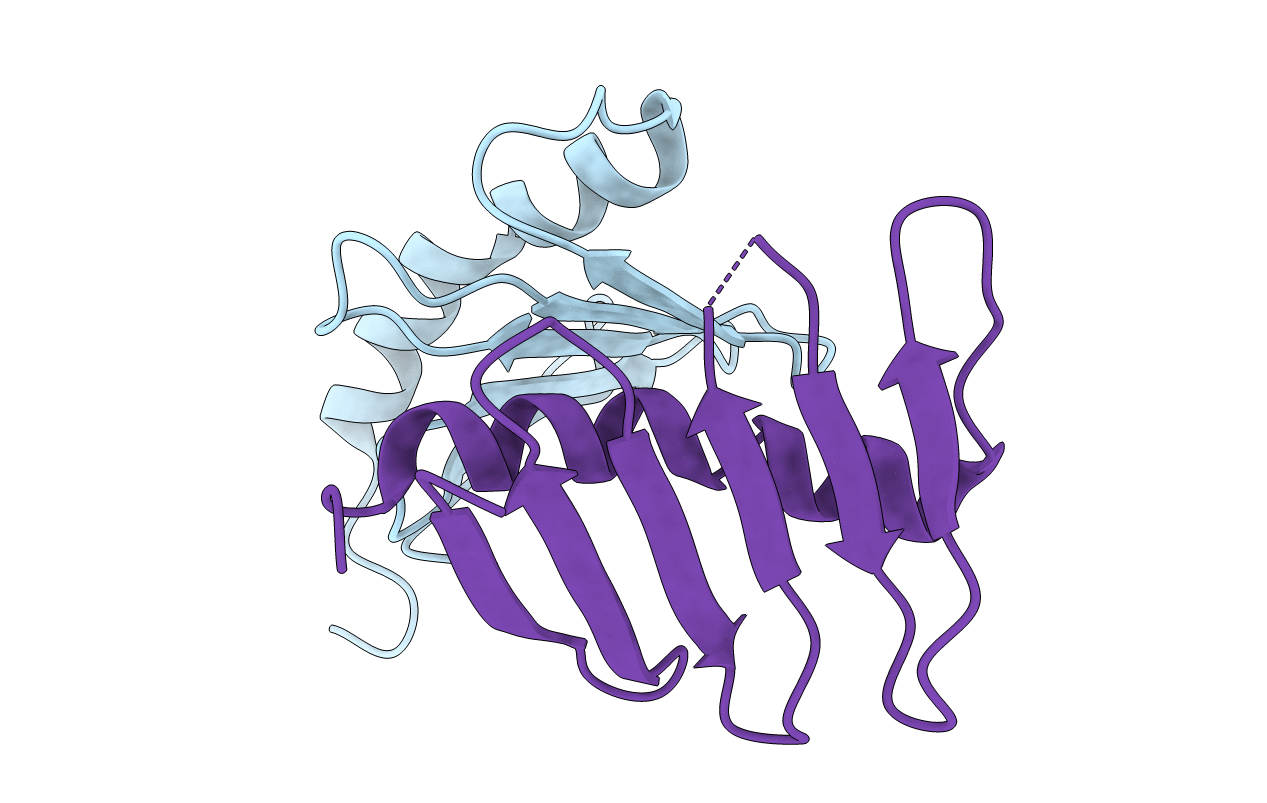
7RL3 image
Deposition Date 2021-07-23
Release Date 2022-08-03
Last Version Date 2023-08-16
Entry Detail
PDB ID:
7RL3
Title:
Structure of Drosophila melanogaster Plk4 PB3
Biological Source:
Source Organism(s):
Expression System(s):
Method Details:
Experimental Method:
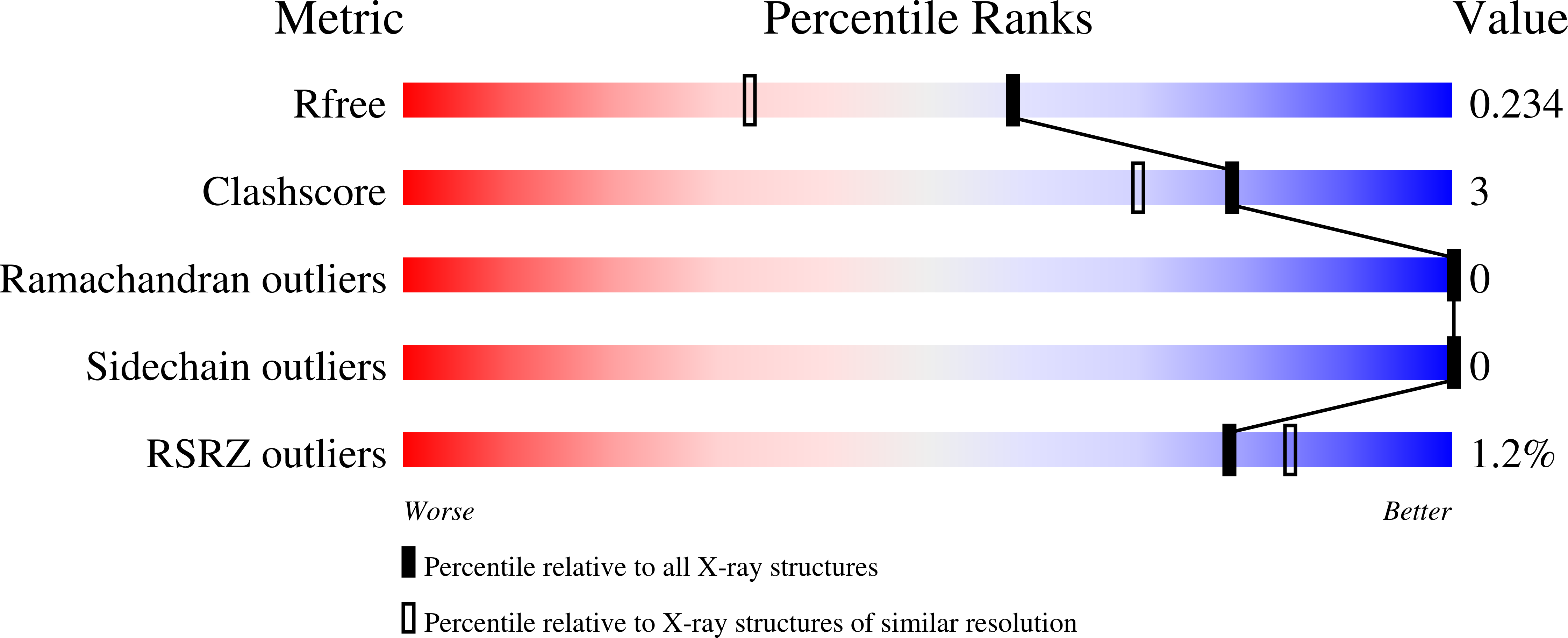
Resolution:
1.75 Å
R-Value Free:
0.23
R-Value Work:
0.19
R-Value Observed:
0.19
Space Group:
P 1 21 1
Macromolecular Entities
Structures with similar UniProt ID
Protein Blast
Polymer Type:polypeptide(L)
Molecule:Serine/threonine-protein kina
Gene (Uniprot):SAK
Chain IDs:A, B
Chain Length:93
Number of Molecules:2
Biological Source:Drosophila melanogaster
Primary Citation
Polo-like kinase 4 homodimerization and condensate formation regulate its own protein levels but are not required for centriole assembly.
Mol. Biol. Cell 34 ar80 ar80 (2023)
PMID: 37163316 DOI: 10.1091/mbc.E22-12-0572

Abstact

Polo-like kinase 4 (Plk4) is the master-regulator of centriole assembly, and cell cycle-dependent regulation of its activity maintains proper centrosome number. During most of the cell cycle, Plk4 levels are nearly undetectable due to its ability to autophosphorylate and trigger its own ubiquitin-mediated degradation. However, during mitotic exit, Plk4 forms a single aggregate on the centriole surface to stimulate centriole duplication. Whereas most Polo-like kinase family members are monomeric, Plk4 is unique because it forms homodimers. Notably, Plk4 trans-autophosphorylates a degron near its kinase domain, a critical step in autodestruction. While it is thought that the purpose of homodimerization is to promote trans-autophosphorylation, this has not been tested. Here, we generated separation-of-function Plk4 mutants that fail to dimerize and show that homodimerization creates a binding site for the Plk4 activator, Asterless. Surprisingly, however, Plk4 dimer mutants are catalytically active in cells, promote centriole assembly, and can trans-autophosphorylate through concentration-dependent condensate formation. Moreover, we mapped and then deleted the weak-interacting regions within Plk4 that mediate condensation and conclude that dimerization and condensation are not required for centriole assembly. Our findings suggest that Plk4 dimerization and condensation function simply to down-regulate Plk4 and suppress centriole overduplication.

Legend

Protein

Chemical

Disease

Primary Citation of related structures
Feedback Form
Name
Email
Institute
Feedback