

7MDH image
Deposition Date 1999-02-16
Release Date 1999-06-04
Last Version Date 2024-10-30
Entry Detail
PDB ID:
7MDH
Title:
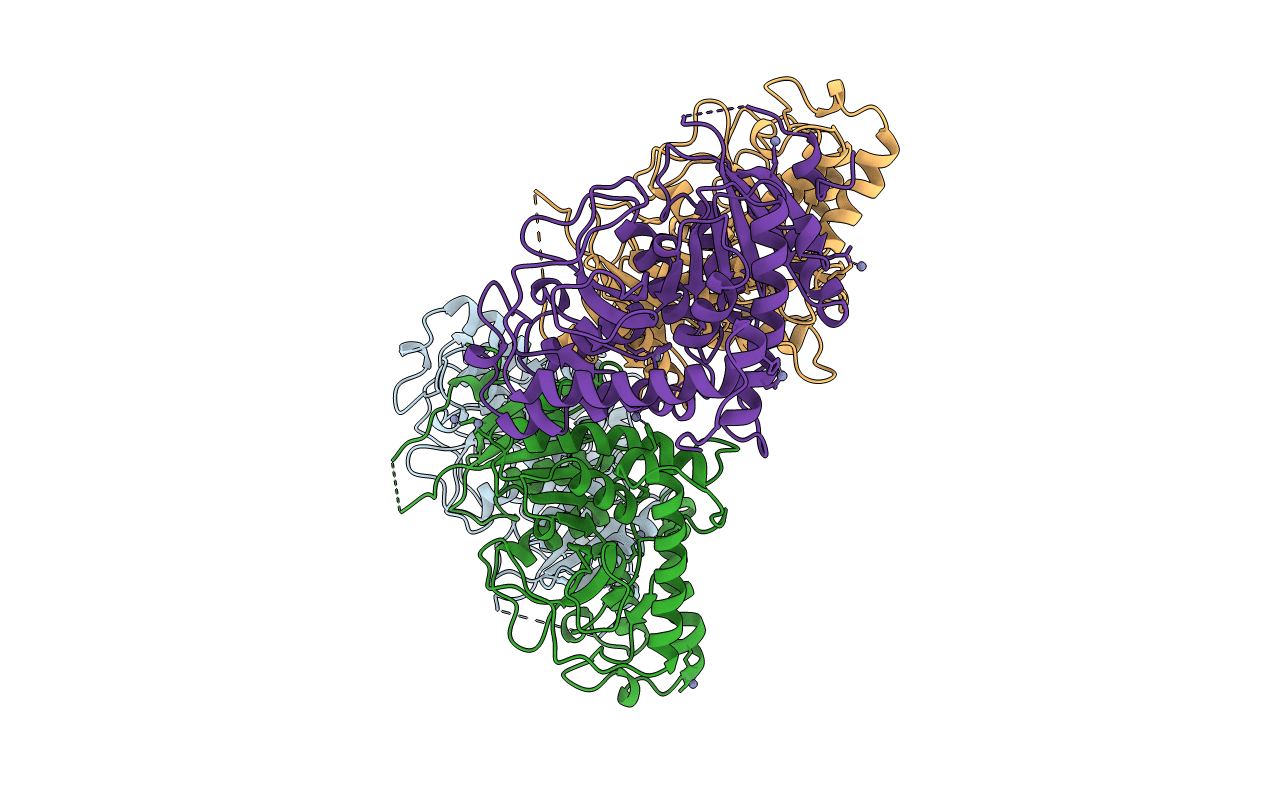
STRUCTURAL BASIS FOR LIGHT ACITVATION OF A CHLOROPLAST ENZYME. THE STRUCTURE OF SORGHUM NADP-MALATE DEHYDROGENASE IN ITS OXIDIZED FORM
Biological Source:
Source Organism(s):
Sorghum bicolor (Taxon ID: 4558)
Expression System(s):
Method Details:
Experimental Method:
Resolution:
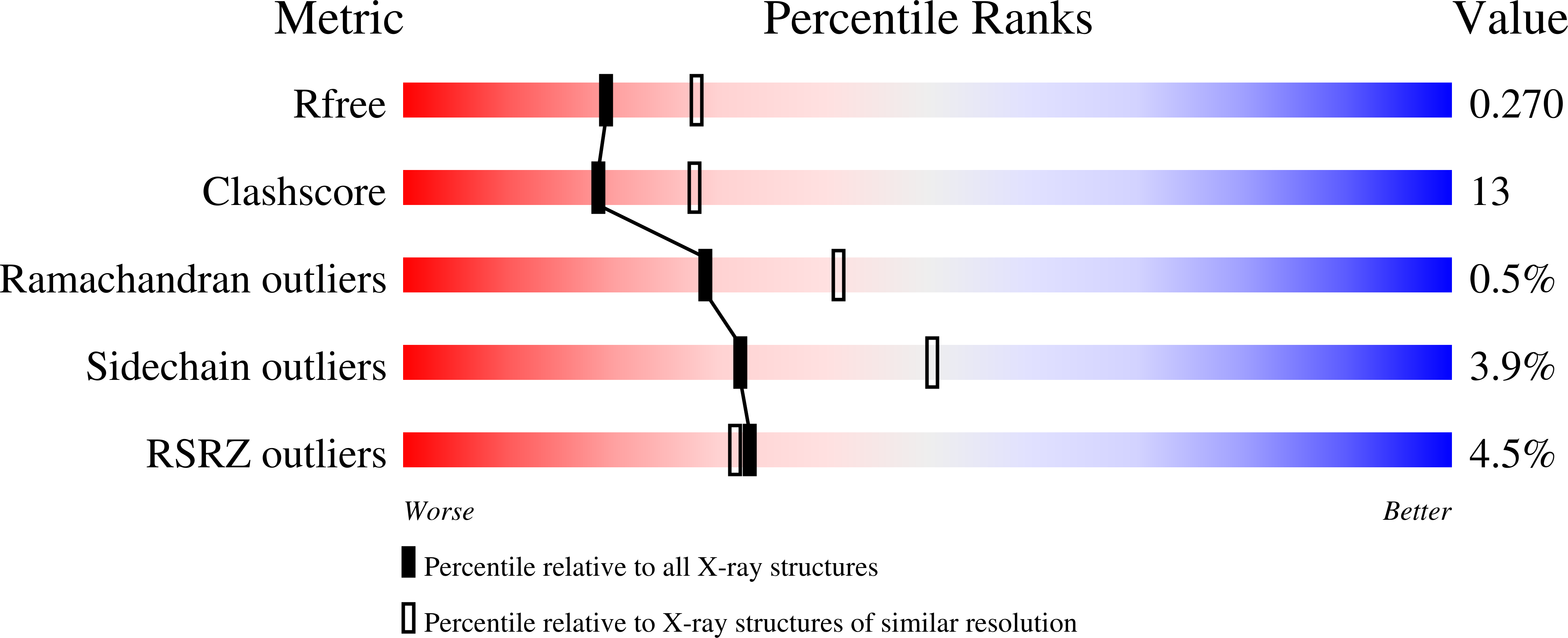
2.40 Å
R-Value Free:
0.27
R-Value Work:
0.22
Space Group:
C 2 2 21
Macromolecular Entities
Structures with similar UniProt ID
Protein Blast
Polymer Type:polypeptide(L)
Molecule:PROTEIN (MALATE DEHYDROGENASE
Mutagens:DELETION OF FIRST 15 N-TERMINAL RESIDUES
Chain IDs:A, B, C, D
Chain Length:375
Number of Molecules:4
Biological Source:Sorghum bicolor
Ligand Molecules
Primary Citation
Structural basis for light activation of a chloroplast enzyme: the structure of sorghum NADP-malate dehydrogenase in its oxidized form.
Biochemistry 38 4319 4326 (1999)
PMID: 10194350 DOI: 10.1021/bi982876c

Abstact

Some key chloroplast enzymes are activated by light via a ferredoxin-thioredoxin reduction system which reduces disulfide bridges in the enzymes. We describe for the first time the structural basis for the redox activation of a chloroplast enzyme, the NADP-dependent malate dehydrogenase (MDH) from Sorghum vulgare whose structure has been determined and refined at 2.4 A resolution. In addition to the normal structural components of MDHs, the enzyme exhibits extensions at both the N- and C-termini, each of which contains a regulatory disulfide bridge which must be reduced for activation. The N-terminal disulfide motif is inserted in a cleft between the two subunits of the dimer, thereby locking the domains in each subunit. The C-terminal disulfide keeps the C-terminal residues tight to the enzyme surface and blocks access to the active site. Reduction of the N-terminal disulfide would release the stopper between the domains and give the enzyme the necessary flexibility. Simultaneous reduction of the C-terminal disulfide would free the C-terminal residues from binding to the enzyme and make the active site accessible.

Legend

Protein

Chemical

Disease

Primary Citation of related structures
Feedback Form
Name
Email
Institute
Feedback