

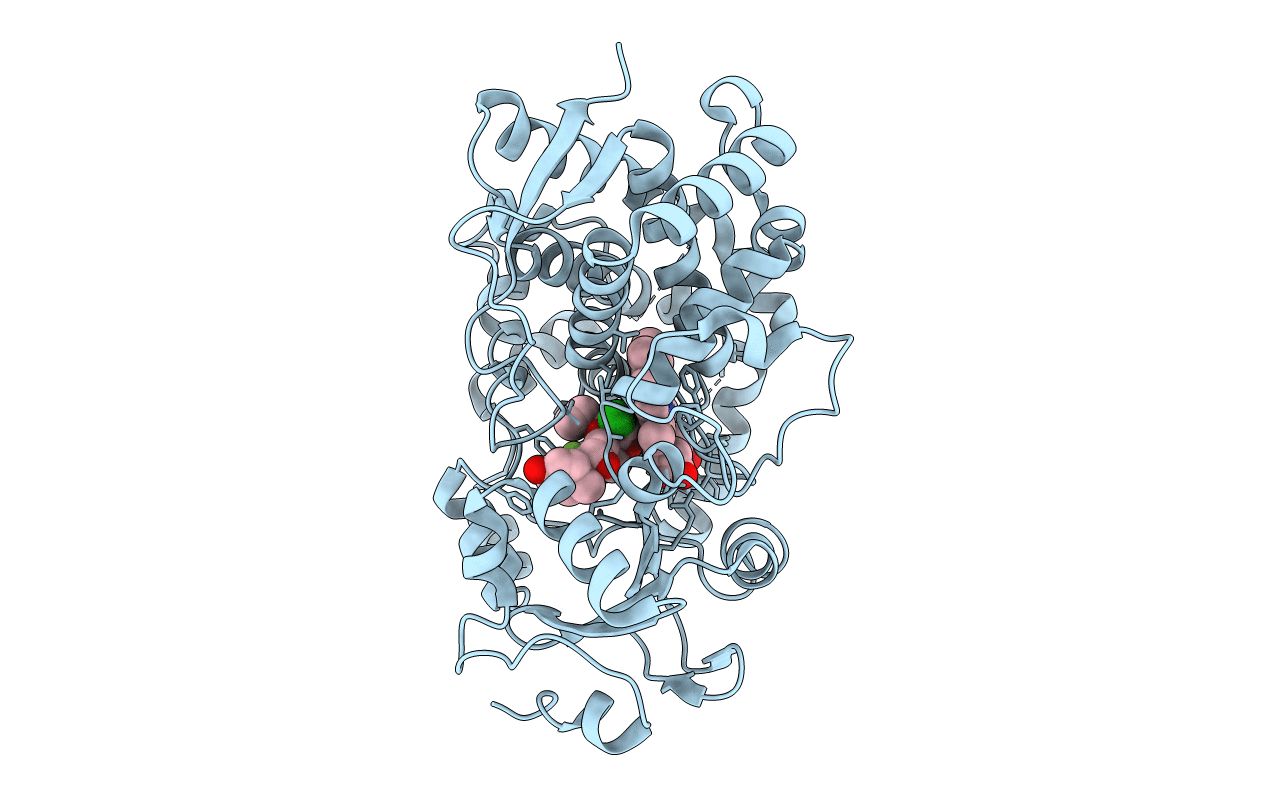
7LAD image
Deposition Date 2021-01-06
Release Date 2021-10-27
Last Version Date 2023-10-18
Entry Detail
PDB ID:
7LAD
Title:
Clobetasol propionate bound to CYP3A5
Biological Source:
Source Organism(s):
Homo sapiens (Taxon ID: 9606)
Expression System(s):
Method Details:
Experimental Method:
Resolution:
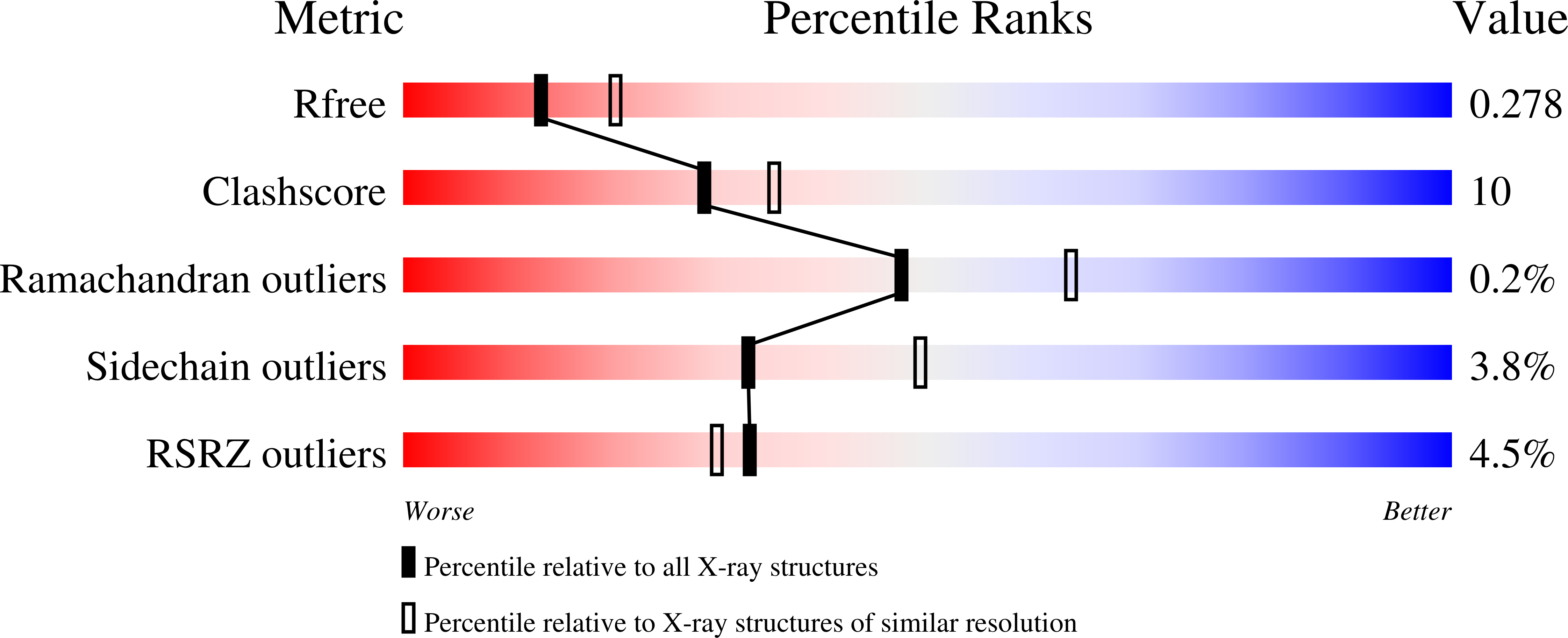
2.65 Å
R-Value Free:
0.27
R-Value Work:
0.24
R-Value Observed:
0.25
Space Group:
I 2 2 2
Macromolecular Entities
Structures with similar UniProt ID
Protein Blast
Polymer Type:polypeptide(L)
Molecule:Cytochrome P450 3A5
Gene (Uniprot):CYP3A5
Chain IDs:A
Chain Length:481
Number of Molecules:1
Biological Source:Homo sapiens
Primary Citation
Unraveling the Structural Basis of Selective Inhibition of Human Cytochrome P450 3A5.
J. Am. Chem. Soc. 143 18467 18480 (2021)
PMID: 34648292 DOI: 10.1021/jacs.1c07066

Abstact

The human cytochrome P450 (CYP) CYP3A4 and CYP3A5 enzymes metabolize more than one-half of marketed drugs. They share high structural and substrate similarity and are often studied together as CYP3A4/5. However, CYP3A5 preferentially metabolizes several clinically prescribed drugs, such as tacrolimus. Genetic polymorphism in CYP3A5 makes race-based dosing adjustment of tacrolimus necessary to minimize acute rejection after organ transplantation. Moreover, the differential tissue distribution and expression levels of CYP3A4 and CYP3A5 can aggravate toxicity during treatment. Therefore, selective inhibitors of CYP3A5 are needed to distinguish the role of CYP3A5 from that of CYP3A4 and serve as starting points for potential therapeutic development. To this end, we report the crystal structure of CYP3A5 in complex with a previously reported selective inhibitor, clobetasol propionate (CBZ). This is the first CYP3A5 structure with a type I inhibitor, which along with the previously reported substrate-free and type II inhibitor-bound structures, constitute the main CYP3A5 structural modalities. Supported by structure-guided mutagenesis analyses, the CYP3A5-CBZ structure showed that a unique conformation of the F-F' loop in CYP3A5 enables selective binding of CBZ to CYP3A5. Several polar interactions, including hydrogen bonds, stabilize the position of CBZ to interact with this unique F-F' loop conformation. In addition, functional and biophysical assays using CBZ analogs highlight the importance of heme-adjacent moieties for selective CYP3A5 inhibition. Our findings can be used to guide further development of more potent and selective CYP3A5 inhibitors.

Legend

Protein

Chemical

Disease

Primary Citation of related structures
Feedback Form
Name
Email
Institute
Feedback