

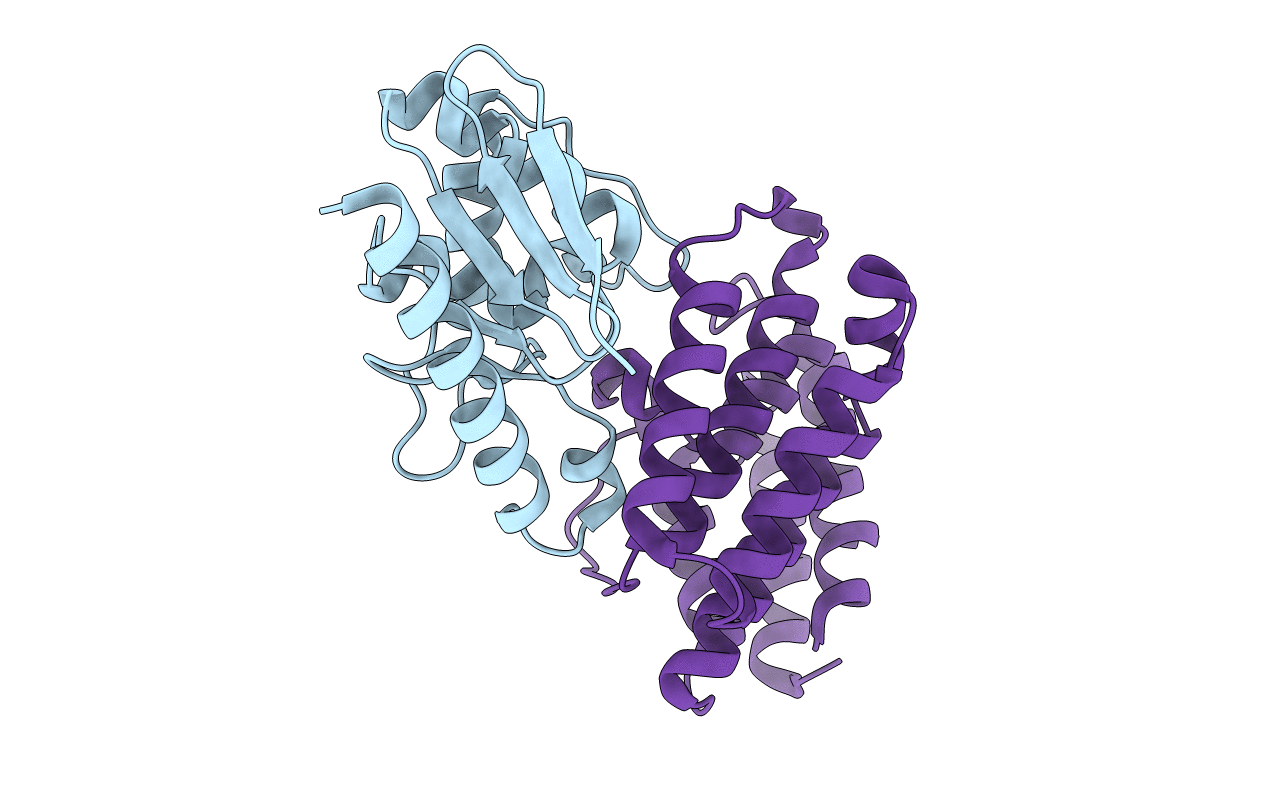
7JTU image
Deposition Date 2020-08-18
Release Date 2021-03-31
Last Version Date 2024-11-20
Entry Detail
PDB ID:
7JTU
Keywords:
Title:
Cytidine deaminase T6S toxin from Pseudomonas syringae
Biological Source:
Source Organism(s):
Expression System(s):
Method Details:
Experimental Method:
Resolution:
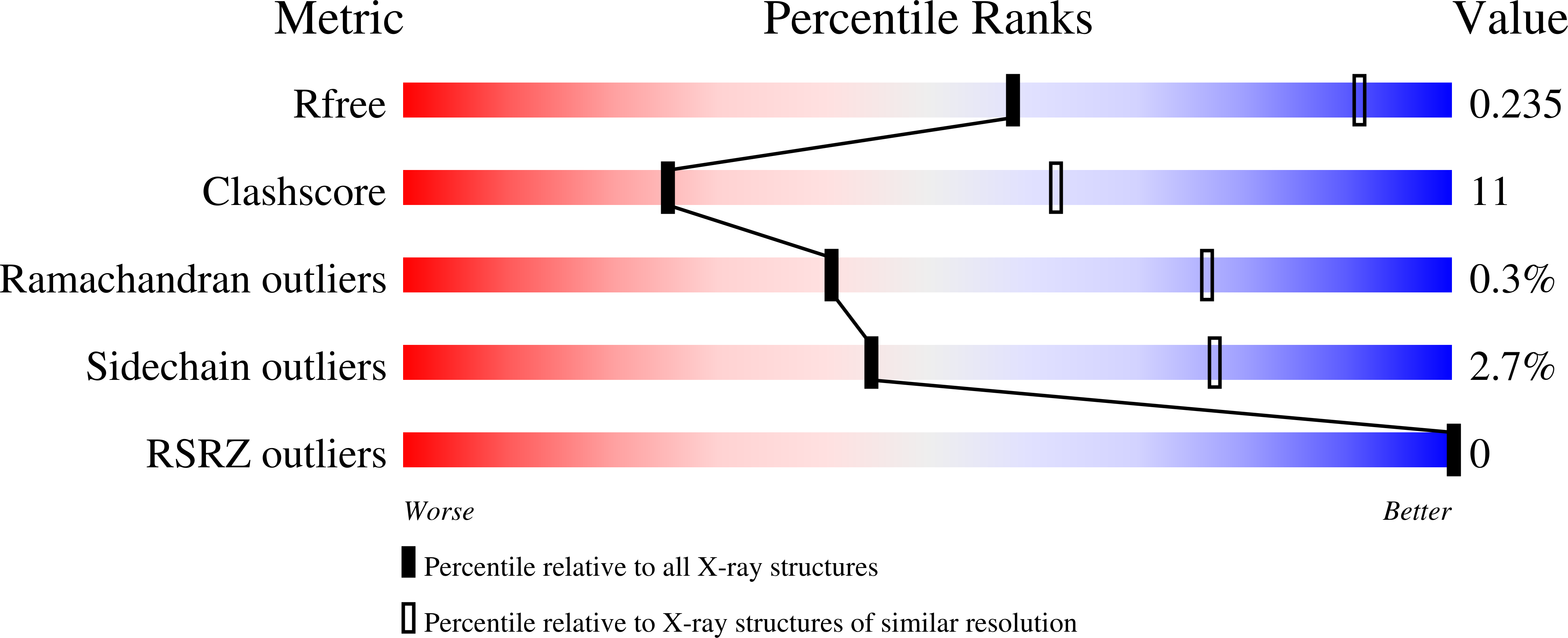
3.00 Å
R-Value Free:
0.23
R-Value Work:
0.20
R-Value Observed:
0.20
Space Group:
I 41 2 2
Macromolecular Entities
Structures with similar UniProt ID
Protein Blast
Polymer Type:polypeptide(L)
Molecule:SsdA
Gene (Uniprot):ALQ37_00950
Chain IDs:A
Chain Length:165
Number of Molecules:1
Biological Source:Pseudomonas syringae
Polymer Type:polypeptide(L)
Molecule:SsdAI
Chain IDs:B
Chain Length:193
Number of Molecules:1
Biological Source:Pseudomonas syringae
Modified Residue
Compound ID Chain ID Parent Comp ID Details 2D Image
MSE A MET modified residue
Primary Citation
An interbacterial DNA deaminase toxin directly mutagenizes surviving target populations.
Elife 10 ? ? (2021)
PMID: 33448264 DOI: 10.7554/eLife.62967

Abstact

When bacterial cells come in contact, antagonism mediated by the delivery of toxins frequently ensues. The potential for such encounters to have long-term beneficial consequences in recipient cells has not been investigated. Here, we examined the effects of intoxication by DddA, a cytosine deaminase delivered via the type VI secretion system (T6SS) of Burkholderia cenocepacia. Despite its killing potential, we observed that several bacterial species resist DddA and instead accumulate mutations. These mutations can lead to the acquisition of antibiotic resistance, indicating that even in the absence of killing, interbacterial antagonism can have profound consequences on target populations. Investigation of additional toxins from the deaminase superfamily revealed that mutagenic activity is a common feature of these proteins, including a representative we show targets single-stranded DNA and displays a markedly divergent structure. Our findings suggest that a surprising consequence of antagonistic interactions between bacteria could be the promotion of adaptation via the action of directly mutagenic toxins.

Legend

Protein

Chemical

Disease

Primary Citation of related structures
Feedback Form
Name
Email
Institute
Feedback