

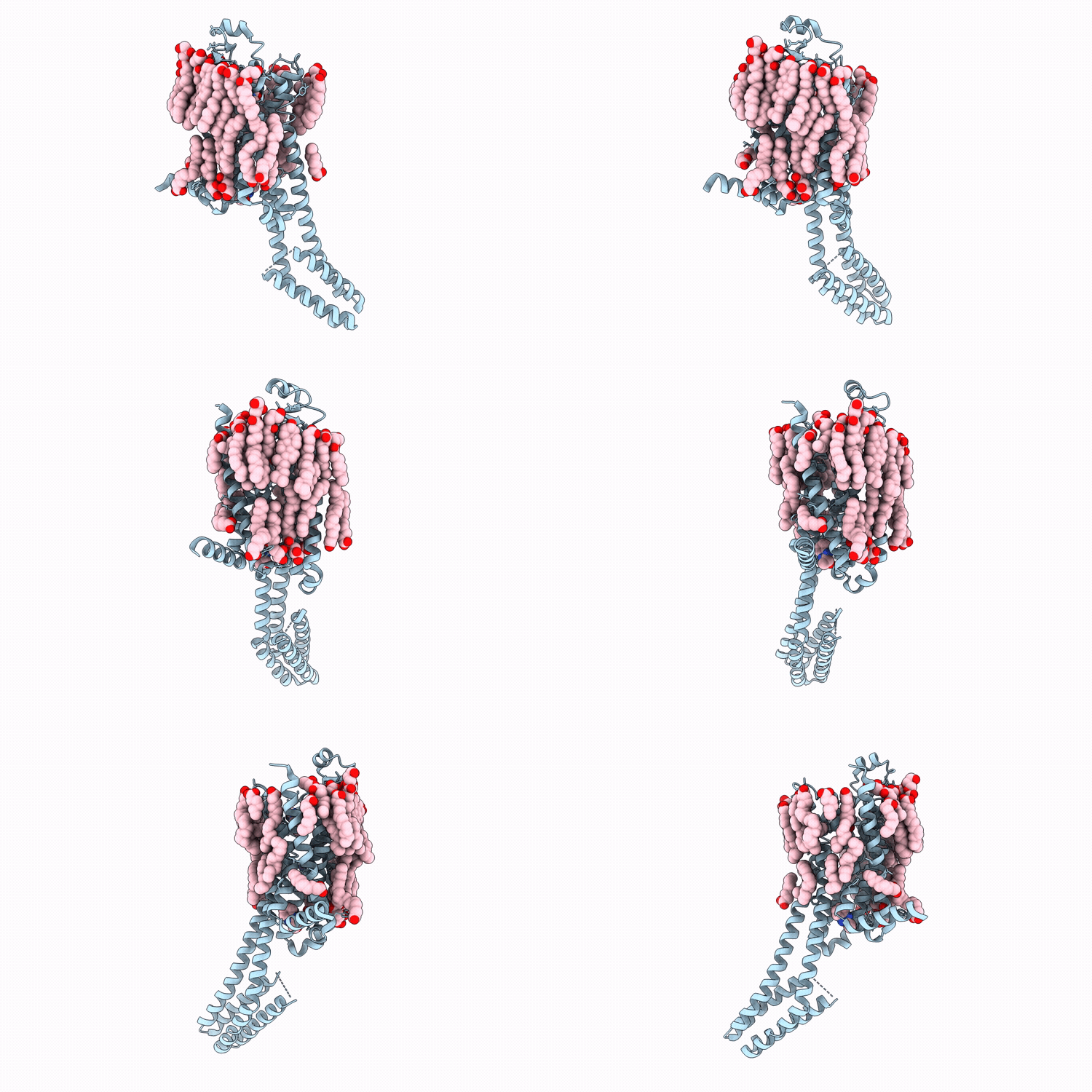
7INC image
Deposition Date 2025-08-21
Release Date 2026-05-20
Last Version Date 2026-05-20
Entry Detail
PDB ID:
7INC
Title:
Crystal structure of A2A in complex with F7
Biological Source:
Source Organism(s):
Homo sapiens (Taxon ID: 9606)
Escherichia coli (Taxon ID: 562)
Expression System(s):
Method Details:
Experimental Method:
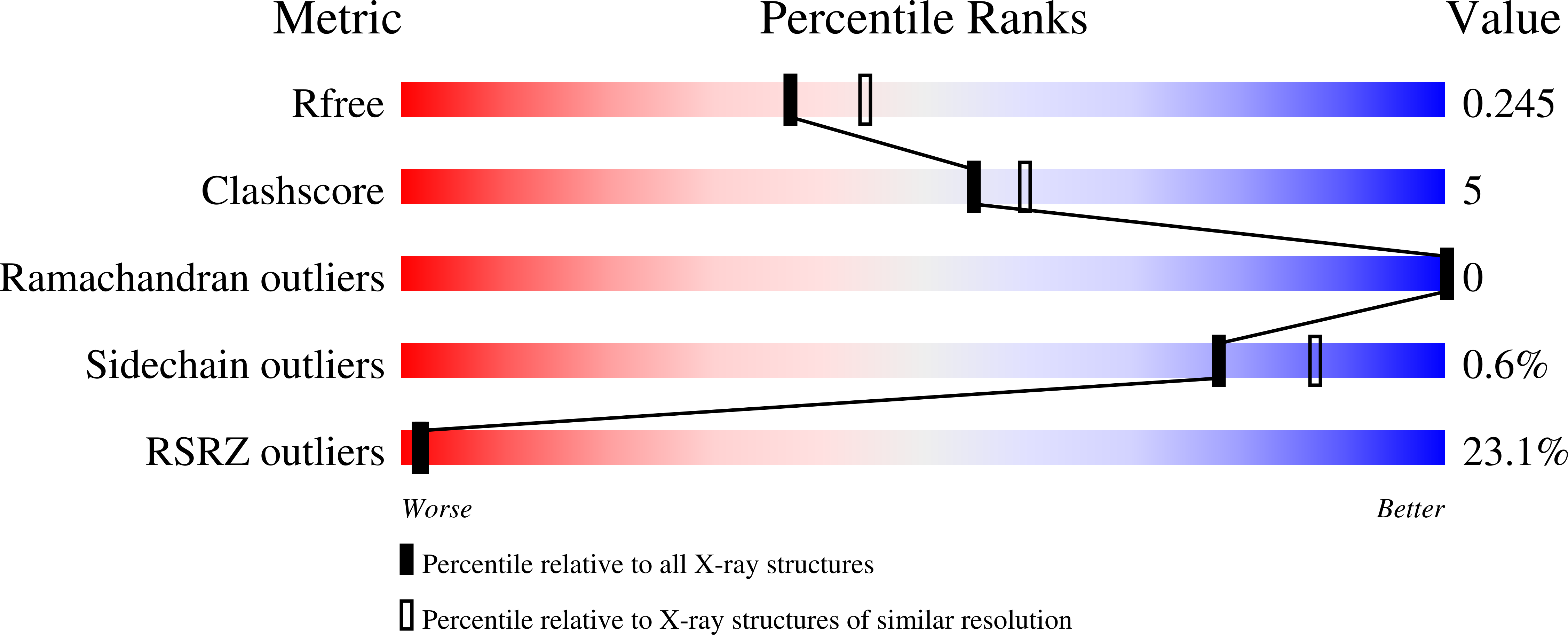
Resolution:
2.18 Å
R-Value Free:
0.24
R-Value Work:
0.23
R-Value Observed:
0.23
Space Group:
C 2 2 21
Macromolecular Entities
Protein Blast
Polymer Type:polypeptide(L)
Molecule:Adenosine receptor A2a/Solubl
Gene (Uniprot):cybC, ADORA2A
Mutagens:A54L,T88A,R107A,K122A,N154A,L202A,L235A,V239A
Chain IDs:A
Chain Length:433
Number of Molecules:1
Biological Source:Homo sapiens, Escherichia coli
Primary Citation
An integrated experimental and computational pipeline for crystallographic fragment screening of membrane protein in the lipid cubic phase.
Commun Chem ? ? ? (2026)
PMID: 42129437 DOI: 10.1038/s42004-026-02059-7

Abstact

X-ray crystallographic fragment screening is a powerful strategy in modern drug discovery, enabling the identification of small-molecule starting points for rational hit-to-lead optimization. While highly effective for soluble proteins, its application to membrane proteins remains challenging due to low expression yields, high hydrophobicity, and the complexities of crystallization-particularly when using lipid cubic phase (LCP), which is often essential for high-resolution structural studies of targets like G-protein-coupled receptors (GPCRs). In this study, we present a methodology that integrates high-throughput X-ray crystallography with computational modeling and complementary biophysical validation to overcome these barriers. Using a thermostabilized human adenosine A(2A) receptor crystallized in LCP as a test system, we screened 568 fragments and identified 23 initial hits. The work represents the first large-scale fragment screening effort targeting crystals of a membrane protein grown in LCP. Structure-guided virtual screening of these hits led to the design of 109 follow-up compounds, of which 56 yielded crystal structures. Of these, 19 were additionally confirmed to bind by grating-coupled interferometry (GCI), providing complementary biophysical validation. Our results demonstrated the feasibility and effectiveness of this integrated approach for fragment-based drug discovery on membrane proteins crystallized in LCP. Moreover, the detection of ligands at a previously uncharacterized intracellular pocket in a GPCR highlights the potential of this strategy to accelerate the discovery of therapeutically relevant compounds for challenging drug targets.

Legend

Protein

Chemical

Disease

Primary Citation of related structures
Feedback Form
Name
Email
Institute
Feedback