

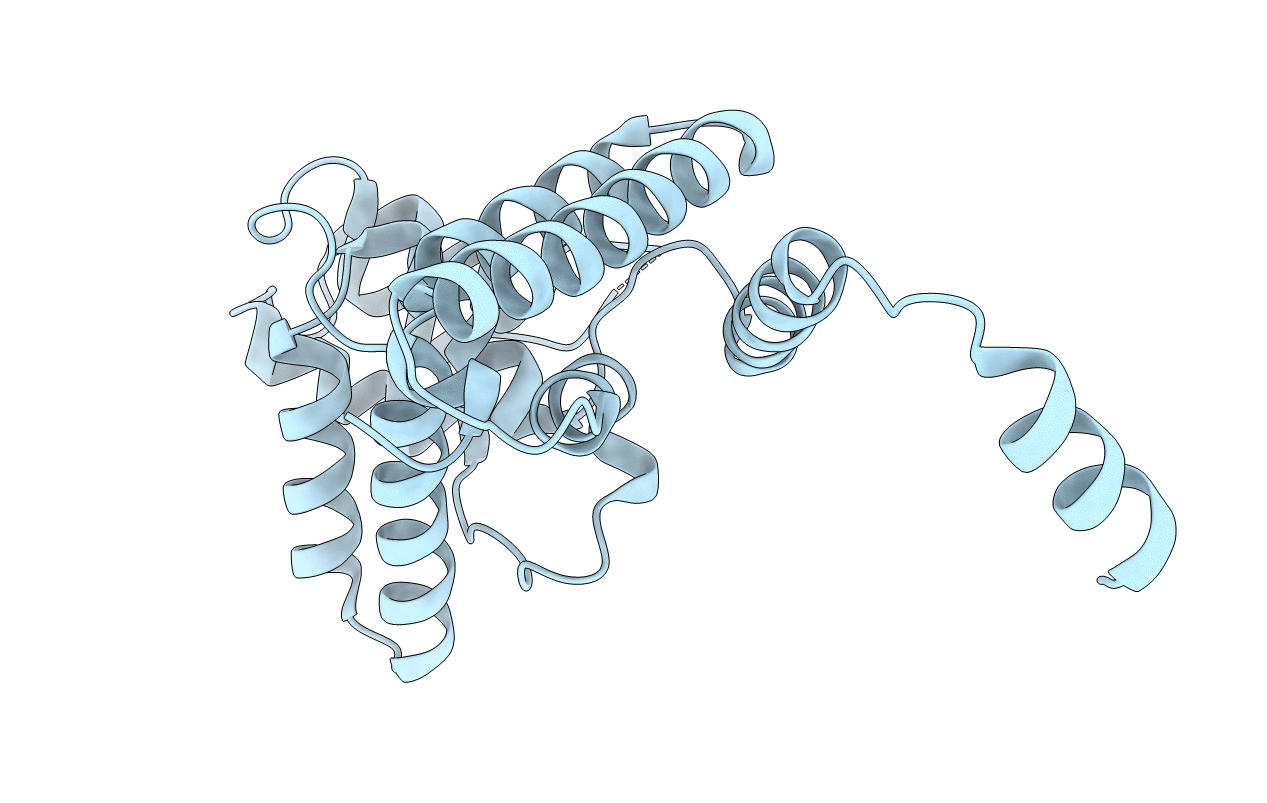
7D9Y image
Deposition Date 2020-10-14
Release Date 2021-02-24
Last Version Date 2023-11-29
Entry Detail
PDB ID:
7D9Y
Keywords:
Title:
DNA binding domain of human DNA Ligase IV mutant - A3V
Biological Source:
Source Organism(s):
Homo sapiens (Taxon ID: 9606)
Expression System(s):
Method Details:
Experimental Method:
Resolution:
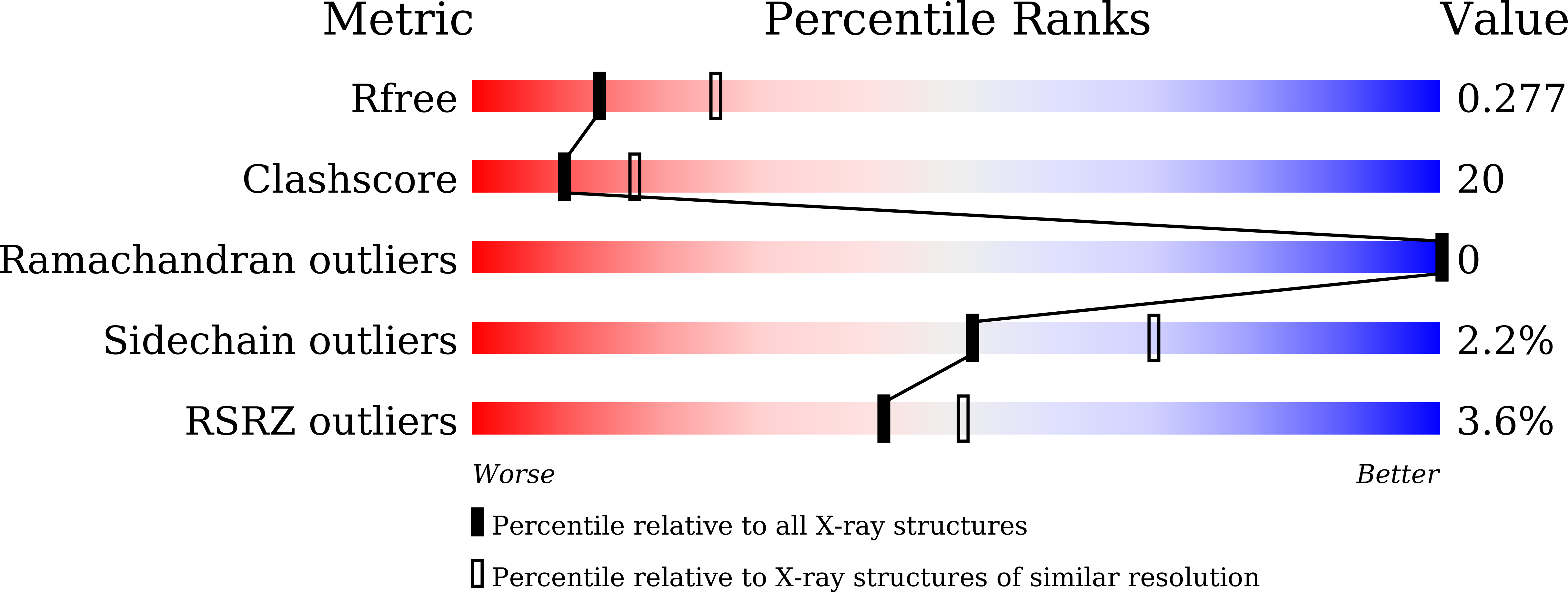
2.76 Å
R-Value Free:
0.27
R-Value Work:
0.23
R-Value Observed:
0.23
Space Group:
F 41 3 2
Macromolecular Entities
Structures with similar UniProt ID
Protein Blast
Polymer Type:polypeptide(L)
Molecule:DNA ligase 4
Gene (Uniprot):LIG4
Mutagens:A3V
Chain IDs:A
Chain Length:243
Number of Molecules:1
Biological Source:Homo sapiens
Primary Citation
Hypomorphic mutations in human DNA ligase IV lead to compromised DNA binding efficiency, hydrophobicity and thermal stability.
Protein Eng. Des. Sel. 34 ? ? (2021)
PMID: 33586762 DOI: 10.1093/protein/gzab001

Abstact

Studies have shown that Lig4 syndrome mutations in DNA ligase IV (LigIV) are compromised in its function with residual level of double strand break ligation activity in vivo. It was speculated that Lig4 syndrome mutations adversely affect protein folding and stability. Though there are crystal structures of LigIV, there are no reports of crystal structures of Lig4 syndrome mutants and their biophysical characterization to date. Here, we have examined the conformational states, thermal stability, hydrophobicity and DNA binding efficiency of human DNA LigIV wild type and its hypomorphic mutants by far-UV circular dichroism, tyrosine and tryptophan fluorescence, and 1-anilino-8-naphthalene-sulfonate binding, dynamic light scattering, size exclusion chromatography, multi-angle light scattering and electrophoretic mobility shift assay. We show here that LigIV hypomorphic mutants have reduced DNA-binding efficiency, a shift in secondary structure content from the helical to random coil, marginal reduction in their thermal stability and increased hydrophobicity as compared to the wild-type LigIV.

Legend

Protein

Chemical

Disease

Primary Citation of related structures
Feedback Form
Name
Email
Institute
Feedback