

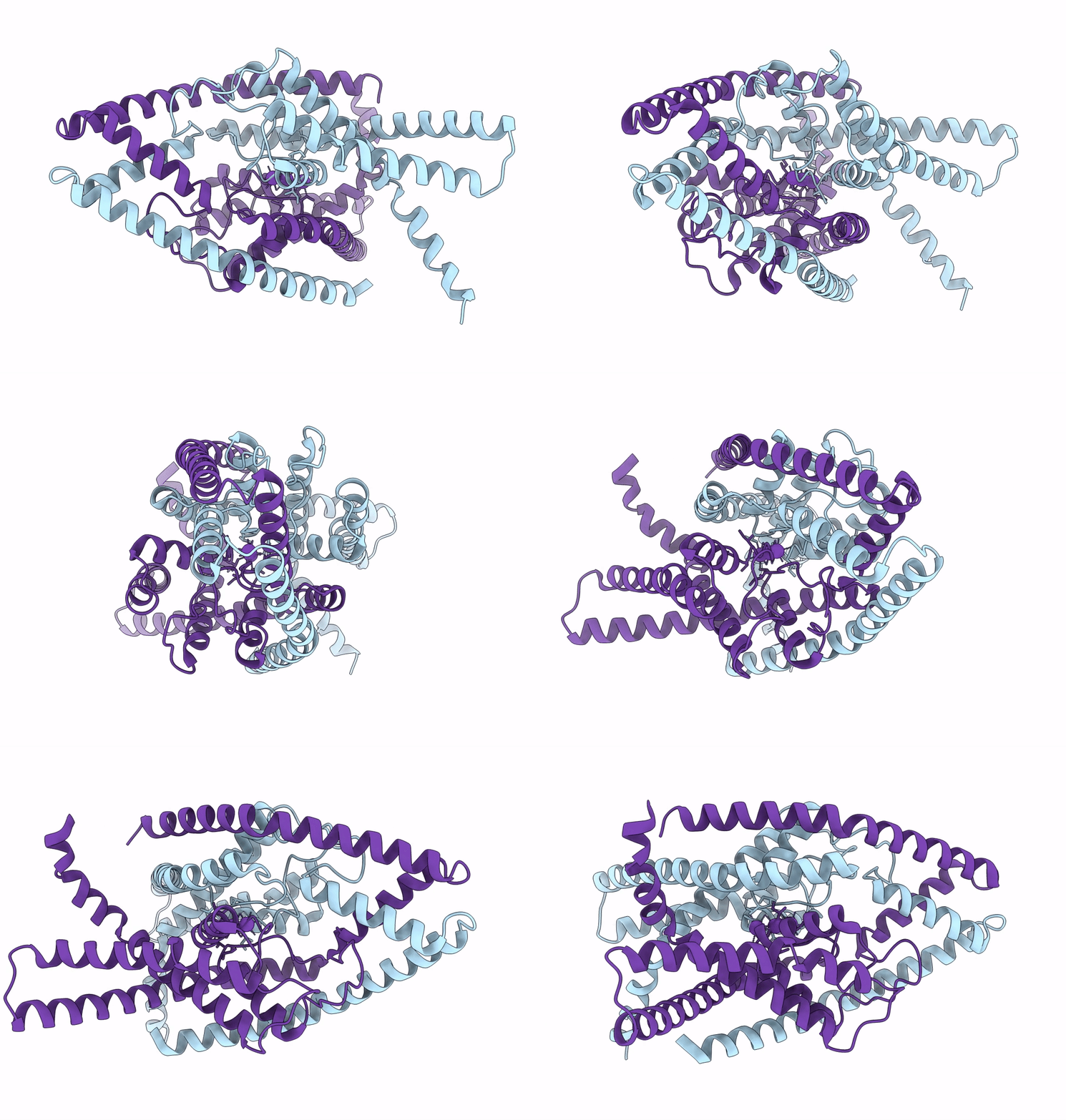
6WLV image
Deposition Date 2020-04-20
Release Date 2020-07-15
Last Version Date 2024-10-23
Entry Detail
PDB ID:
6WLV
Title:
TASK2 in MSP1D1 lipid nanodisc at pH 6.5
Biological Source:
Source Organism(s):
Mus musculus (Taxon ID: 10090)
Expression System(s):
Method Details:
Experimental Method:
Resolution:
3.45 Å
Aggregation State:
PARTICLE
Reconstruction Method:
SINGLE PARTICLE
Macromolecular Entities
Structures with similar UniProt ID
Protein Blast
Polymer Type:polypeptide(L)
Molecule:Potassium channel TASK2
Gene (Uniprot):Kcnk5
Chain IDs:A, B
Chain Length:343
Number of Molecules:2
Biological Source:Mus musculus
Ligand Molecules
Primary Citation
Structural basis for pH gating of the two-pore domain K + channel TASK2.
Nature 586 457 462 (2020)
PMID: 32999458 DOI: 10.1038/s41586-020-2770-2

Abstact

TASK2 (also known as KCNK5) channels generate pH-gated leak-type K+ currents to control cellular electrical excitability1-3. TASK2 is involved in the regulation of breathing by chemosensory neurons of the retrotrapezoid nucleus in the brainstem4-6 and pH homeostasis by kidney proximal tubule cells7,8. These roles depend on channel activation by intracellular and extracellular alkalization3,8,9, but the mechanistic basis for TASK2 gating by pH is unknown. Here we present cryo-electron microscopy structures of Mus musculus TASK2 in lipid nanodiscs in open and closed conformations. We identify two gates, distinct from previously observed K+ channel gates, controlled by stimuli on either side of the membrane. Intracellular gating involves lysine protonation on inner helices and the formation of a protein seal between the cytoplasm and the channel. Extracellular gating involves arginine protonation on the channel surface and correlated conformational changes that displace the K+-selectivity filter to render it nonconductive. These results explain how internal and external protons control intracellular and selectivity filter gates to modulate TASK2 activity.

Legend

Protein

Chemical

Disease

Primary Citation of related structures
Feedback Form
Name
Email
Institute
Feedback