

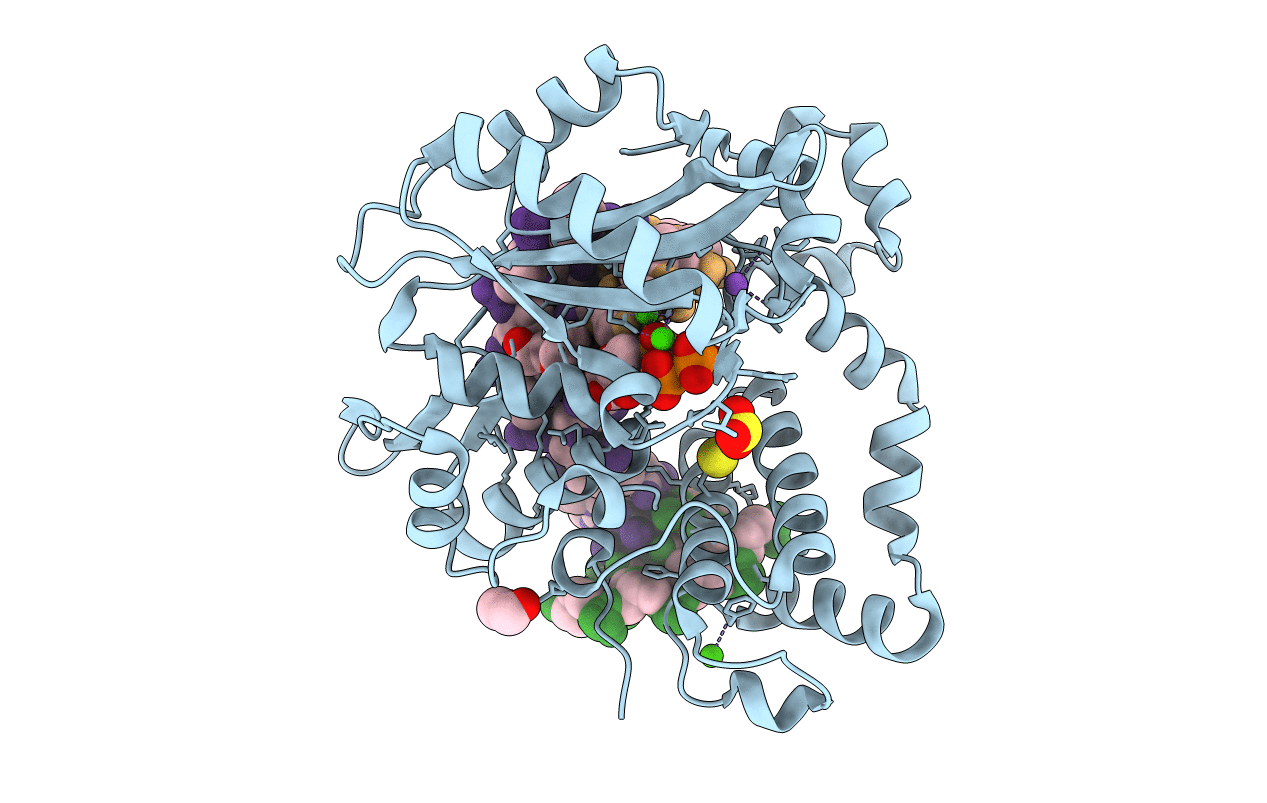
6VEZ image
Deposition Date 2020-01-03
Release Date 2021-09-01
Last Version Date 2024-10-23
Entry Detail
PDB ID:
6VEZ
Keywords:
Title:
DNA Polymerase Mu, 8-oxorGTP:At Pre-Catalytic Ternary Complex, 20 mM Ca2+ (60 min)
Biological Source:
Source Organism(s):
Expression System(s):
Method Details:
Experimental Method:
Resolution:
1.88 Å
R-Value Free:
0.20
R-Value Work:
0.16
R-Value Observed:
0.16
Space Group:
P 21 21 21
Macromolecular Entities
Structures with similar UniProt ID
Protein Blast
Polymer Type:polypeptide(L)
Molecule:DNA-directed DNA/RNA polymera
Gene (Uniprot):POLM
Chain IDs:A
Chain Length:356
Number of Molecules:1
Biological Source:Homo sapiens
Polymer Type:polydeoxyribonucleotide
Molecule:DNA (5'-D(P*GP*CP*CP*G)-3')
Chain IDs:D
Chain Length:4
Number of Molecules:1
Biological Source:synthetic construct
Polymer Type:polydeoxyribonucleotide
Molecule:DNA (5'-D(*CP*GP*TP*A)-3')
Chain IDs:C (auth: P)
Chain Length:4
Number of Molecules:1
Biological Source:synthetic construct
Polymer Type:polydeoxyribonucleotide
Molecule:DNA (5'-D(*CP*GP*GP*CP*AP*TP*
Chain IDs:B (auth: T)
Chain Length:9
Number of Molecules:1
Biological Source:synthetic construct
Primary Citation
Structural basis for proficient oxidized ribonucleotide insertion in double strand break repair.
Nat Commun 12 5055 5055 (2021)
PMID: 34417448 DOI: 10.1038/s41467-021-24486-x

Abstact

Reactive oxygen species (ROS) oxidize cellular nucleotide pools and cause double strand breaks (DSBs). Non-homologous end-joining (NHEJ) attaches broken chromosomal ends together in mammalian cells. Ribonucleotide insertion by DNA polymerase (pol) μ prepares breaks for end-joining and this is required for successful NHEJ in vivo. We previously showed that pol μ lacks discrimination against oxidized dGTP (8-oxo-dGTP), that can lead to mutagenesis, cancer, aging and human disease. Here we reveal the structural basis for proficient oxidized ribonucleotide (8-oxo-rGTP) incorporation during DSB repair by pol μ. Time-lapse crystallography snapshots of structural intermediates during nucleotide insertion along with computational simulations reveal substrate, metal and side chain dynamics, that allow oxidized ribonucleotides to escape polymerase discrimination checkpoints. Abundant nucleotide pools, combined with inefficient sanitization and repair, implicate pol μ mediated oxidized ribonucleotide insertion as an emerging source of widespread persistent mutagenesis and genomic instability.

Legend

Protein

Chemical

Disease

Primary Citation of related structures
Feedback Form
Name
Email
Institute
Feedback