

6TYD image
Deposition Date 2019-08-08
Release Date 2020-01-01
Last Version Date 2024-10-23
Entry Detail
PDB ID:
6TYD
Keywords:
Title:
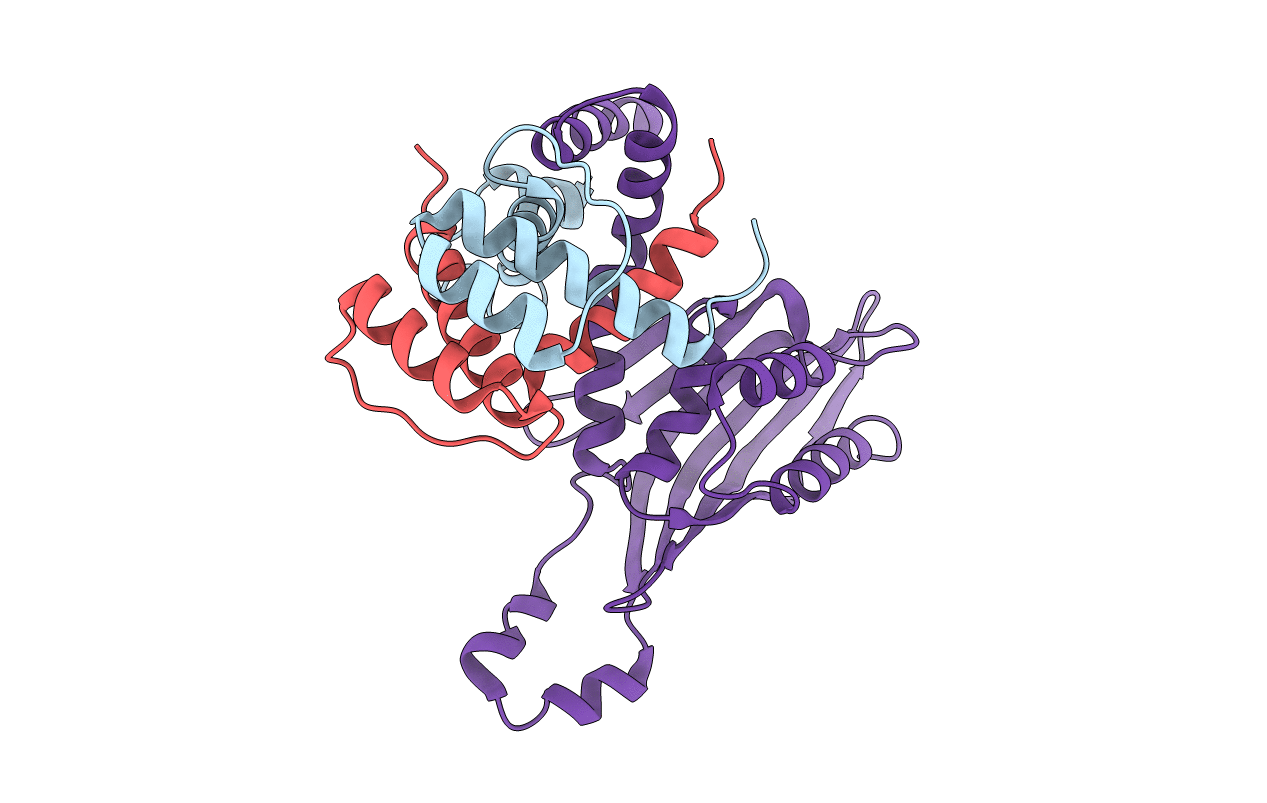
Structure of human LDB1 in complex with SSBP2
Biological Source:
Source Organism(s):
Homo sapiens (Taxon ID: 9606)
Expression System(s):
Method Details:
Experimental Method:
Resolution:
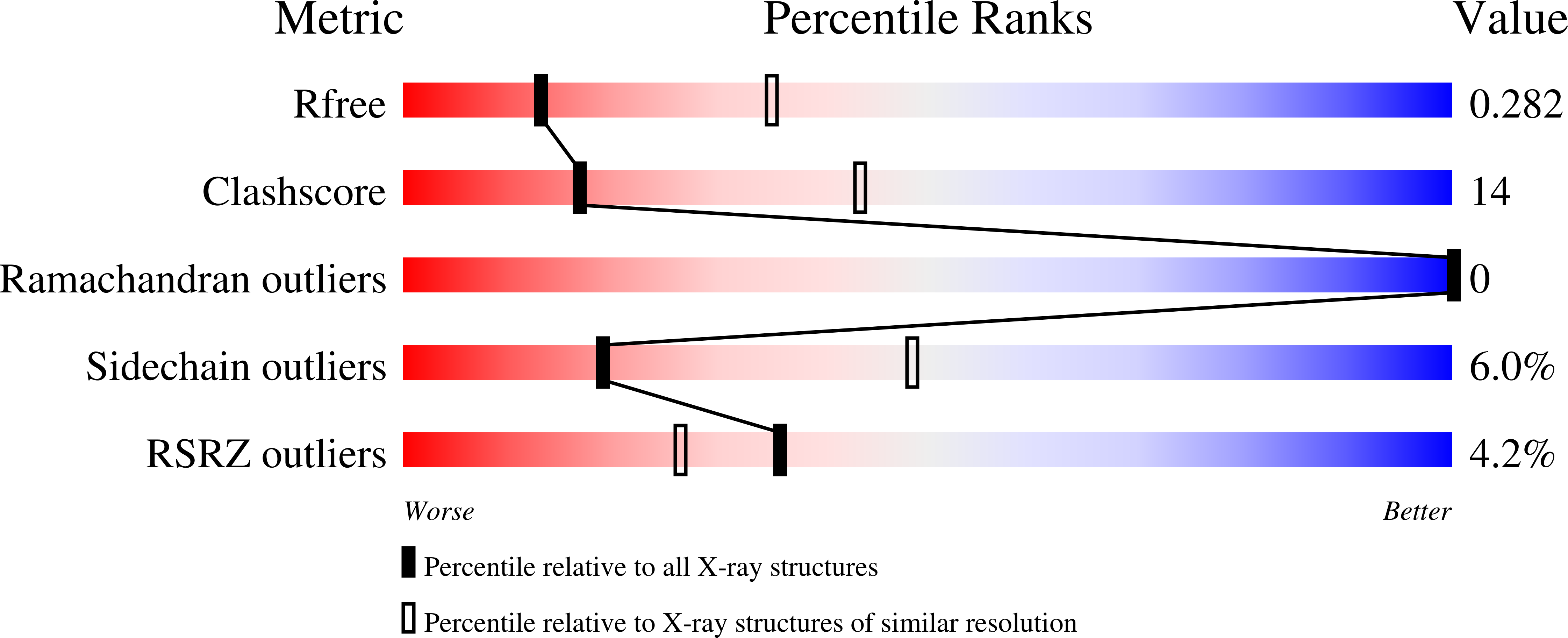
2.80 Å
R-Value Free:
0.28
R-Value Work:
0.24
R-Value Observed:
0.24
Space Group:
P 65 2 2
Macromolecular Entities
Structures with similar UniProt ID
Protein Blast
Polymer Type:polypeptide(L)
Molecule:Single-stranded DNA-binding p
Gene (Uniprot):SSBP2
Chain IDs:B (auth: A), C (auth: B)
Chain Length:95
Number of Molecules:2
Biological Source:Homo sapiens
Structures with similar UniProt ID
Protein Blast
Polymer Type:polypeptide(L)
Molecule:LIM domain-binding protein 1
Gene (Uniprot):LDB1
Chain IDs:A (auth: V)
Chain Length:231
Number of Molecules:1
Biological Source:Homo sapiens
Modified Residue
Compound ID Chain ID Parent Comp ID Details 2D Image
MSE A MET modified residue
Ligand Molecules
Primary Citation
Crystal structure of human LDB1 in complex with SSBP2.
Proc. Natl. Acad. Sci. U.S.A. 117 1042 1048 (2020)
PMID: 31892537 DOI: 10.1073/pnas.1914181117

Abstact

The Lim domain binding proteins (LDB1 and LDB2 in human and Chip in Drosophila) play critical roles in cell fate decisions through partnership with multiple Lim-homeobox and Lim-only proteins in diverse developmental systems including cardiogenesis, neurogenesis, and hematopoiesis. In mammalian erythroid cells, LDB1 dimerization supports long-range connections between enhancers and genes involved in erythropoiesis, including the β-globin genes. Single-stranded DNA binding proteins (SSBPs) interact specifically with the LDB/Chip conserved domain (LCCD) of LDB proteins and stabilize LDBs by preventing their proteasomal degradation, thus promoting their functions in gene regulation. The structural basis for LDB1 self-interaction and interface with SSBPs is unclear. Here we report a crystal structure of the human LDB1/SSBP2 complex at 2.8-Å resolution. The LDB1 dimerization domain (DD) contains an N-terminal nuclear transport factor 2 (NTF2)-like subdomain and a small helix 4-helix 5 subdomain, which together form the LDB1 dimerization interface. The 2 LCCDs in the symmetric LDB1 dimer flank the core DDs, with each LCCD forming extensive interactions with an SSBP2 dimer. The conserved linker between LDB1 DD and LCCD covers a potential ligand-binding pocket of the LDB1 NTF2-like subdomain and may serve as a regulatory site for LDB1 structure and function. Our structural and biochemical data provide a much-anticipated structural basis for understanding how LDB1 and the LDB1/SSBP interactions form the structural core of diverse complexes mediating cell choice decisions and long-range enhancer-promoter interactions.

Legend

Protein

Chemical

Disease

Primary Citation of related structures
Feedback Form
Name
Email
Institute
Feedback