

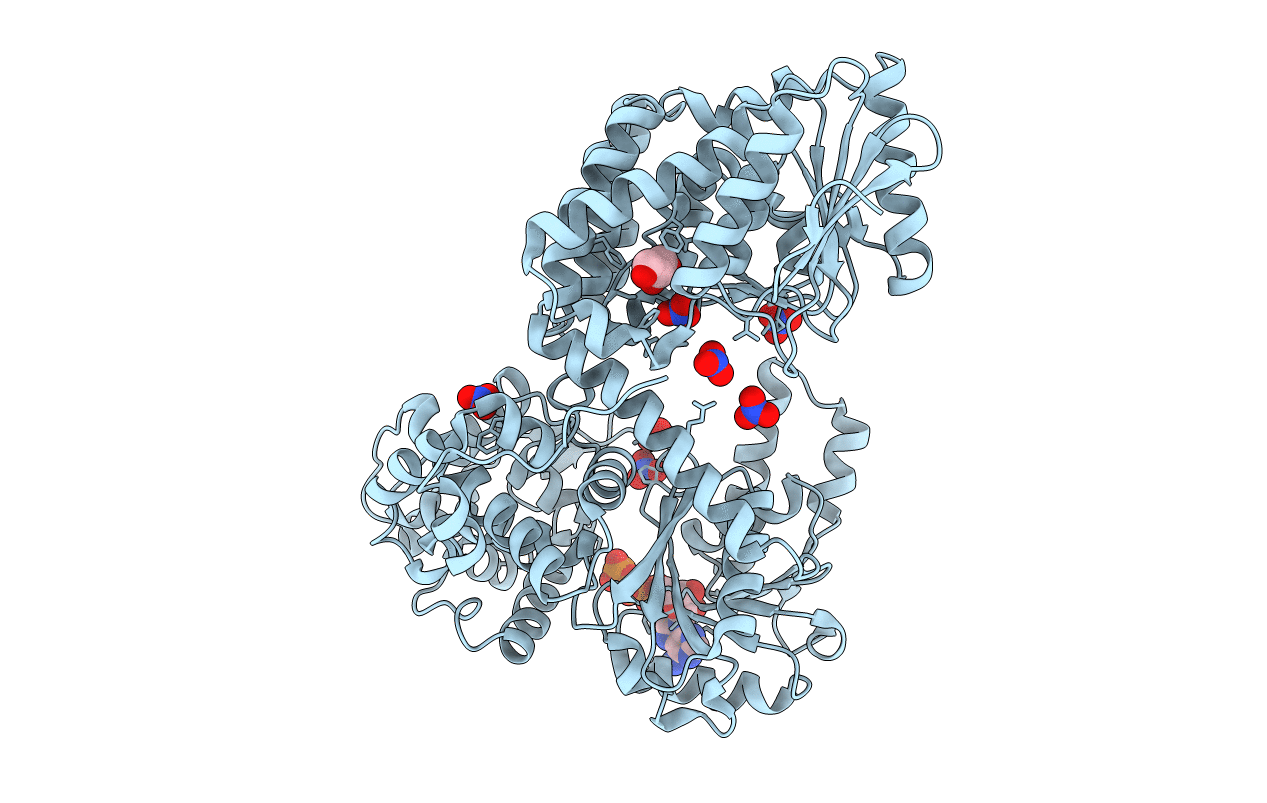
6TNM image
Deposition Date 2019-12-09
Release Date 2020-03-25
Last Version Date 2024-01-24
Entry Detail
PDB ID:
6TNM
Keywords:
Title:
E. coli aerobic trifunctional enzyme subunit-alpha
Biological Source:
Source Organism(s):
Expression System(s):
Method Details:
Experimental Method:
Resolution:
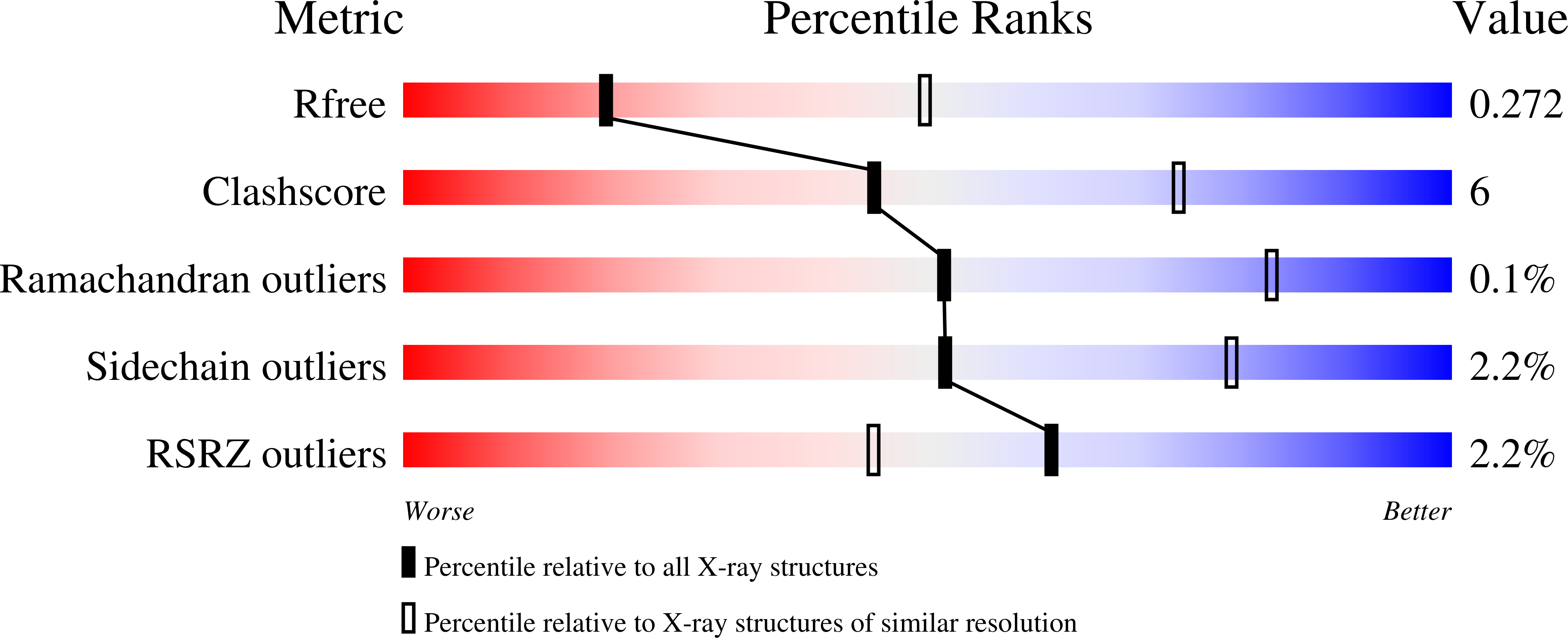
2.95 Å
R-Value Free:
0.27
R-Value Work:
0.23
R-Value Observed:
0.23
Space Group:
C 2 2 21
Macromolecular Entities
Structures with similar UniProt ID
Protein Blast
Polymer Type:polypeptide(L)
Molecule:Fatty acid oxidation complex
Gene (Uniprot):fadB
Chain IDs:A
Chain Length:743
Number of Molecules:1
Biological Source:Escherichia coli (strain K12)
Primary Citation
Insights into the stability and substrate specificity of the E. coli aerobic beta-oxidation trifunctional enzyme complex.
J. Struct. Biol. 210 107494 107494 (2020)
PMID: 32171906 DOI: 10.1016/j.jsb.2020.107494

Abstact

Degradation of fatty acids by the β-oxidation pathway results in the formation of acetyl-CoA which enters the TCA cycle for the production of ATP. In E. coli, the last three steps of the β-oxidation are catalyzed by two heterotetrameric α2β2 enzymes namely the aerobic trifunctional enzyme (EcTFE) and the anaerobic TFE (anEcTFE). The α-subunit of TFE has 2E-enoyl-CoA hydratase (ECH) and 3S-hydroxyacyl-CoA dehydrogenase (HAD) activities whereas the β-subunit is a thiolase with 3-ketoacyl-CoA thiolase (KAT) activity. Recently, it has been shown that the two TFEs have complementary substrate specificities allowing for the complete degradation of long chain fatty acyl-CoAs into acetyl-CoA under aerobic conditions. Also, it has been shown that the tetrameric EcTFE and anEcTFE assemblies are similar to the TFEs of Pseudomans fragi and human, respectively. Here the properties of the EcTFE subunits are further characterized. Strikingly, it is observed that when expressed separately, EcTFE-α is a catalytically active monomer whereas EcTFE-β is inactive. However, when mixed together active EcTFE tetramer is reconstituted. The crystal structure of the EcTFE-α chain is also reported, complexed with ATP, bound in its HAD active site. Structural comparisons show that the EcTFE hydratase active site has a relatively small fatty acyl tail binding pocket when compared to other TFEs in good agreement with its preferred specificity for short chain 2E-enoyl-CoA substrates. Furthermore, it is observed that millimolar concentrations of ATP destabilize the EcTFE complex, and this may have implications for the ATP-mediated regulation of β-oxidation in E. coli.

Legend

Protein

Chemical

Disease

Primary Citation of related structures
Feedback Form
Name
Email
Institute
Feedback