

6RWT image
Deposition Date 2019-06-06
Release Date 2019-09-18
Last Version Date 2024-05-15
Entry Detail
PDB ID:
6RWT
Keywords:
Title:
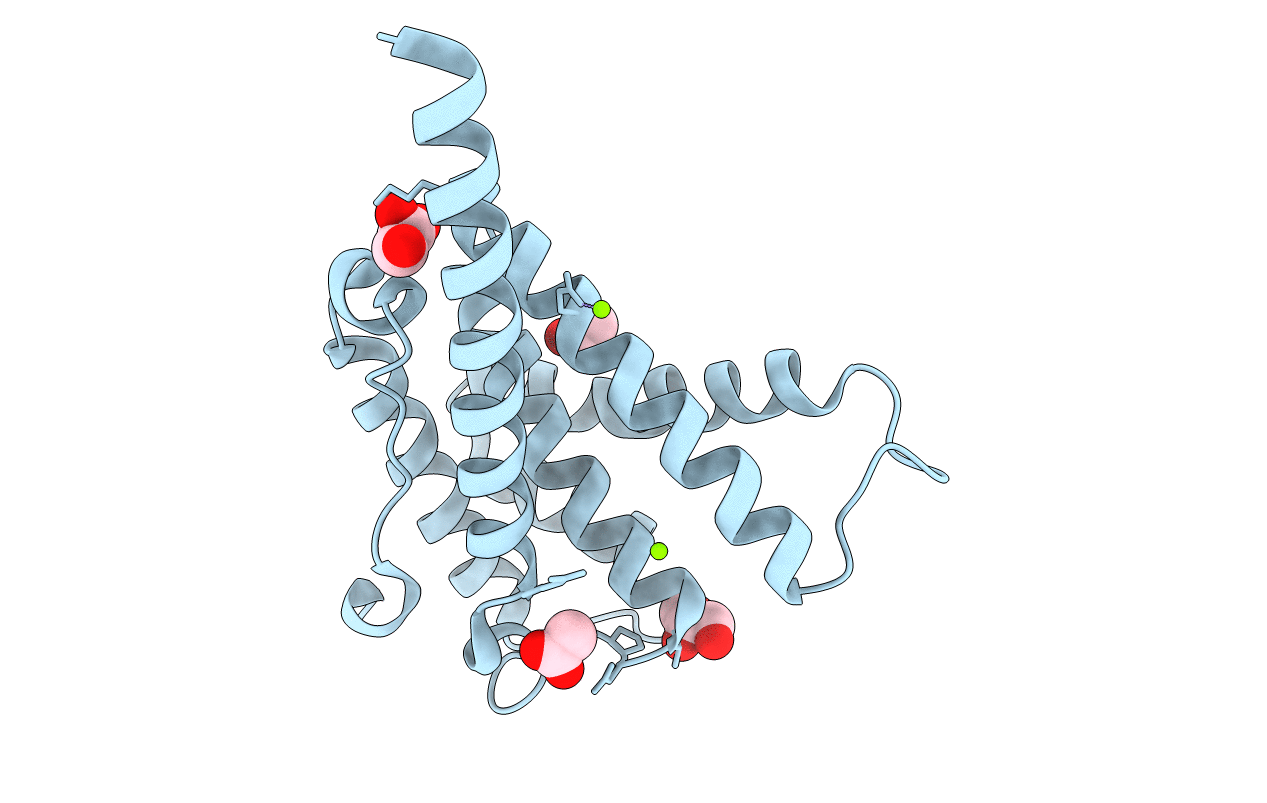
Crystal structure of the Cbp3 homolog from Brucella abortus
Biological Source:
Source Organism(s):
Expression System(s):
Method Details:
Experimental Method:
Resolution:
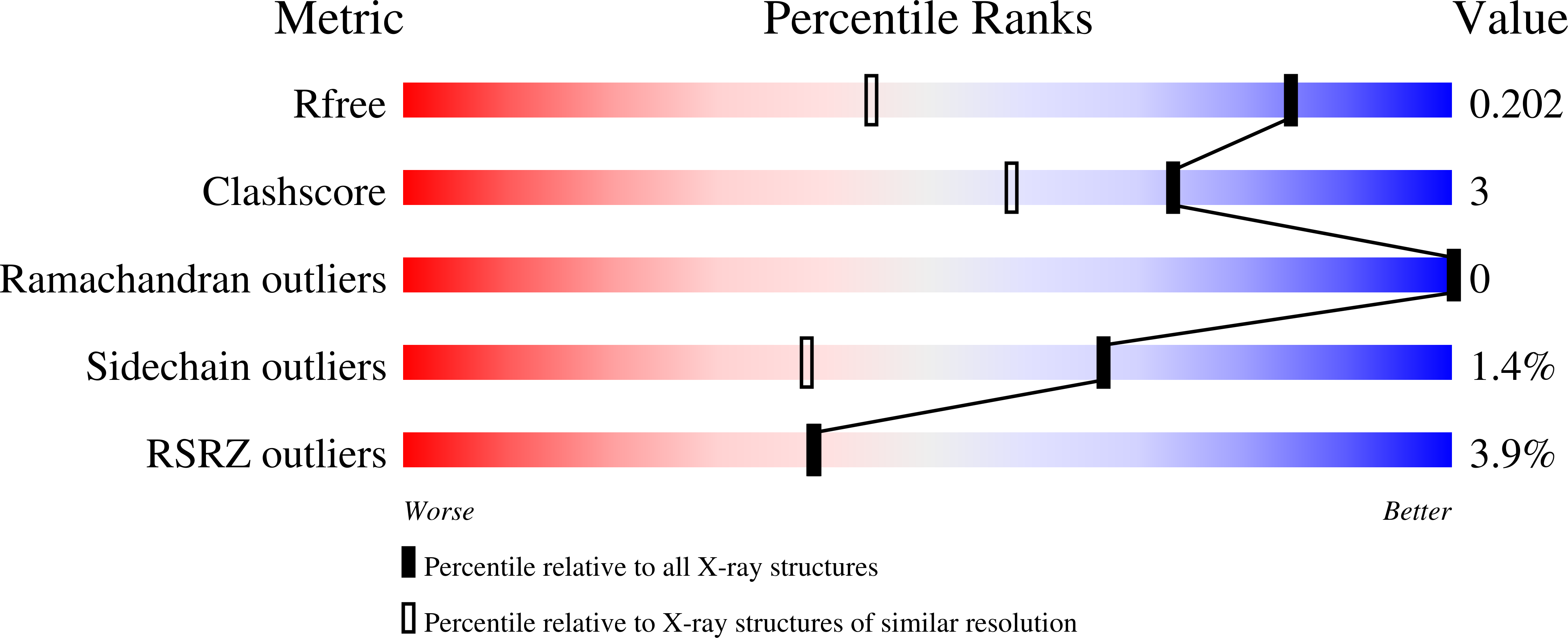
1.42 Å
R-Value Free:
0.20
R-Value Work:
0.16
R-Value Observed:
0.17
Space Group:
P 21 21 21
Macromolecular Entities
Structures with similar UniProt ID
Protein Blast
Polymer Type:polypeptide(L)
Molecule:Ubiquinol-cytochrome C chaper
Chain IDs:A
Chain Length:184
Number of Molecules:1
Biological Source:Brucella abortus NCTC 8038
Primary Citation
Structural basis for the interaction of the chaperone Cbp3 with newly synthesized cytochromebduring mitochondrial respiratory chain assembly.
J. Biol. Chem. 294 16663 16671 (2019)
PMID: 31537648 DOI: 10.1074/jbc.RA119.010483

Abstact

Assembly of the mitochondrial respiratory chain requires the coordinated synthesis of mitochondrial and nuclear encoded subunits, redox co-factor acquisition, and correct joining of the subunits to form functional complexes. The conserved Cbp3-Cbp6 chaperone complex binds newly synthesized cytochrome b and supports the ordered acquisition of the heme co-factors. Moreover, it functions as a translational activator by interacting with the mitoribosome. Cbp3 consists of two distinct domains: an N-terminal domain present in mitochondrial Cbp3 homologs and a highly conserved C-terminal domain comprising a ubiquinol-cytochrome c chaperone region. Here, we solved the crystal structure of this C-terminal domain from a bacterial homolog at 1.4 Å resolution, revealing a unique all-helical fold. This structure allowed mapping of the interaction sites of yeast Cbp3 with Cbp6 and cytochrome b via site-specific photo-cross-linking. We propose that mitochondrial Cbp3 homologs carry an N-terminal extension that positions the conserved C-terminal domain at the ribosomal tunnel exit for an efficient interaction with its substrate, the newly synthesized cytochrome b protein.

Legend

Protein

Chemical

Disease

Primary Citation of related structures
Feedback Form
Name
Email
Institute
Feedback