

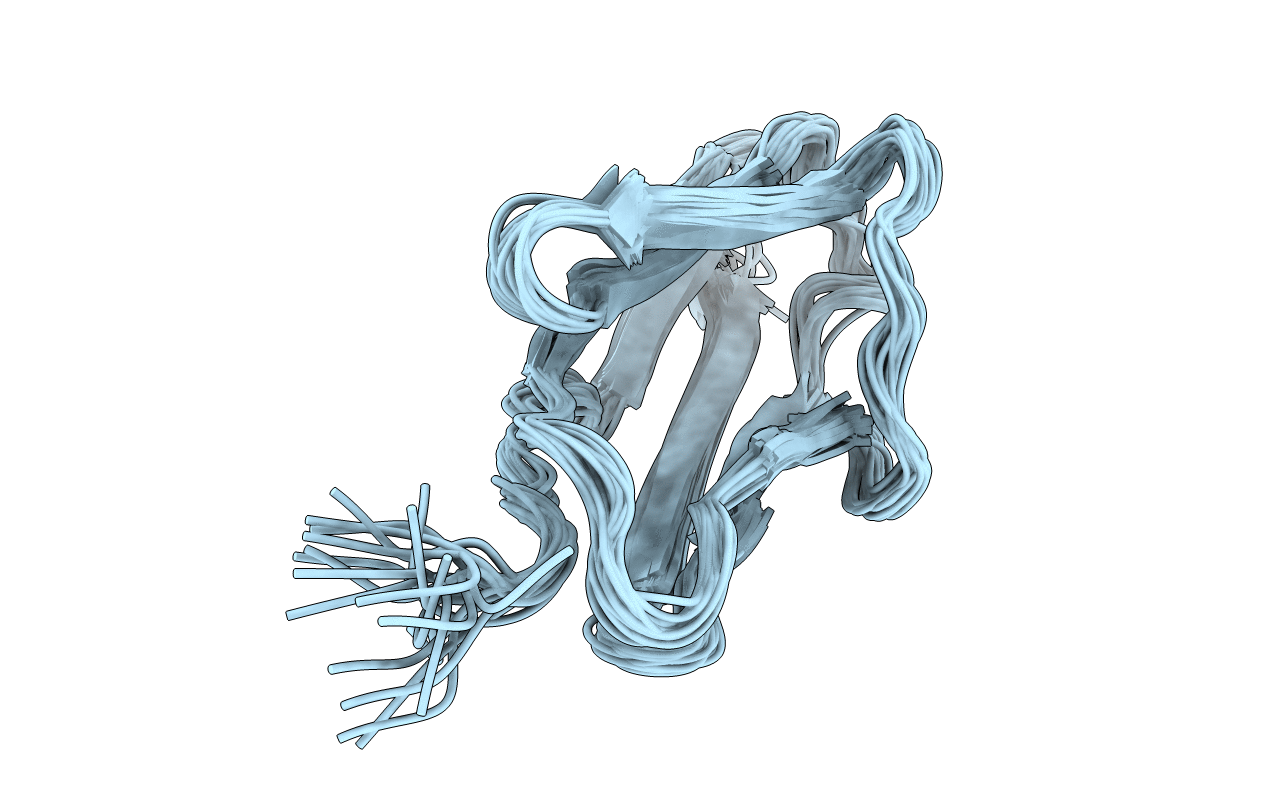
6MG9 image
Deposition Date 2018-09-13
Release Date 2019-02-06
Last Version Date 2024-05-01
Entry Detail
PDB ID:
6MG9
Title:
Human Obscurin Ig57 Domain
Biological Source:
Source Organism(s):
Homo sapiens (Taxon ID: 9606)
Expression System(s):
Method Details:
Experimental Method:
Conformers Calculated:
200
Conformers Submitted:
20
Selection Criteria:
structures with the least restraint violations
Macromolecular Entities
Structures with similar UniProt ID
Protein Blast
Polymer Type:polypeptide(L)
Molecule:Obscurin
Gene (Uniprot):OBSCN
Chain IDs:A
Chain Length:102
Number of Molecules:1
Biological Source:Homo sapiens
Ligand Molecules
Primary Citation
Obscurin is a semi-flexible molecule in solution.
Protein Sci. 28 717 726 (2019)
PMID: 30666746 DOI: 10.1002/pro.3578

Abstact

Obscurin, a giant modular cytoskeletal protein, is comprised mostly of tandem immunoglobulin-like (Ig-like) domains. This architecture allows obscurin to connect distal targets within the cell. The linkers connecting the Ig domains are usually short (3-4 residues). The physical effect arising from these short linkers is not known; such linkers may lead to a stiff elongated molecule or, conversely, may lead to a more compact and dynamic structure. In an effort to better understand how linkers affect obscurin flexibility, and to better understand the physical underpinnings of this flexibility, here we study the structure and dynamics of four representative sets of dual obscurin Ig domains using experimental and computational techniques. We find in all cases tested that tandem obscurin Ig domains interact at the poles of each domain and tend to stay relatively extended in solution. NMR, SAXS, and MD simulations reveal that while tandem domains are elongated, they also bend and flex significantly. By applying this behavior to a simplified model, it becomes apparent obscurin can link targets more than 200 nm away. However, as targets get further apart, obscurin begins acting as a spring and requires progressively more energy to further elongate.

Legend

Protein

Chemical

Disease

Primary Citation of related structures
Feedback Form
Name
Email
Institute
Feedback