

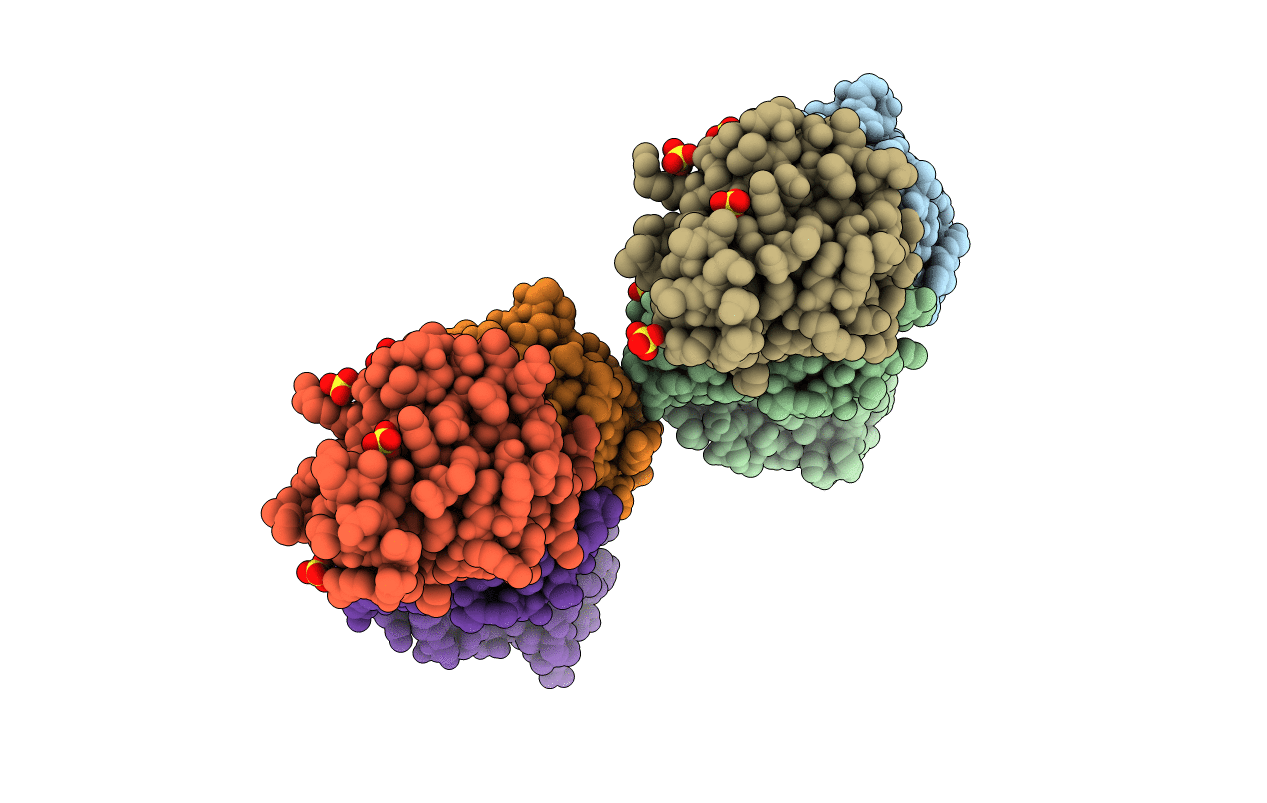
6KTR image
Deposition Date 2019-08-28
Release Date 2020-07-08
Last Version Date 2024-10-23
Entry Detail
PDB ID:
6KTR
Title:
Crystal structure of fibroblast growth factor 19 in complex with Fab
Biological Source:
Source Organism(s):
Homo sapiens (Taxon ID: 9606)
Expression System(s):
Method Details:
Experimental Method:
Resolution:
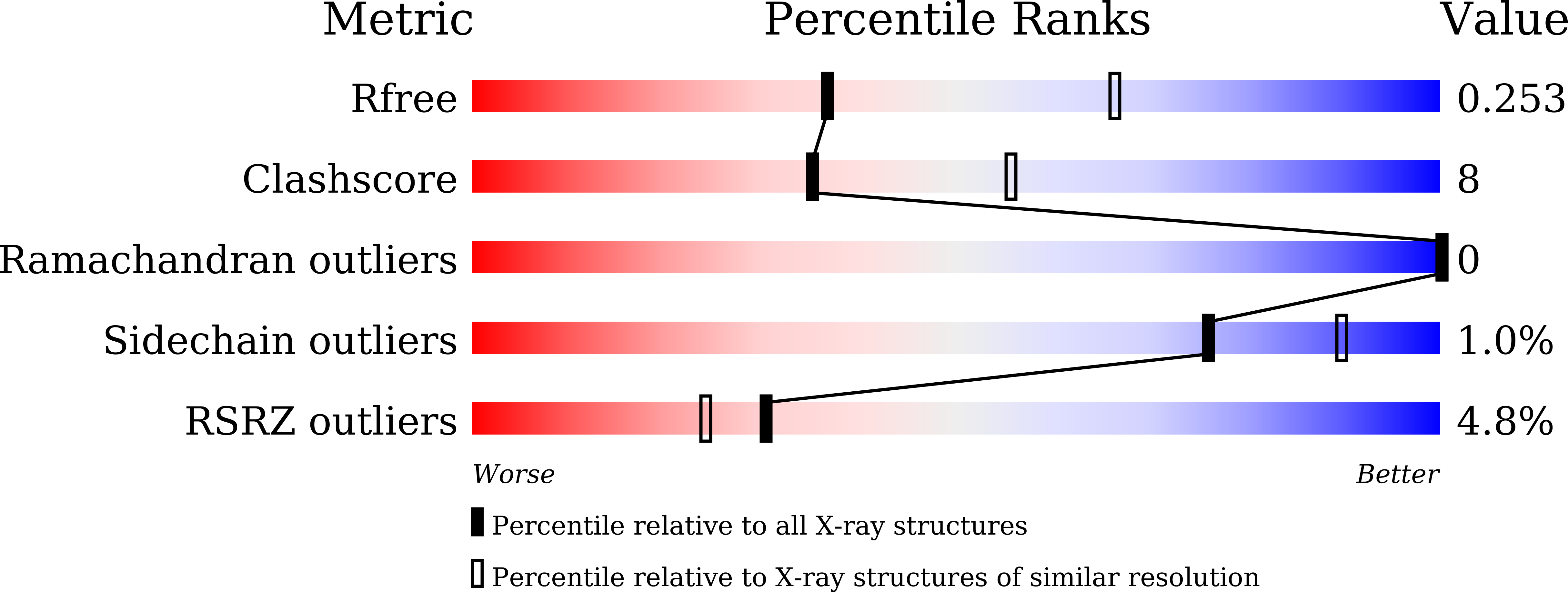
2.60 Å
R-Value Free:
0.25
R-Value Work:
0.20
R-Value Observed:
0.20
Space Group:
P 21 21 21
Macromolecular Entities
Protein Blast
Polymer Type:polypeptide(L)
Molecule:G1A8-Fab-HC
Chain IDs:A, E (auth: F)
Chain Length:233
Number of Molecules:2
Biological Source:Homo sapiens
Protein Blast
Polymer Type:polypeptide(L)
Molecule:G1A8-Fab-LC
Chain IDs:B, F (auth: G)
Chain Length:216
Number of Molecules:2
Biological Source:Homo sapiens
Structures with similar UniProt ID
Protein Blast
Polymer Type:polypeptide(L)
Molecule:Fibroblast growth factor 19
Gene (Uniprot):FGF19
Chain IDs:C, D
Chain Length:218
Number of Molecules:2
Biological Source:Homo sapiens
Primary Citation
Novel Abs targeting the N-terminus of fibroblast growth factor 19 inhibit hepatocellular carcinoma growth without bile-acid-related side-effects.
Cancer Sci. 111 1750 1760 (2020)
PMID: 32061104 DOI: 10.1111/cas.14353

Abstact

Hepatocellular carcinoma (HCC) is a common and particularly fatal form of cancer for which very few drugs are effective. The fibroblast growth factor 19 (FGF19) has been viewed as a driver of HCC development and a potential Ab target for developing novel HCC therapy. However, a previously developed anti-FGF19 Ab disrupted FGF19's normal regulatory function and caused severe bile-acid-related side-effects despite of having potent antitumor effects in preclinical models. Here, we developed novel human Abs (G1A8 and HS29) that specifically target the N-terminus of FGF19. Both Abs inhibited FGF19-induced HCC cell proliferation in vitro and significantly suppressed HCC tumor growth in mouse models. Importantly, no bile-acid-related side effects were observed in preclinical cynomolgus monkeys. Fundamentally, our study demonstrates that it is possible to target FGF19 for anti-HCC therapies without adversely affecting its normal bile acid regulatory function, and highlights the exciting promise of G1A8 or HS29 as potential therapy for HCC.

Legend

Protein

Chemical

Disease

Primary Citation of related structures
Feedback Form
Name
Email
Institute
Feedback