

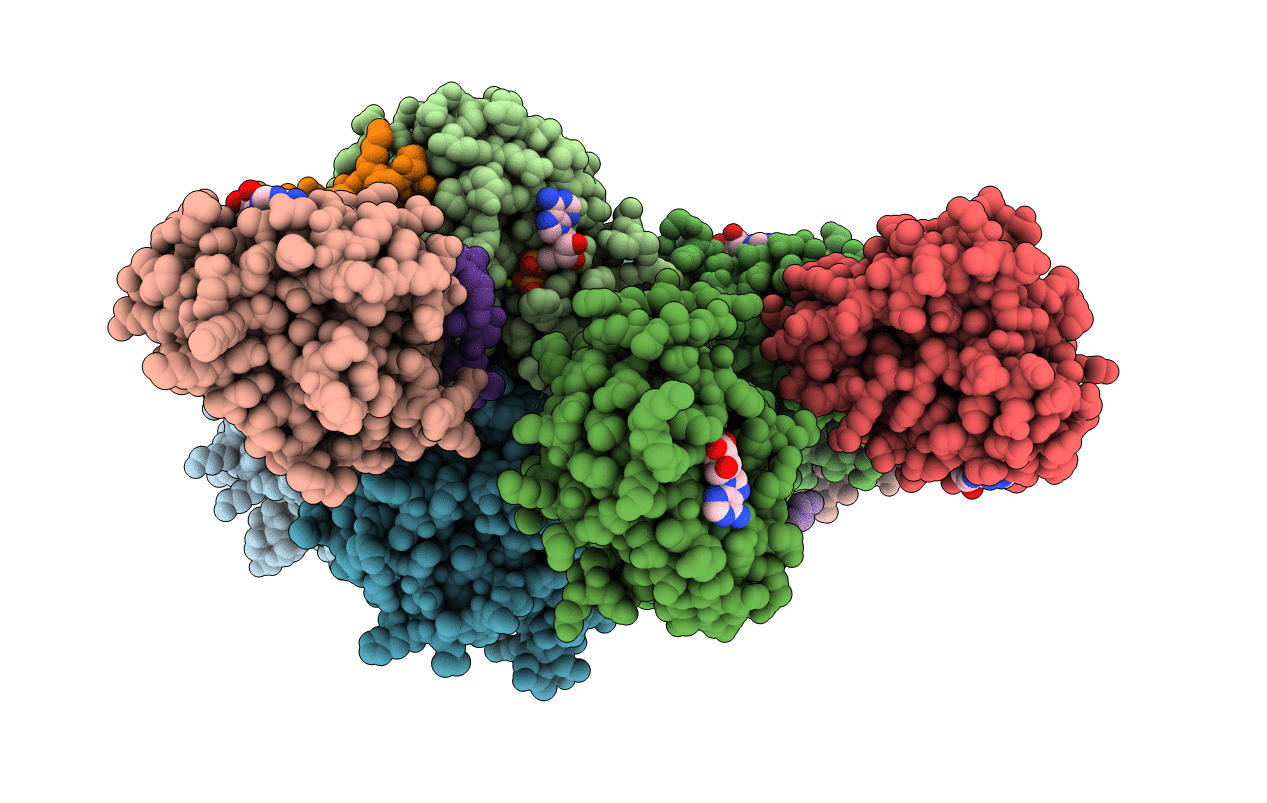
6HQU image
Deposition Date 2018-09-25
Release Date 2019-10-09
Last Version Date 2024-11-06
Entry Detail
PDB ID:
6HQU
Keywords:
Title:
Humanised RadA mutant HumRadA22 in complex with a recombined BRC repeat 8-2
Biological Source:
Expression System(s):
Method Details:
Experimental Method:
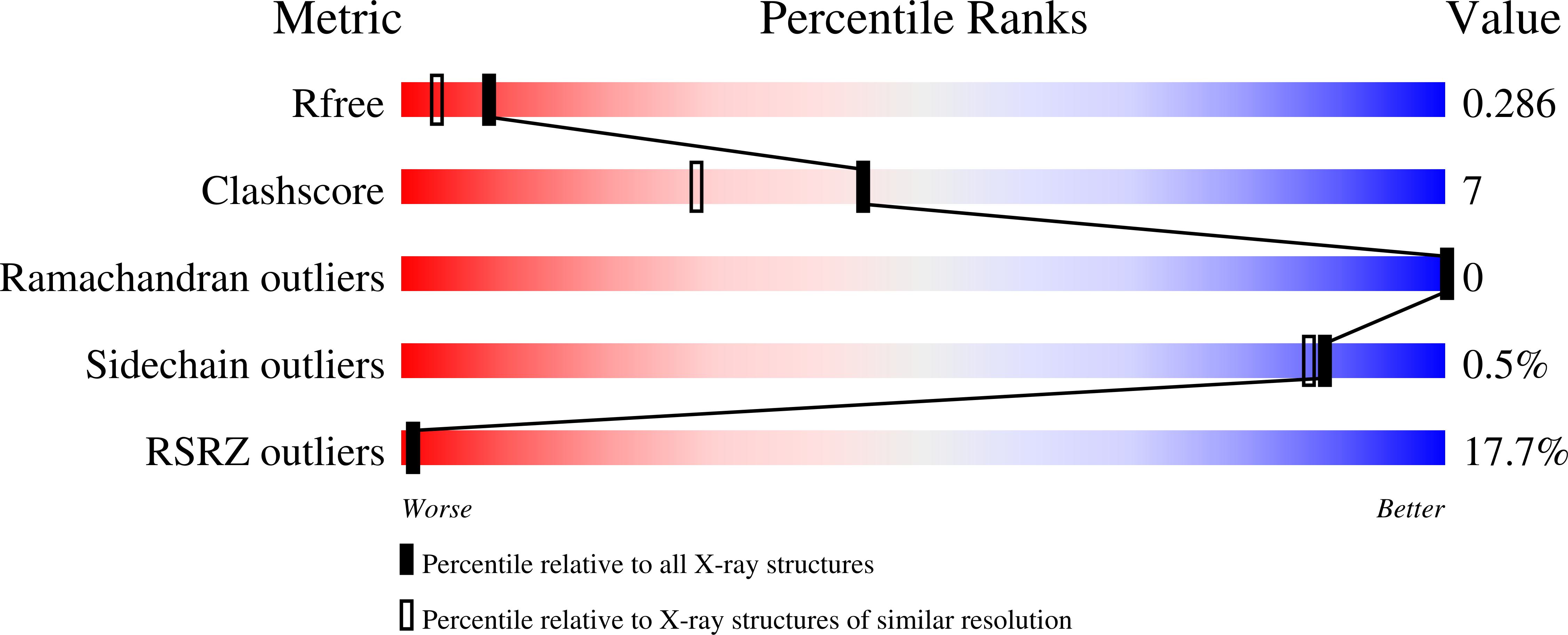
Resolution:
1.97 Å
R-Value Free:
0.27
R-Value Work:
0.26
R-Value Observed:
0.26
Space Group:
P 1 21 1
Macromolecular Entities
Structures with similar UniProt ID
Protein Blast
Polymer Type:polypeptide(L)
Molecule:DNA repair and recombination
Chain IDs:A, B, C, D, E, F, G, H
Chain Length:231
Number of Molecules:8
Biological Source:Pyrococcus furiosus (strain ATCC 43587 / DSM 3638 / JCM 8422 / Vc1)
Structures with similar UniProt ID
Protein Blast
Polymer Type:polypeptide(L)
Molecule:Breast cancer type 2 suscepti
Chain IDs:I, J, K, L, M, N, O
Chain Length:38
Number of Molecules:7
Biological Source:Homo sapiens
Primary Citation
Improved RAD51 binders through motif shuffling based on the modularity of BRC repeats.
Proc. Natl. Acad. Sci. U.S.A. 118 ? ? (2021)
PMID: 34772801 DOI: 10.1073/pnas.2017708118

Abstact

Exchanges of protein sequence modules support leaps in function unavailable through point mutations during evolution. Here we study the role of the two RAD51-interacting modules within the eight binding BRC repeats of BRCA2. We created 64 chimeric repeats by shuffling these modules and measured their binding to RAD51. We found that certain shuffled module combinations were stronger binders than any of the module combinations in the natural repeats. Surprisingly, the contribution from the two modules was poorly correlated with affinities of natural repeats, with a weak BRC8 repeat containing the most effective N-terminal module. The binding of the strongest chimera, BRC8-2, to RAD51 was improved by -2.4 kCal/mol compared to the strongest natural repeat, BRC4. A crystal structure of RAD51:BRC8-2 complex shows an improved interface fit and an extended β-hairpin in this repeat. BRC8-2 was shown to function in human cells, preventing the formation of nuclear RAD51 foci after ionizing radiation.

Legend

Protein

Chemical

Disease

Primary Citation of related structures
Feedback Form
Name
Email
Institute
Feedback