

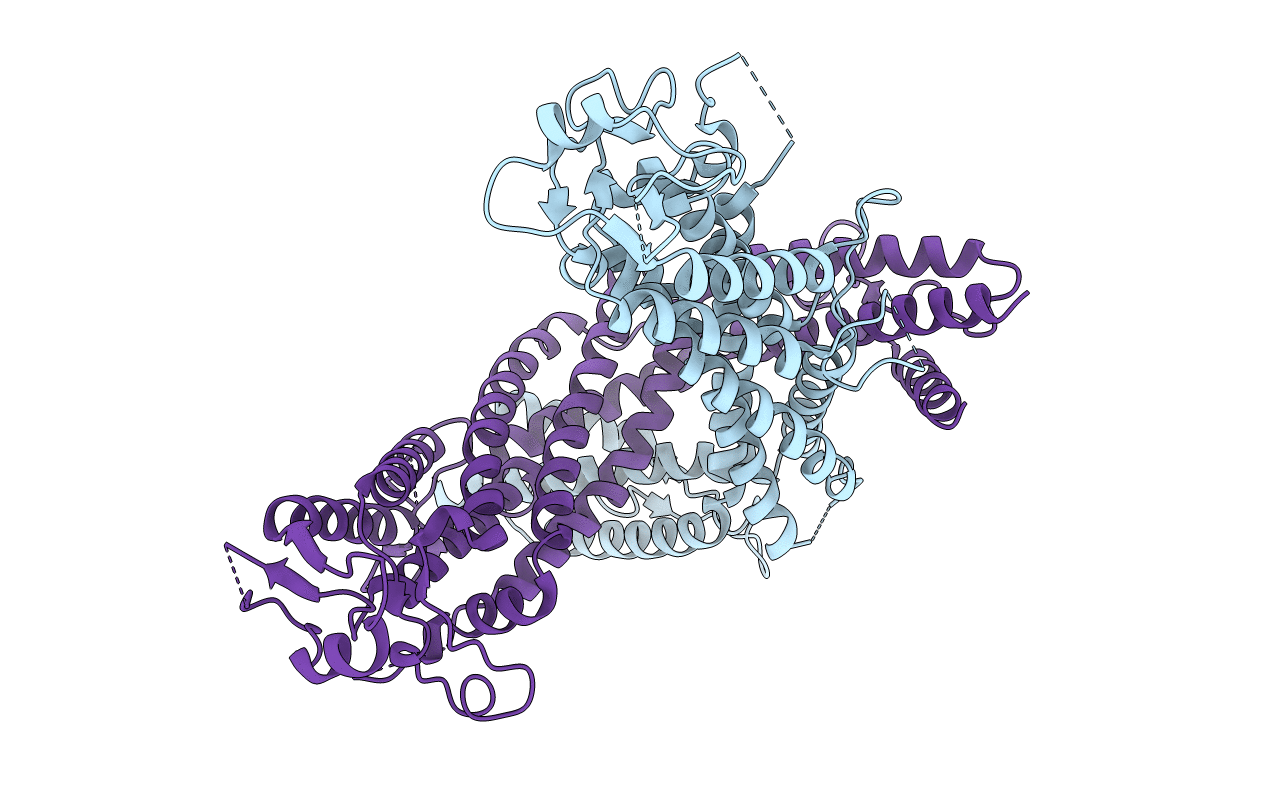
6GW5 image
Deposition Date 2018-06-21
Release Date 2018-07-25
Last Version Date 2024-10-23
Entry Detail
PDB ID:
6GW5
Keywords:
Title:
X-ray structure of the Helicobacter pylori SabA adhesin domain
Biological Source:
Source Organism(s):
Expression System(s):
Method Details:
Experimental Method:
Resolution:
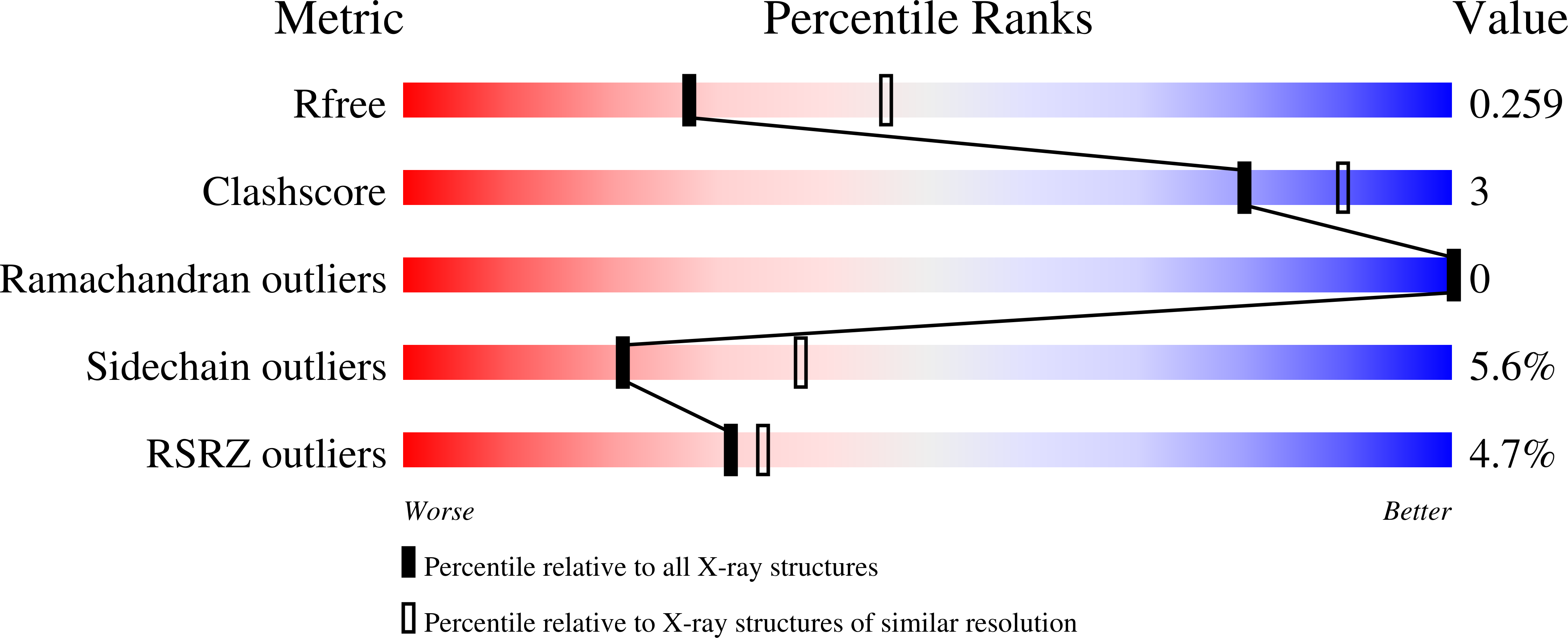
2.52 Å
R-Value Free:
0.25
R-Value Work:
0.20
R-Value Observed:
0.20
Space Group:
P 2 21 21
Macromolecular Entities
Structures with similar UniProt ID
Protein Blast
Polymer Type:polypeptide(L)
Molecule:Putative Outer membrane prote
Gene (Uniprot):jhp_0662
Chain IDs:A, B
Chain Length:440
Number of Molecules:2
Biological Source:Helicobacter pylori
Primary Citation
Hop-family Helicobacter outer membrane adhesins form a novel class of Type 5-like secretion proteins with an interrupted beta-barrel domain.
Mol. Microbiol. 110 33 46 (2018)
PMID: 29995350 DOI: 10.1111/mmi.14075

Abstact

The human stomach pathogen Helicobacter pyloriattaches to healthy and inflamed gastric tissue through members of a paralogous family of 'Helicobacter outer membrane proteins' (Hops), including adhesins BabA, SabA, HopQ, LabA and HopZ. Hops share a conserved 25 kDa C-terminal region that is thought to form an autotransporter-like transmembrane domain. Instead, our results show that Hops contain a non-continuous transmembrane domain, composed of seven predicted β-strands at the C-terminus and one at the N-terminus. Folding and outer membrane localization of the C-terminal β-domain critically depends on a predicted transmembrane β-strand within the first 16 N-terminal residues. The N-terminus is shown to reside in the periplasm, and our crystal and small angle X-ray scattering structures for the SabA extracellular domain reveal a conserved coiled-coil stem domain that connects to transmembrane β-strand 1 and 2. Taken together, our data show that Hop adhesins represent a novel outer membrane protein topology encompassing an OmpA-like 8-stranded β-barrel that is interrupted by a 15-108 kDa domain inserted inside the first extracellular loop. The insertion of large, folded domains in an extracellular loop is unprecedented in bacterial outer membrane proteins and is expected to have important consequences on how these proteins reach the cell surface.

Legend

Protein

Chemical

Disease

Primary Citation of related structures
Feedback Form
Name
Email
Institute
Feedback