

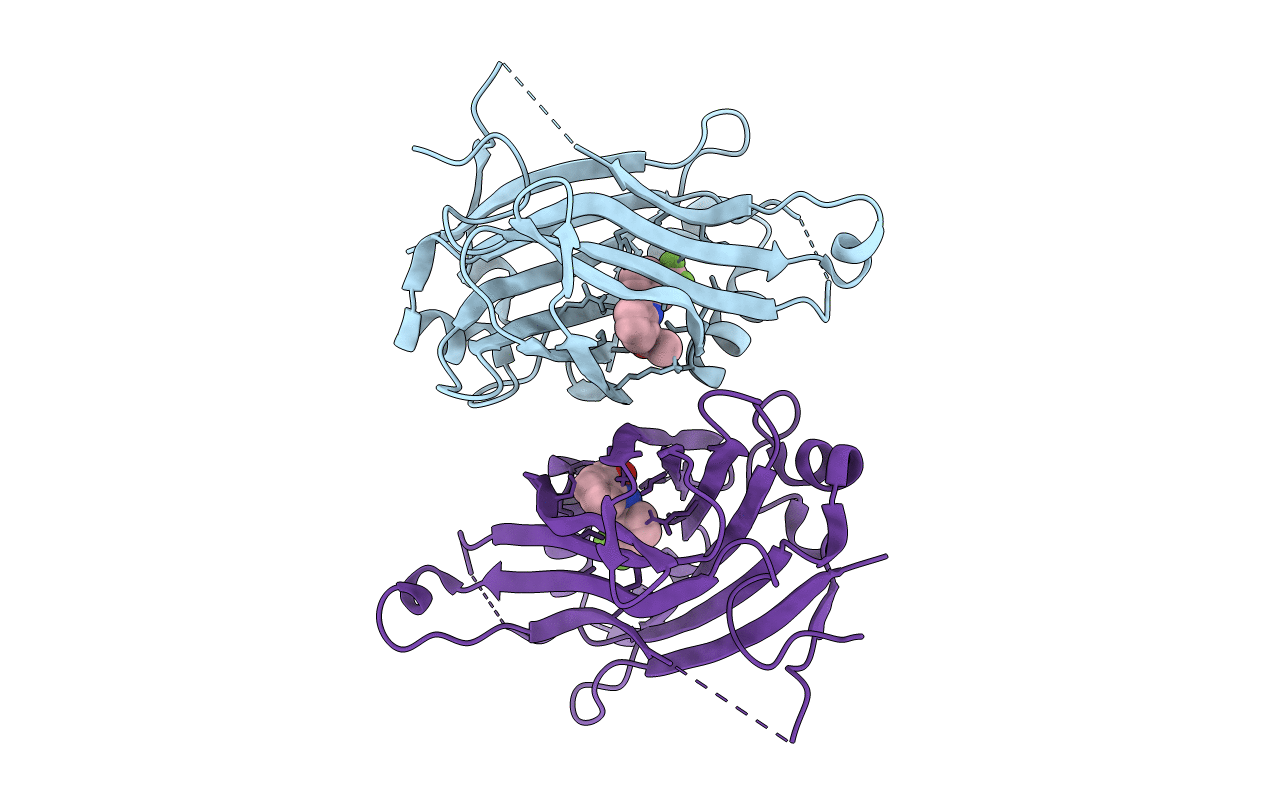
6E5G image
Deposition Date 2018-07-20
Release Date 2019-01-09
Last Version Date 2024-10-16
Entry Detail
PDB ID:
6E5G
Title:
Crystal structure of human TEAD2-Yap binding domain covalently bound to an allosteric regulator
Biological Source:
Source Organism(s):
Homo sapiens (Taxon ID: 9606)
Expression System(s):
Method Details:
Experimental Method:
Resolution:
2.43 Å
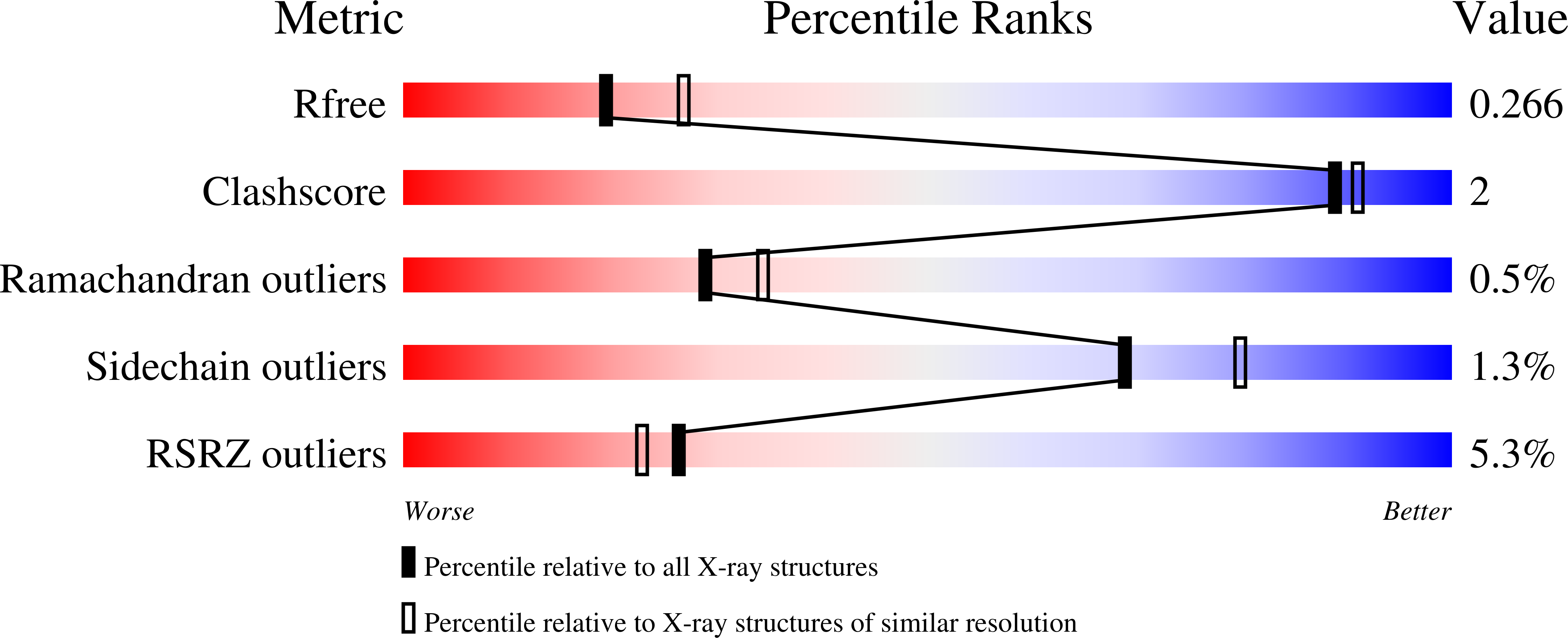
R-Value Free:
0.26
R-Value Work:
0.22
R-Value Observed:
0.22
Space Group:
C 1 2 1
Macromolecular Entities
Structures with similar UniProt ID
Protein Blast
Polymer Type:polypeptide(L)
Molecule:Transcriptional enhancer fact
Gene (Uniprot):TEAD2
Chain IDs:A (auth: B), B (auth: A)
Chain Length:235
Number of Molecules:2
Biological Source:Homo sapiens
Ligand Molecules
Primary Citation
Small-Molecule Covalent Modification of Conserved Cysteine Leads to Allosteric Inhibition of the TEAD⋅Yap Protein-Protein Interaction.
Cell Chem Biol 26 378 ? (2019)
PMID: 30581134 DOI: 10.1016/j.chembiol.2018.11.010

Abstact

The Hippo pathway coordinates extracellular signals onto the control of tissue homeostasis and organ size. Hippo signaling primarily regulates the ability of Yap1 to bind and co-activate TEA domain (TEAD) transcription factors. Yap1 tightly binds to TEAD4 via a large flat interface, making the development of small-molecule orthosteric inhibitors highly challenging. Here, we report small-molecule TEAD⋅Yap inhibitors that rapidly and selectively form a covalent bond with a conserved cysteine located within the unique deep hydrophobic palmitate-binding pocket of TEADs. Inhibition of TEAD4 binding to Yap1 by these compounds was irreversible and occurred on a longer time scale. In mammalian cells, the compounds formed a covalent complex with TEAD4, inhibited its binding to Yap1, blocked its transcriptional activity, and suppressed expression of connective tissue growth factor. The compounds inhibited cell viability of patient-derived glioblastoma spheroids, making them suitable as chemical probes to explore Hippo signaling in cancer.

Legend

Protein

Chemical

Disease

Primary Citation of related structures
Feedback Form
Name
Email
Institute
Feedback