

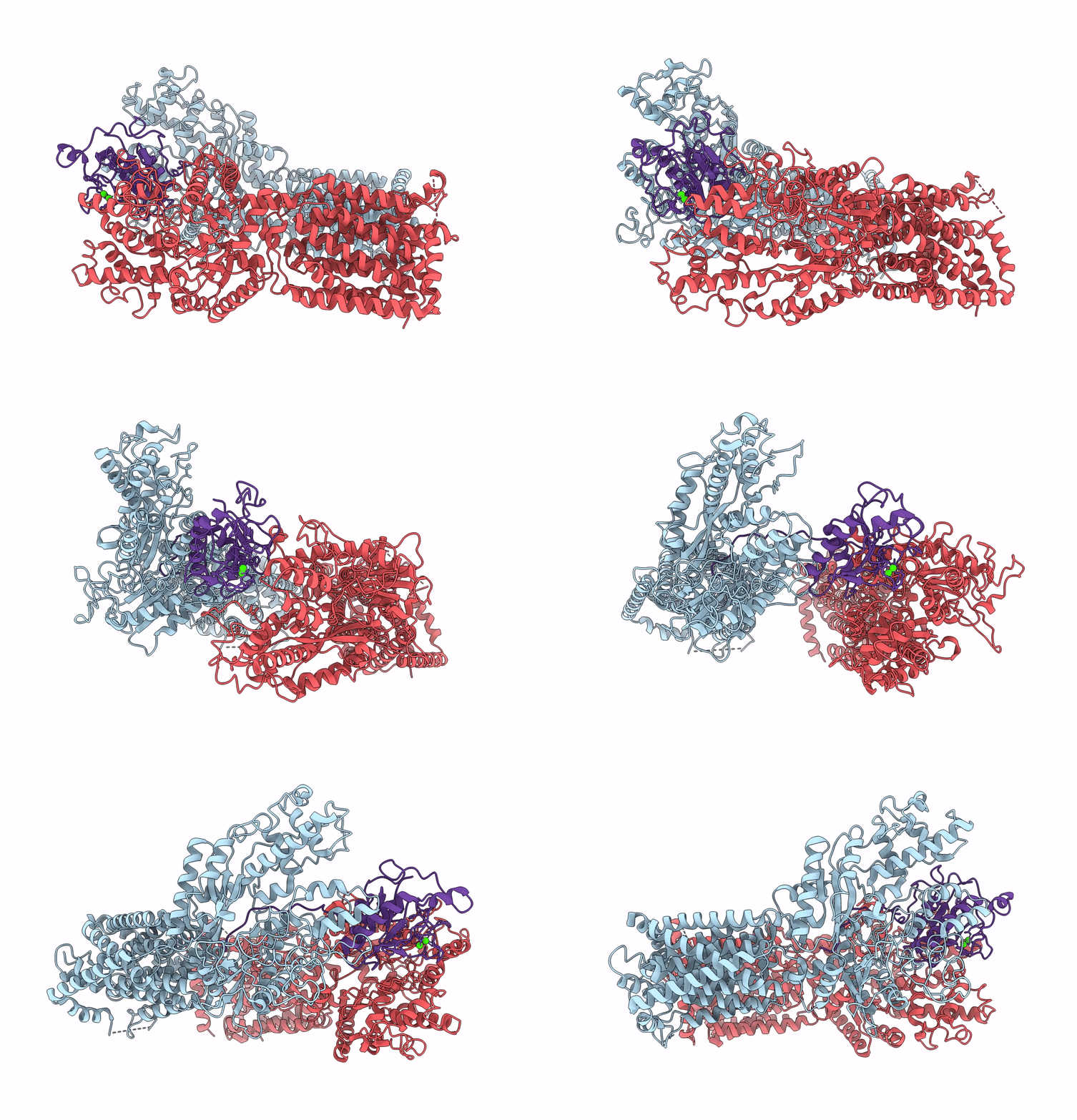
6E1H image
Deposition Date 2018-07-09
Release Date 2018-08-29
Last Version Date 2024-11-13
Entry Detail
PDB ID:
6E1H
Title:
Structure of 2:1 human Ptch1-Shh-N complex
Biological Source:
Source Organism(s):
Homo sapiens (Taxon ID: 9606)
Expression System(s):
Method Details:
Experimental Method:
Resolution:
3.50 Å
Aggregation State:
PARTICLE
Reconstruction Method:
SINGLE PARTICLE

Macromolecular Entities
Structures with similar UniProt ID
Protein Blast
Polymer Type:polypeptide(L)
Molecule:Protein patched homolog 1
Gene (Uniprot):PTCH1
Chain IDs:A, C (auth: B)
Chain Length:1447
Number of Molecules:2
Biological Source:Homo sapiens
Structures with similar UniProt ID
Protein Blast
Polymer Type:polypeptide(L)
Molecule:Sonic hedgehog protein
Gene (Uniprot):SHH
Chain IDs:B (auth: C)
Chain Length:174
Number of Molecules:1
Biological Source:Homo sapiens
Primary Citation
Two Patched molecules engage distinct sites on Hedgehog yielding a signaling-competent complex.
Science 362 ? ? (2018)
PMID: 30139912 DOI: 10.1126/science.aas8843

Abstact

Aberrant Hedgehog (HH) signaling leads to various types of cancer and birth defects. N-terminally palmitoylated HH initiates signaling by binding its receptor Patched-1 (PTCH1). A recent 1:1 PTCH1-HH complex structure visualized a palmitate-mediated binding site on HH, which was inconsistent with previous studies that implied a distinct, calcium-mediated binding site for PTCH1 and HH co-receptors. Our 3.5-angstrom resolution cryo-electron microscopy structure of native Sonic Hedgehog (SHH-N) in complex with PTCH1 at a physiological calcium concentration reconciles these disparate findings and demonstrates that one SHH-N molecule engages both epitopes to bind two PTCH1 receptors in an asymmetric manner. Functional assays using PTCH1 or SHH-N mutants that disrupt the individual interfaces illustrate that simultaneous engagement of both interfaces is required for efficient signaling in cells.

Legend

Protein

Chemical

Disease

Primary Citation of related structures
Feedback Form
Name
Email
Institute
Feedback