

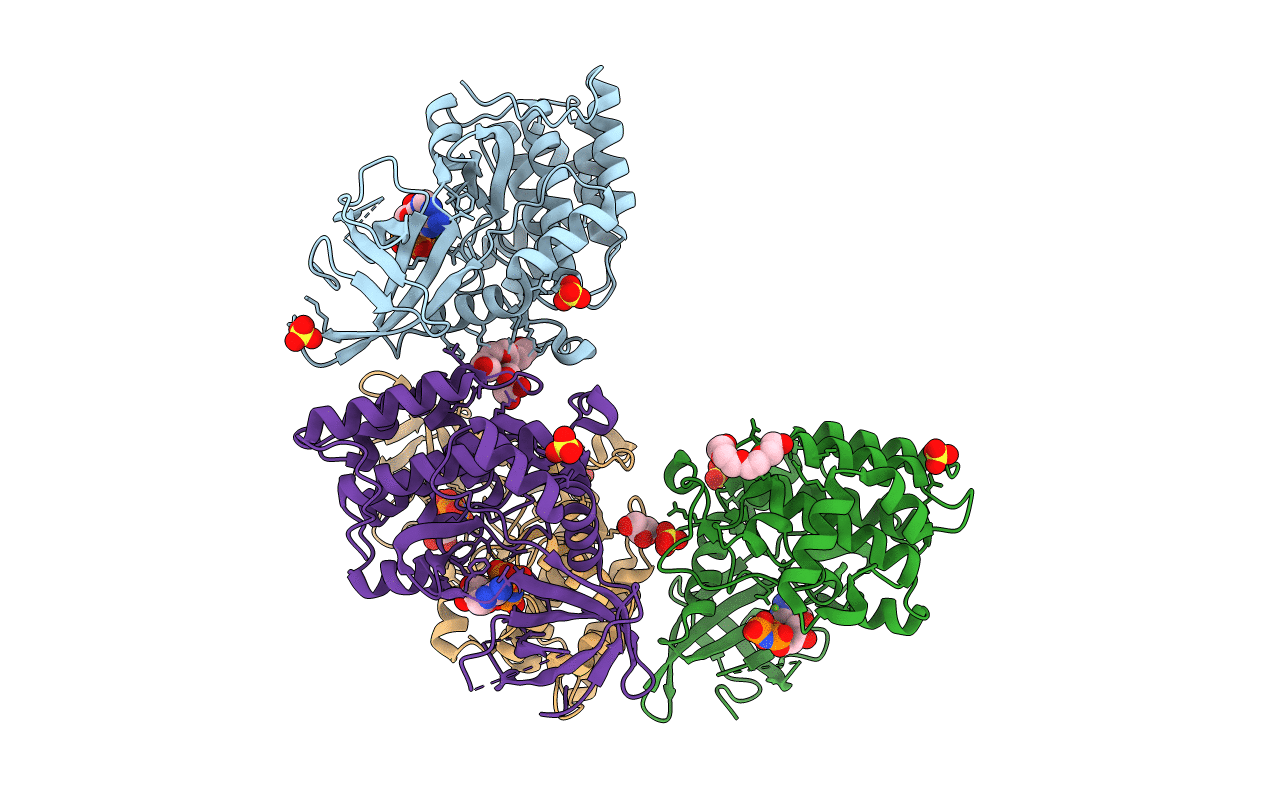
6AC9 image
Deposition Date 2018-07-25
Release Date 2018-12-26
Last Version Date 2024-03-27
Entry Detail
PDB ID:
6AC9
Keywords:
Title:
Crystal structure of human Vaccinia-related kinase 1 (VRK1) in complex with AMP-PNP
Biological Source:
Source Organism(s):
Homo sapiens (Taxon ID: 9606)
Expression System(s):
Method Details:
Experimental Method:
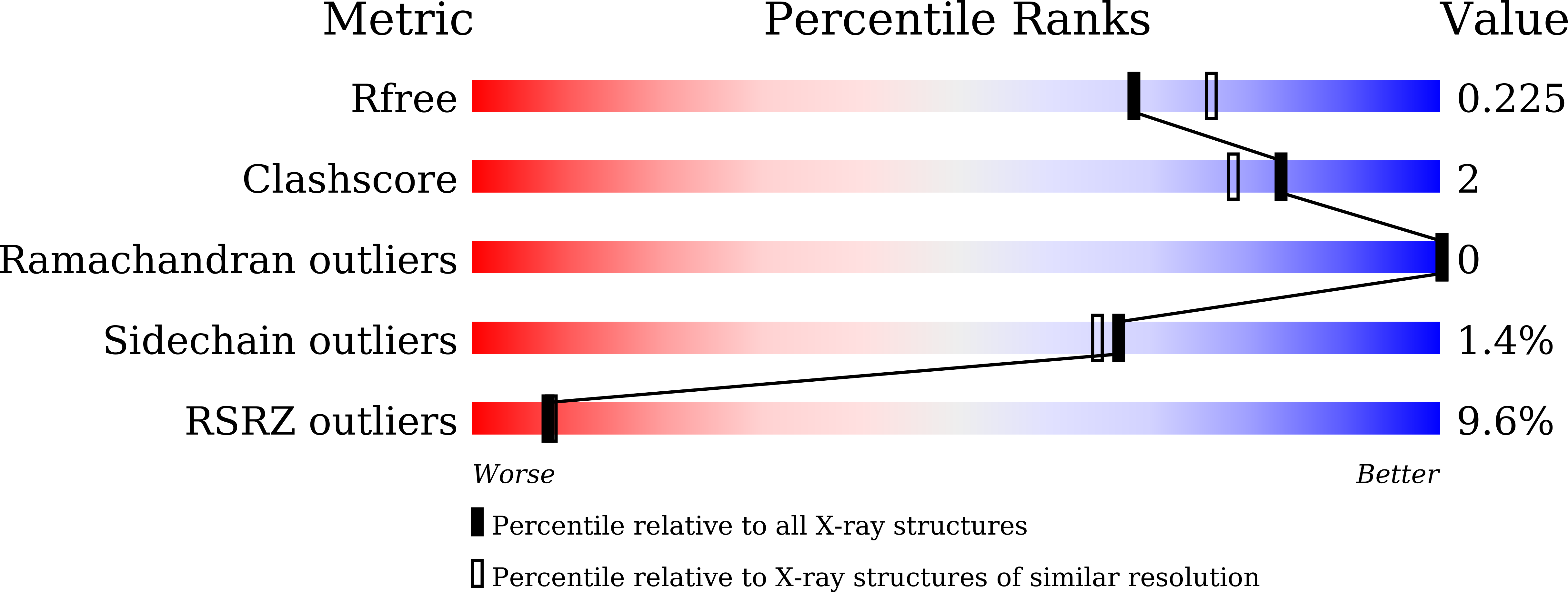
Resolution:
2.07 Å
R-Value Free:
0.22
R-Value Work:
0.18
R-Value Observed:
0.18
Space Group:
P 21 21 21
Macromolecular Entities
Structures with similar UniProt ID
Protein Blast
Polymer Type:polypeptide(L)
Molecule:Serine/threonine-protein kina
Gene (Uniprot):VRK1
Mutagens:K34A, K35A, E36A, E212A, K214A, E215A, E292A, K293A, K295A, K359A, K360A
Chain IDs:A, B, C, D
Chain Length:370
Number of Molecules:4
Biological Source:Homo sapiens
Primary Citation
Crystal structure of human vaccinia-related kinase 1 in complex with AMP-PNP, a non-hydrolyzable ATP analog.
Protein Sci. 28 524 532 (2019)
PMID: 30461091 DOI: 10.1002/pro.3552

Abstact

Vaccinia-related kinase 1 (VRK1), a serine/threonine mitotic kinase, is widely over-expressed in dividing cells and regarded as a cancer drug target primarily due to its function as an early response gene in cell proliferation. However, the mechanism of VRK1 phosphorylation and substrate activation is not well understood. More importantly even the molecular basis of VRK1 interaction with its cofactor, adenosine triphosphate (ATP), is unavailable to-date. As designing specific inhibitors remains to be the major challenge in kinase research, such a molecular understanding will enable us to design ATP-competitive specific inhibitors of VRK1. Here we report the molecular characterization of VRK1 in complex with AMP-PNP, a non-hydrolyzable ATP-analog, using NMR titration followed by the co-crystal structure determined upto 2.07 Å resolution. We also carried out the structural comparison of the AMP-PNP bound-form with its apo and inhibitor-bound counterparts, which has enabled us to present our rationale toward designing VRK1-specific inhibitors.

Legend

Protein

Chemical

Disease

Primary Citation of related structures
Feedback Form
Name
Email
Institute
Feedback