

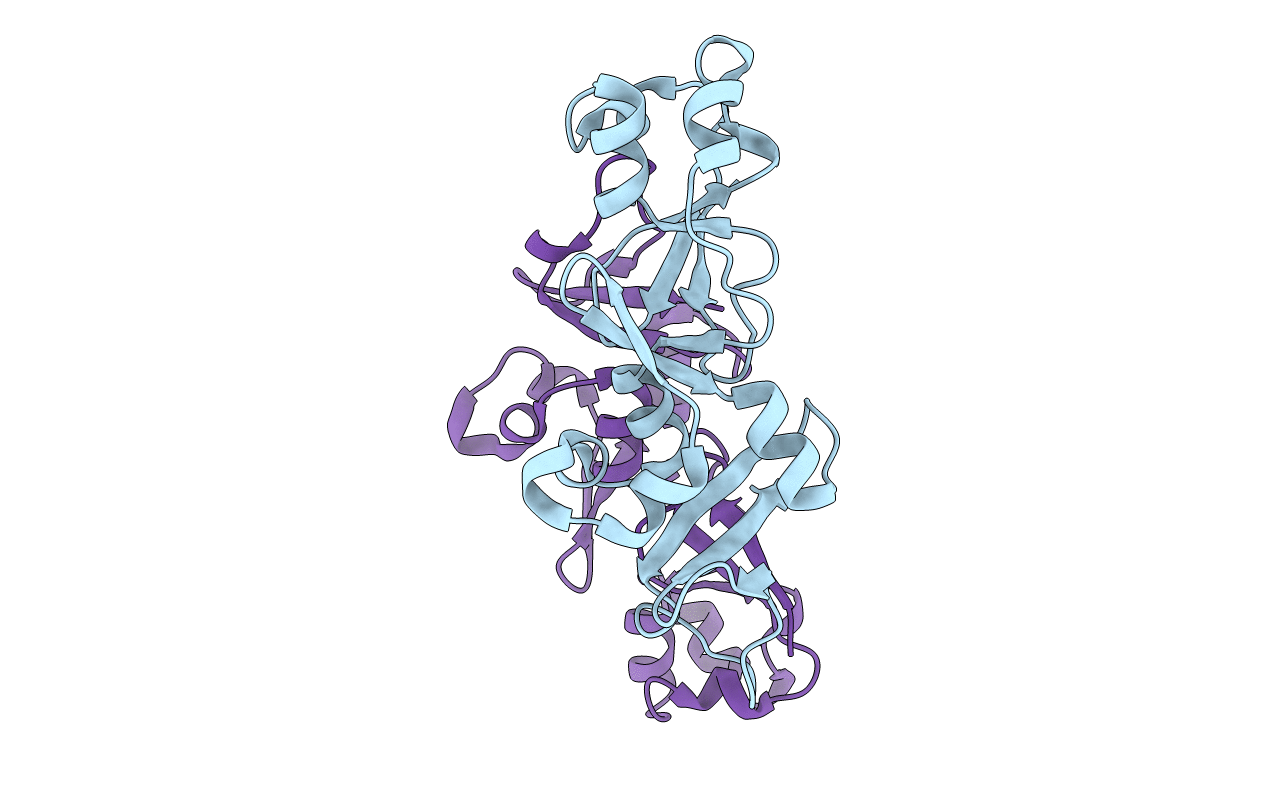
6A51 image
Deposition Date 2018-06-21
Release Date 2019-06-26
Last Version Date 2024-11-06
Entry Detail
PDB ID:
6A51
Title:
Novel Regulators CheP and CheQ Specifically Control Chemotaxis Core Gene cheVAW Transcription in Bacterial Pathogen Campylobacter jejuni
Biological Source:
Source Organism(s):
Method Details:
Experimental Method:
Resolution:
2.60 Å
R-Value Free:
0.22
R-Value Work:
0.18
R-Value Observed:
0.18
Space Group:
P 41 21 2

Macromolecular Entities
Structures with similar UniProt ID
Protein Blast
Polymer Type:polypeptide(L)
Molecule:CheQ
Chain IDs:A, B
Chain Length:170
Number of Molecules:2
Biological Source:Campylobacter jejuni subsp. jejuni
Primary Citation
The novel regulators CheP and CheQ control the core chemotaxis operon cheVAW in Campylobacter jejuni.
Mol. Microbiol. 111 145 158 (2019)
PMID: 30338872 DOI: 10.1111/mmi.14144

Abstact

Campylobacter jejuni is the leading cause of foodborne gastrointestinal illness worldwide, and chemotaxis plays an important role in its host colonization and pathogenesis. Although many studies on chemotaxis have focused on the physical organization and signaling mechanism of the system's protein complex, much less is known about the transcriptional regulation of its components. Here, we describe two novel regulators, CJJ81176_0275 and CJJ81176_0276 (designated as CheP and CheQ), which specifically activate the transcription of the chemotaxis core genes cheV, cheA and cheW in C. jejuni and they are also essential for chemotactic responses. CheP has a single HD-related output domain (HDOD) domain and can promote CheQ binding to the cheVAW operon promoter through a protein-protein interaction. Mutagenesis analyses identified key residues critical for CheP function and/or interaction with CheQ. Further structural characterization of CheQ revealed a novel fold with strong positive surface charges that allow for its DNA binding. These findings reveal the gene regulatory mechanism of the chemotaxis system in an important bacterial pathogen and provide potential anti-virulence targets for campylobacteriosis treatment. In addition, ChePQ is an example of how proteins with the widespread but functionally obscure HDOD can coordinate with a signal output DNA-binding protein/domain to regulate the expression of important signaling pathways.

Legend

Protein

Chemical

Disease

Primary Citation of related structures
Feedback Form
Name
Email
Institute
Feedback