

5YGQ image
Deposition Date 2017-09-25
Release Date 2018-09-26
Last Version Date 2023-11-22
Entry Detail
PDB ID:
5YGQ
Keywords:
Title:
Crystal Structure of Ferredoxin NADP+ Oxidoreductase from Rhodopseudomonas palustris
Biological Source:
Expression System(s):
Method Details:
Experimental Method:
Resolution:
2.40 Å
R-Value Free:
0.26
R-Value Work:
0.21
R-Value Observed:
0.22
Space Group:
P 21 21 21
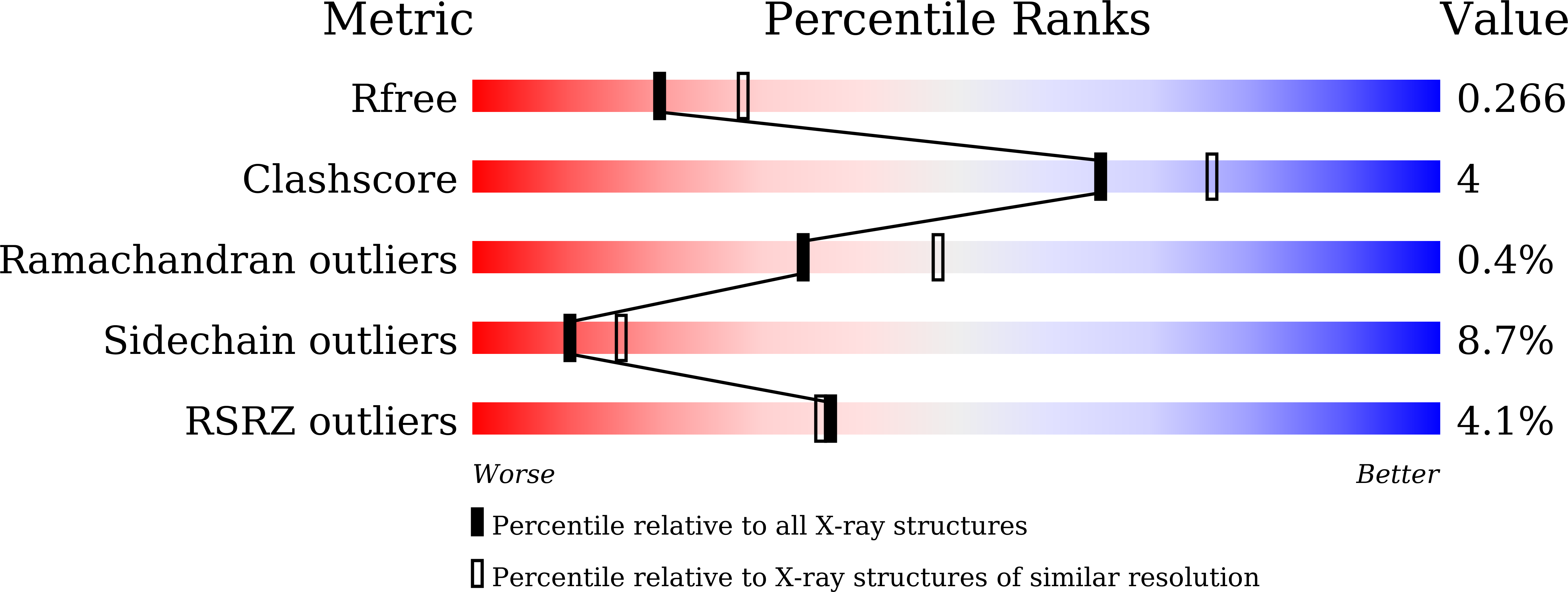
Macromolecular Entities
Structures with similar UniProt ID
Protein Blast
Polymer Type:polypeptide(L)
Molecule:Ferredoxin--NADP reductase
Gene (Uniprot):RPA3954
Chain IDs:A, B
Chain Length:342
Number of Molecules:2
Biological Source:Rhodopseudomonas palustris (strain ATCC BAA-98 / CGA009)
Ligand Molecules
Primary Citation
Kinetic and structural insight into a role of the re-face Tyr328 residue of the homodimer type ferredoxin-NADP+oxidoreductase from Rhodopseudomonas palustris in the reaction with NADP+/NADPH.
Biochim Biophys Acta Bioenerg ? 148140 148140 (2019)
PMID: 31838096 DOI: 10.1016/j.bbabio.2019.148140

Abstact

Among the thioredoxin reductase-type ferredoxin-NAD(P)+ oxidoreductase (FNR) family, FNR from photosynthetic purple non‑sulfur bacterium Rhodopseudomonas palustris (RpFNR) is distinctive because the predicted residue on the re-face of the isoalloxazine ring portion of the FAD prosthetic group is a tyrosine. Here, we report the crystal structure of wild type RpFNR and kinetic analyses of the reaction of wild type, and Y328F, Y328H and Y328S mutants with NADP+/NADPH using steady state and pre-steady state kinetic approaches. The obtained crystal structure of wild type RpFNR confirmed the presence of Tyr328 on the re-face of the isoalloxazine ring of the FAD prosthetic group through the unique hydrogen bonding of its hydroxyl group. In the steady state assays, the substitution results in the decrease of Kd for NADP+ and KM for NADPH in the diaphorase assay; however, the kcat values also decreased significantly. In the stopped-flow spectrophotometry, mixing oxidized RpFNRs with NADPH and reduced RpFNRs with NADP+ resulted in rapid charge transfer complex formation followed by hydride transfer. The observed rate constants for the hydride transfer in both directions were comparable (>400 s-1). The substitution did not drastically affect the rate of hydride transfer, but substantially slowed down the subsequent release and re-association of NADP+/NADPH in both directions. The obtained results suggest that Tyr328 stabilizes the stacking of C-terminal residues on the isoalloxazine ring portion of the FAD prosthetic group, which impedes the access of NADP+/NADPH on the isoalloxazine ring portions, in turn, enhancing the release of the NADP+/NADPH and/or reaction with electron transfer proteins.

Legend

Protein

Chemical

Disease

Primary Citation of related structures
Feedback Form
Name
Email
Institute
Feedback