

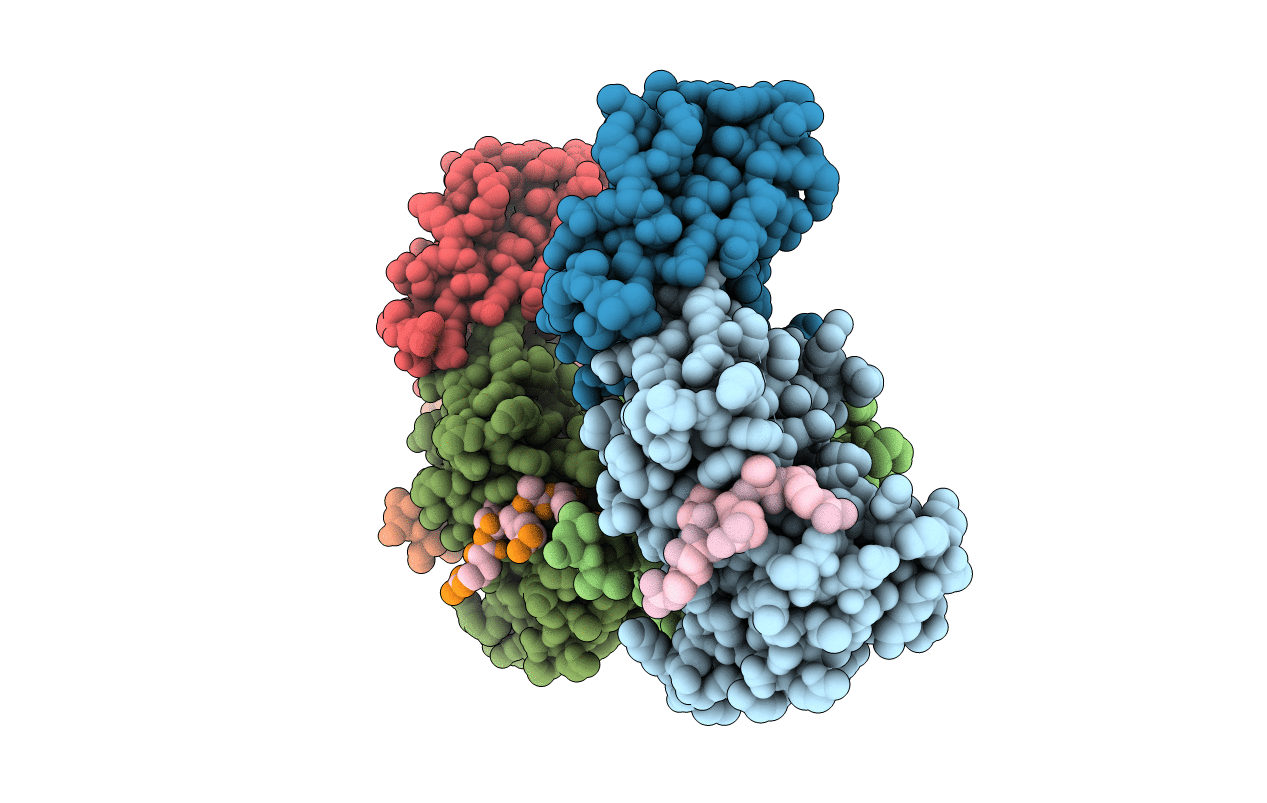
5YC1 image
Deposition Date 2017-09-06
Release Date 2017-10-11
Last Version Date 2024-03-27
Entry Detail
PDB ID:
5YC1
Title:
TRAF4_GPIb complex
Biological Source:
Source Organism(s):
Homo sapiens (Taxon ID: 9606)
Expression System(s):
Method Details:
Experimental Method:
Resolution:
2.51 Å
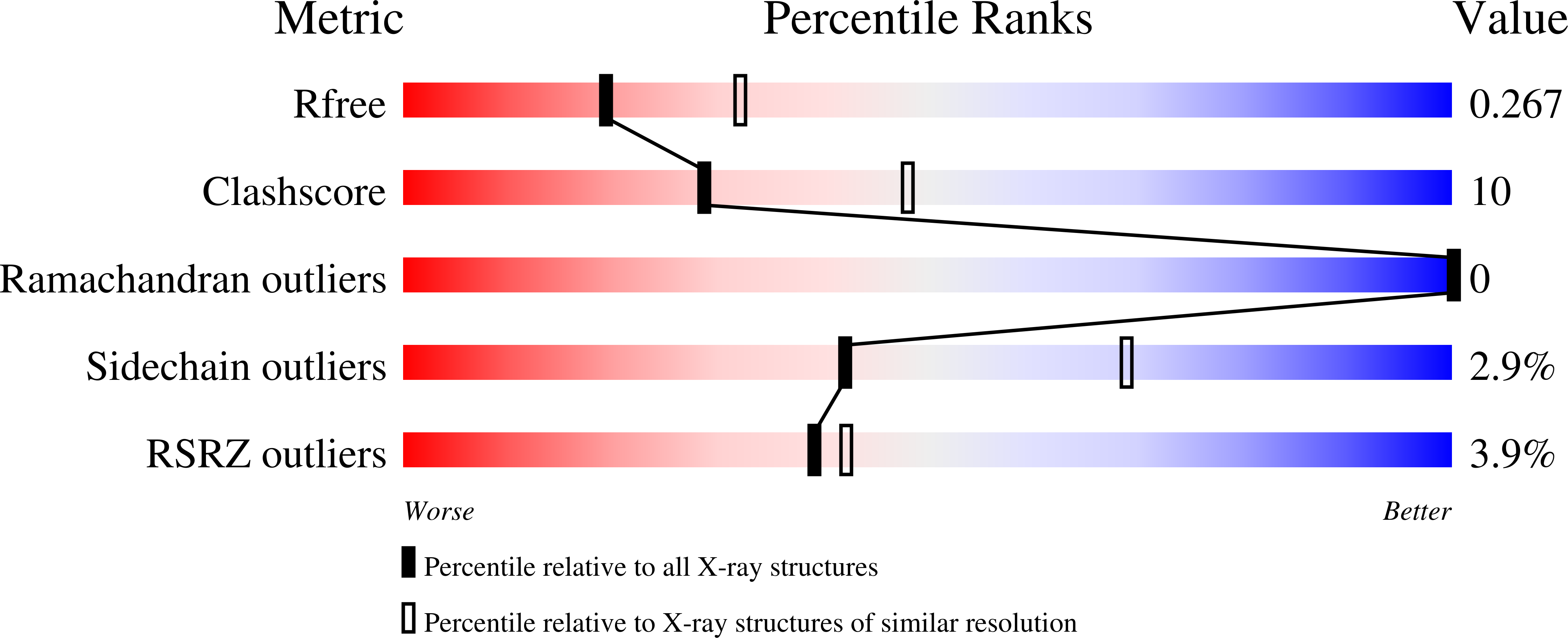
R-Value Free:
0.26
R-Value Work:
0.21
R-Value Observed:
0.21
Space Group:
P 1 21 1
Macromolecular Entities
Structures with similar UniProt ID
Protein Blast
Polymer Type:polypeptide(L)
Molecule:TNF receptor-associated facto
Gene (Uniprot):TRAF4
Chain IDs:A, B, C, D, E, F
Chain Length:181
Number of Molecules:6
Biological Source:Homo sapiens
Structures with similar UniProt ID
Protein Blast
Polymer Type:polypeptide(L)
Molecule:GPIb peptide
Chain IDs:G, H (auth: I), I (auth: K)
Chain Length:5
Number of Molecules:3
Biological Source:Homo sapiens
Primary Citation
Molecular basis for unique specificity of human TRAF4 for platelets GPIb beta and GPVI
Proc. Natl. Acad. Sci. U.S.A. 114 11422 11427 (2017)
PMID: 29073066 DOI: 10.1073/pnas.1708688114

Abstact

Tumor necrosis factor (TNF)-receptor associated factor 4 (TRAF4), an adaptor protein with E3-ligase activity, is involved in embryogenesis, cancer initiation and progression, and platelet receptor (GPIb-IX-V complex and GPVI)-mediated signaling for reactive oxygen species (ROS) production that initiates thrombosis at arterial shears. Disruption of platelet receptors and the TRAF4 interaction is a potential target for therapeutic intervention by antithrombotic drugs. Here, we report a crystal structure of TRAF4 (amino acid residues 290∼470) in complex with a peptide from the GPIbβ receptor (amino acid residues 177∼181). The GPIbβ peptide binds to a unique shallow surface composed of two hydrophobic pockets on TRAF4. Further studies revealed the TRAF4-binding motif Arg-Leu-X-Ala. The TRAF4-binding motif was present not only in platelet receptors but also in the TGF-β receptor. The current structure will provide a template for furthering our understanding of the receptor-binding specificity of TRAF4, TRAF4-mediated signaling, and related diseases.

Legend

Protein

Chemical

Disease

Primary Citation of related structures
Feedback Form
Name
Email
Institute
Feedback