

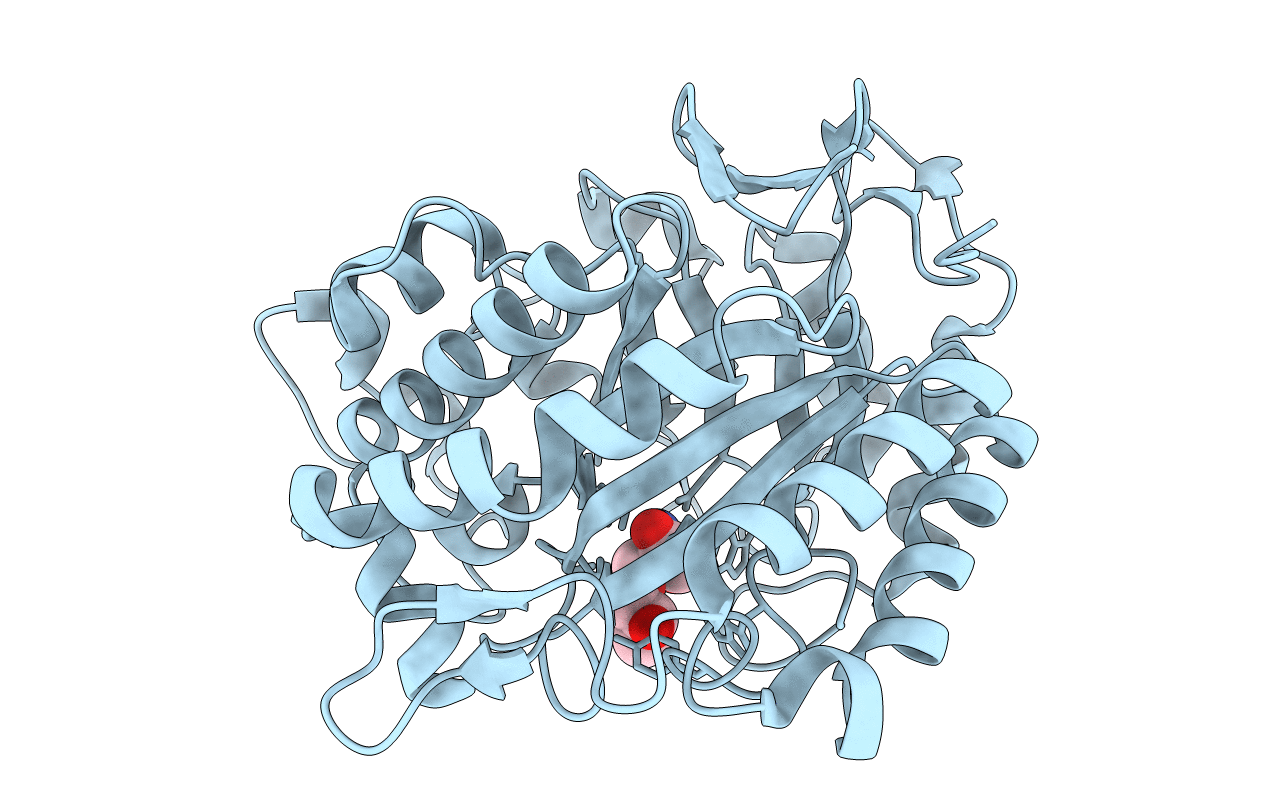
5Y6T image
Deposition Date 2017-08-15
Release Date 2018-06-27
Last Version Date 2024-10-23
Entry Detail
PDB ID:
5Y6T
Keywords:
Title:
Crystal structure of endo-1,4-beta-mannanase from Eisenia fetida
Biological Source:
Source Organism(s):
Eisenia fetida (Taxon ID: 6396)
Expression System(s):
Method Details:
Experimental Method:
Resolution:
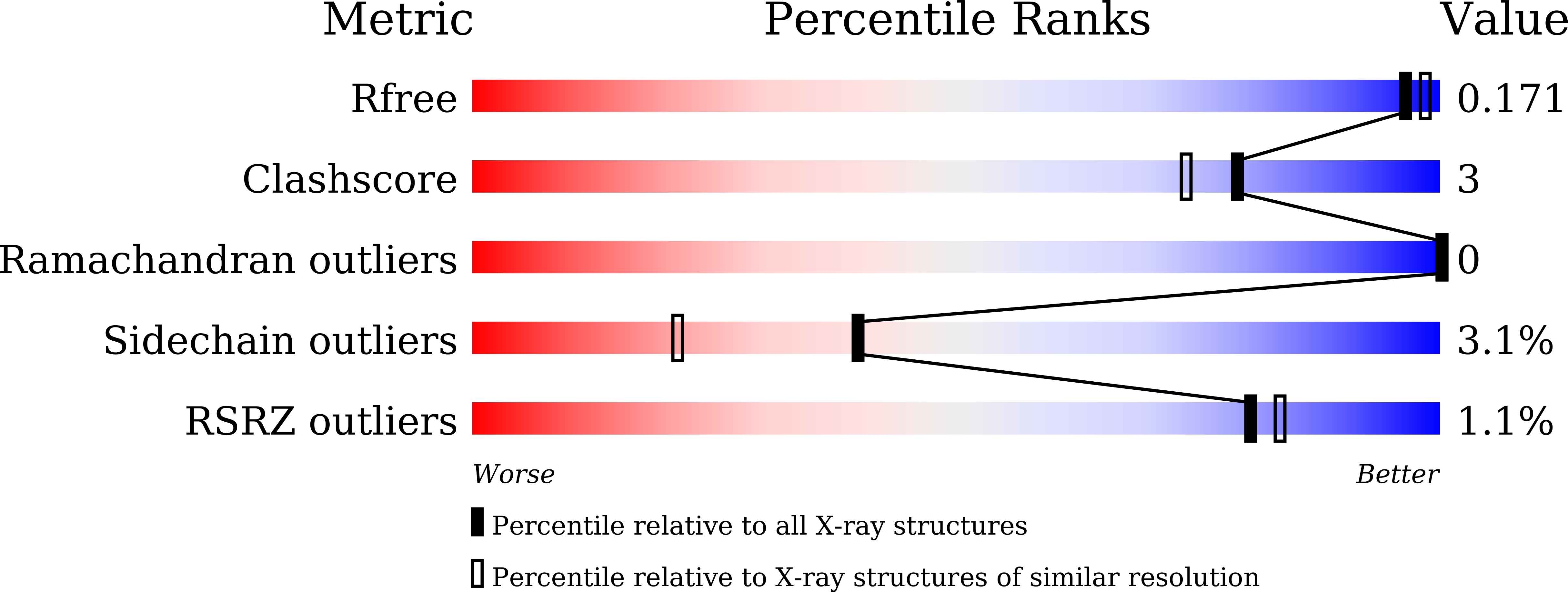
1.70 Å
R-Value Free:
0.16
R-Value Work:
0.13
R-Value Observed:
0.13
Space Group:
P 21 21 21
Macromolecular Entities
Structures with similar UniProt ID
Protein Blast
Polymer Type:polypeptide(L)
Molecule:endo-1,4-beta-mannanase
Chain IDs:A
Chain Length:387
Number of Molecules:1
Biological Source:Eisenia fetida
Primary Citation
Gene cloning, expression, and X-ray crystallographic analysis of a beta-mannanase from Eisenia fetida.
Enzyme.Microb.Technol. 117 15 22 (2018)
PMID: 30037547 DOI: 10.1016/j.enzmictec.2018.05.014

Abstact

The endo-1,4-β-mannanases (Ef-Man) gene from Eisenia fetida was determined to consist of 1131 bp and encode a 377 amino acid protein. The amino acid sequence showed similarity with the endo-1,4-β-mannanases of Daphnia pulex (62%), Cryptopygus antarcticus (64%), Crassostrea gigas (61%), Mytilus edulis (60%), and Aplysia kurodai (58%). The gene encoding mature Ef-Man was expressed in Pichia pastoris (GS115 strain). Based on SDS-PAGE analysis, the molecular mass of the purified recombinant Ef-Man (rEf-Man) was estimated to be 39 kDa. All catalytically important residues of endo-1,4-β-mannanases in the glycoside hydrolase (GH) family 5 were conserved in Ef-Man. The optimal temperature for rEf-Man was identified as 60 °C. HPLC and HPAEC analyses suggest that Ef-Man requires at least six subsites for efficient hydrolysis and is capable of performing transglycosylation reactions. The overall structure of rEf-Man is similar to those of GH5 family proteins, and tertiary structures around the active site are conserved among endo-1,4-β-mannanase families. X-ray crystallographic analysis supports the hydrolysis and transglycosylation reaction mechanism determined by HPLC and HPAEC analyses.

Legend

Protein

Chemical

Disease

Primary Citation of related structures
Feedback Form
Name
Email
Institute
Feedback