

5TWO image
Deposition Date 2016-11-14
Release Date 2017-02-08
Last Version Date 2023-10-04
Entry Detail
PDB ID:
5TWO
Keywords:
Title:
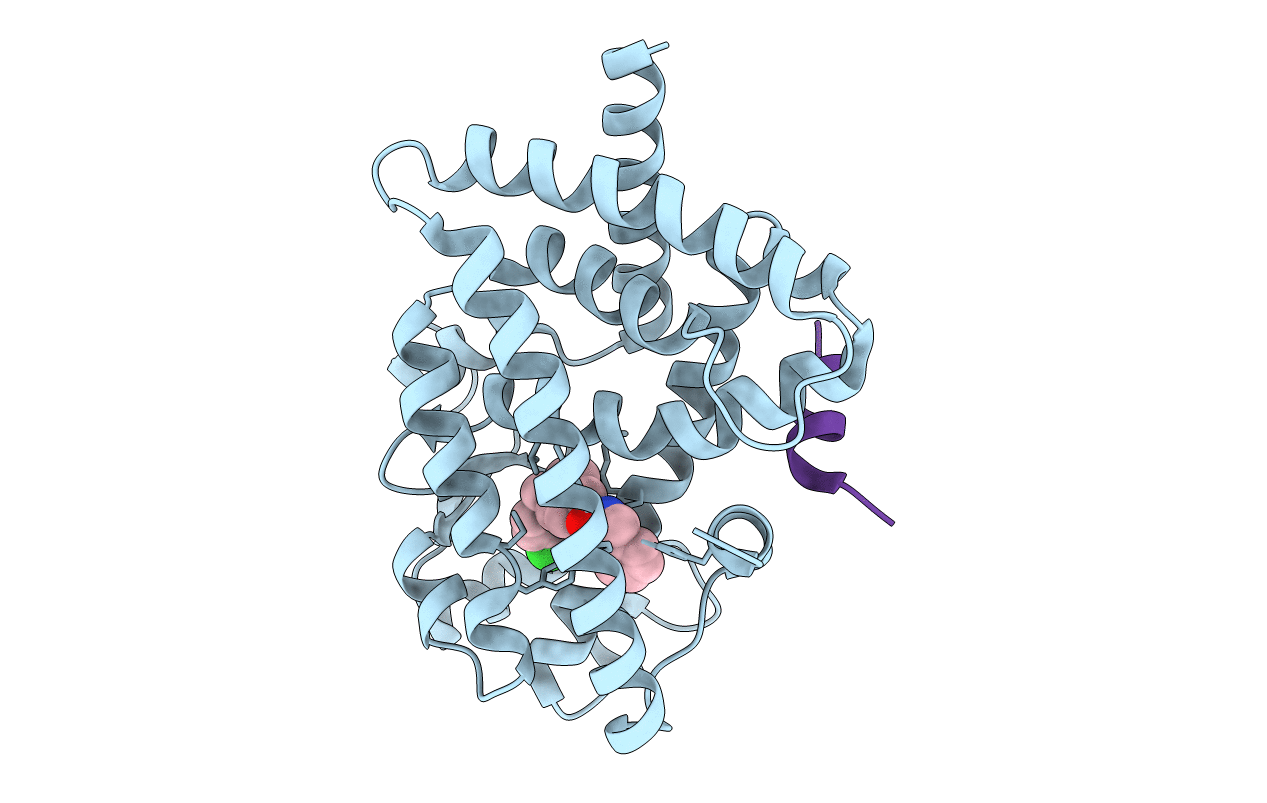
Peroxisome proliferator-activated receptor gamma ligand binding domain in complex with a novel selectively PPAR gamma-modulating ligand VSP-51
Biological Source:
Source Organism(s):
Homo sapiens (Taxon ID: 9606)
unidentified (Taxon ID: 32644)
Expression System(s):
Method Details:
Experimental Method:
Resolution:
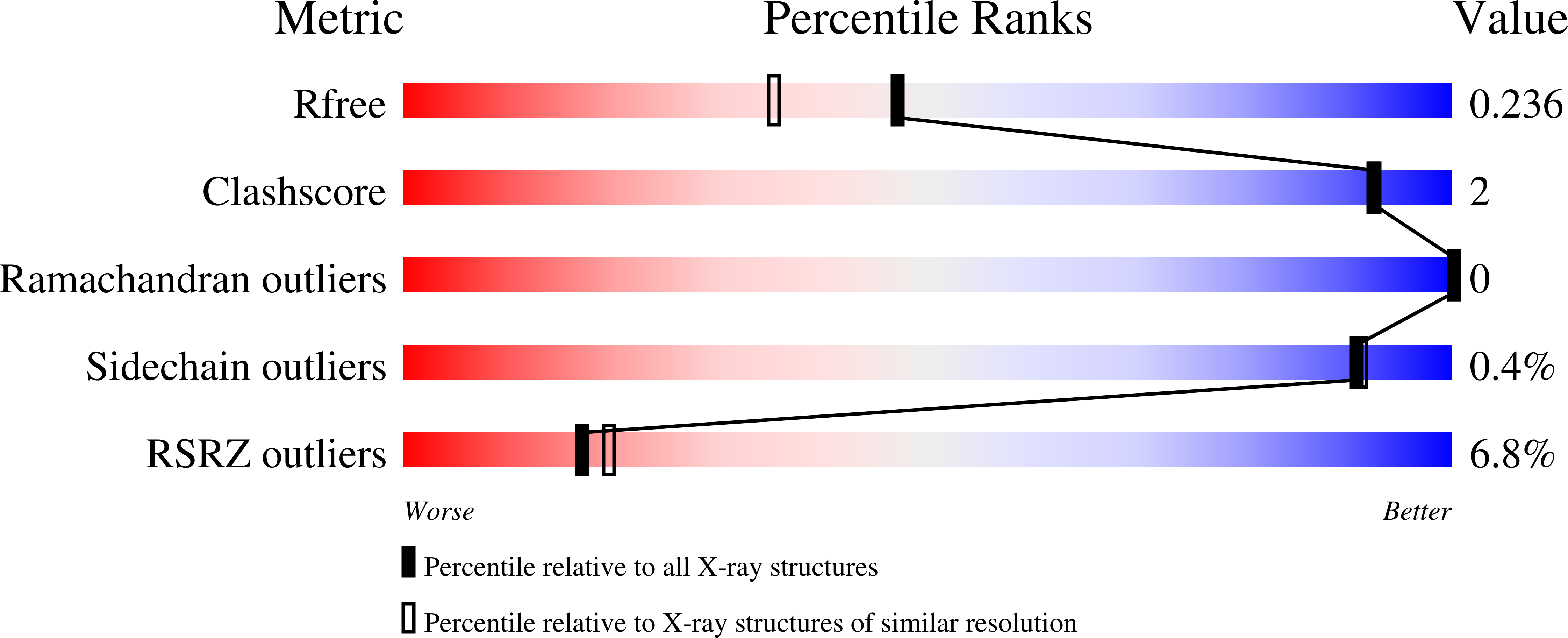
1.93 Å
R-Value Free:
0.23
R-Value Work:
0.20
R-Value Observed:
0.21
Space Group:
C 2 2 21
Macromolecular Entities
Structures with similar UniProt ID
Protein Blast
Polymer Type:polypeptide(L)
Molecule:Peroxisome proliferator-activ
Gene (Uniprot):PPARG
Chain IDs:A
Chain Length:272
Number of Molecules:1
Biological Source:Homo sapiens
Structures with similar UniProt ID
Protein Blast
Polymer Type:polypeptide(L)
Molecule:PRO-SER-LEU-LEU-LYS-LYS-LEU-L
Chain IDs:B
Chain Length:15
Number of Molecules:1
Biological Source:unidentified
Ligand Molecules
Primary Citation
Identification of a novel selective PPAR gamma ligand with a unique binding mode and improved therapeutic profile in vitro.
Sci Rep 7 41487 41487 (2017)
PMID: 28128331 DOI: 10.1038/srep41487

Abstact

Thiazolidinediones (TZD) function as potent anti-diabetic drugs through their direct action on the nuclear receptor peroxisome proliferator-activated receptor γ (PPARγ), but their therapeutic benefits are compromised by severe side effects. To address this concern, here we developed a potent "hit" compound, VSP-51, which is a novel selective PPARγ-modulating ligand with improved therapeutic profiles in vitro compared to the multi-billion dollar TZD drug rosiglitazone (Rosi). Unlike Rosi, VSP-51 is a partial agonist of PPARγ with improved insulin sensitivity due to its ability to bind PPARγ with high affinity without stimulating adipocyte differentiation and the expression of adipogenesis-related genes. We have determined the crystal structure of the PPARγ ligand-binding domain (LBD) in complex with VSP-51, which revealed a unique mode of binding for VSP-51 and provides the molecular basis for the discrimination between VSP-51 from TZDs and other ligands such as telmisartan, SR1663 and SR1664. Taken together, our findings demonstrate that: a) VSP-51 can serve as a promising candidate for anti-diabetic drug discovery; and b) provide a rational basis for the development of future pharmacological agents targeting PPARγ with advantages over current TZD drugs.

Legend

Protein

Chemical

Disease

Primary Citation of related structures
Feedback Form
Name
Email
Institute
Feedback