

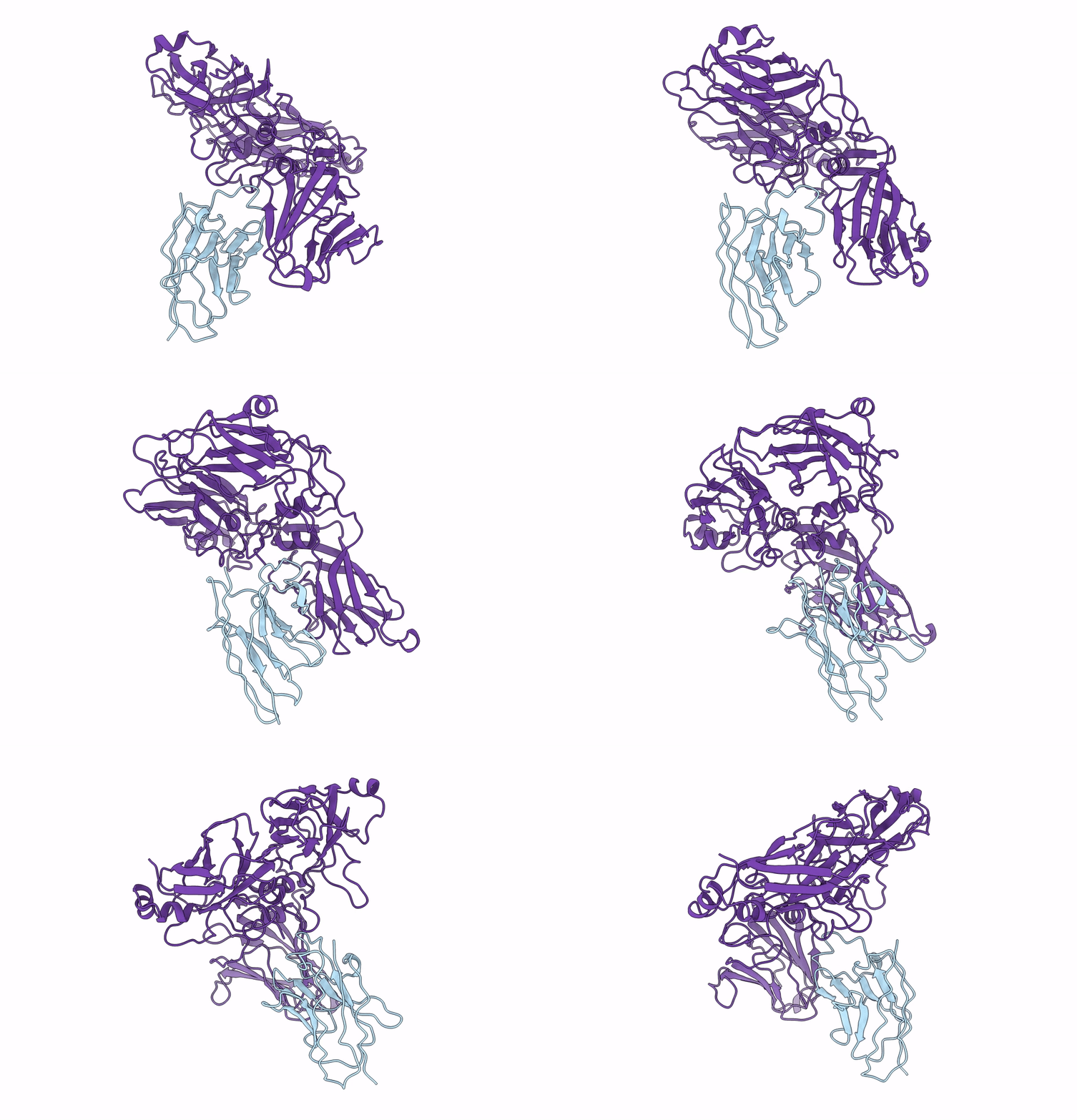
5FOJ image
Deposition Date 2015-11-22
Release Date 2016-01-20
Last Version Date 2024-11-20
Entry Detail
PDB ID:
5FOJ
Keywords:
Title:
Cryo electron microscopy structure of Grapevine Fanleaf Virus complex with Nanobody
Biological Source:
Source Organism(s):
Expression System(s):
Method Details:
Experimental Method:
Resolution:
2.80 Å
Aggregation State:
PARTICLE
Reconstruction Method:
SINGLE PARTICLE
Macromolecular Entities
Structures with similar UniProt ID
Protein Blast
Polymer Type:polypeptide(L)
Molecule:Nanobody
Chain IDs:A
Chain Length:137
Number of Molecules:1
Biological Source:Camelus dromedarius
Structures with similar UniProt ID
Protein Blast
Polymer Type:polypeptide(L)
Molecule:RNA2 polyprotein
Chain IDs:B
Chain Length:504
Number of Molecules:1
Biological Source:Grapevine fanleaf virus
Ligand Molecules
Primary Citation
Structural basis of nanobody recognition of grapevine fanleaf virus and of virus resistance loss.
Proceedings of the National Academy of Sciences of the United States of America 117 10848-10855 ? (2020)
PMID: 32371486 DOI: .

Abstact

Grapevine fanleaf virus (GFLV) is a picorna-like plant virus transmitted by nematodes that affects vineyards worldwide. Nanobody (Nb)-mediated resistance against GFLV has been created recently, and shown to be highly effective in plants, including grapevine, but the underlying mechanism is unknown. Here we present the high-resolution cryo electron microscopy structure of the GFLV-Nb23 complex, which provides the basis for molecular recognition by the Nb. The structure reveals a composite binding site bridging over three domains of one capsid protein (CP) monomer. The structure provides a precise mapping of the Nb23 epitope on the GFLV capsid in which the antigen loop is accommodated through an induced-fit mechanism. Moreover, we uncover and characterize several resistance-breaking GFLV isolates with amino acids mapping within this epitope, including C-terminal extensions of the CP, which would sterically interfere with Nb binding. Escape variants with such extended CP fail to be transmitted by nematodes linking Nb-mediated resistance to vector transmission. Together, these data provide insights into the molecular mechanism of Nb23-mediated recognition of GFLV and of virus resistance loss.

Legend

Protein

Chemical

Disease

Primary Citation of related structures
Feedback Form
Name
Email
Institute
Feedback