

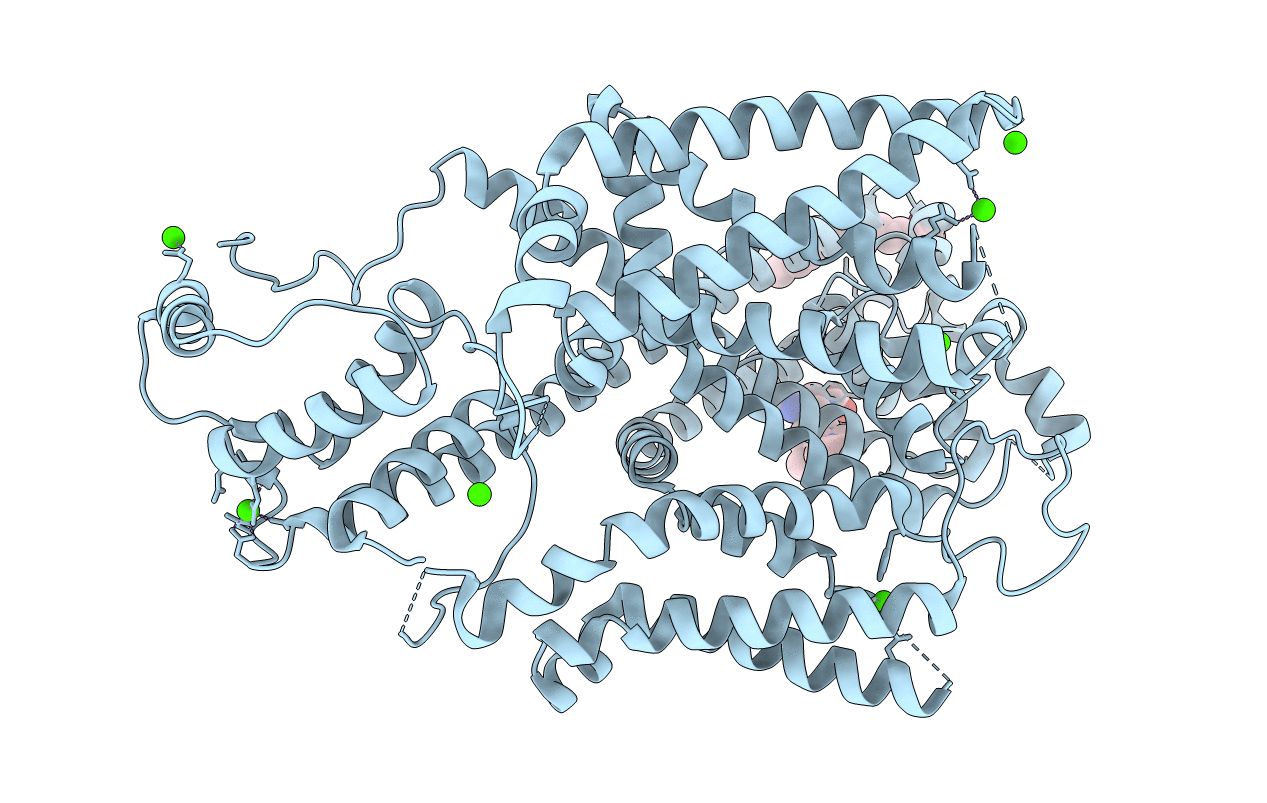
5DQQ image
Deposition Date 2015-09-15
Release Date 2016-03-09
Last Version Date 2024-03-06
Entry Detail
PDB ID:
5DQQ
Title:
Structure, inhibition and regulation of two-pore channel TPC1 from Arabidopsis thaliana
Biological Source:
Source Organism(s):
Expression System(s):
Method Details:
Experimental Method:
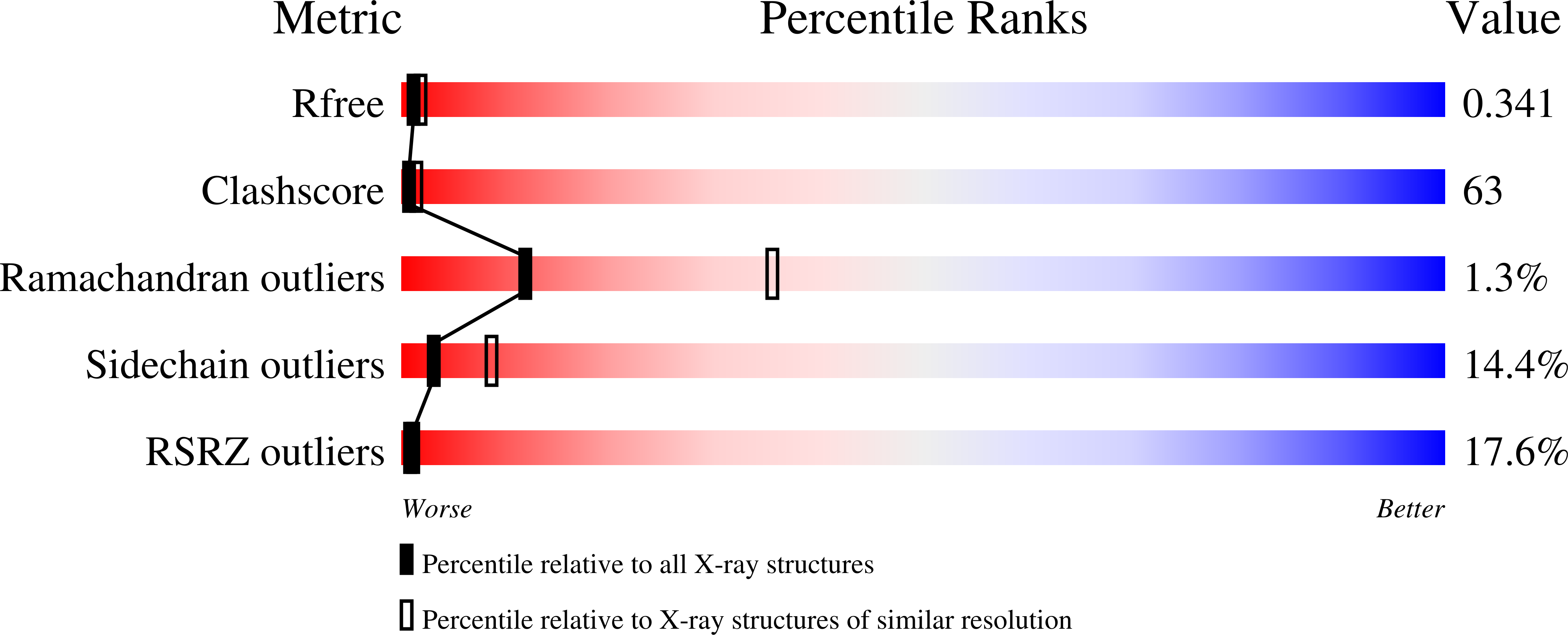
Resolution:
2.87 Å
R-Value Free:
0.33
R-Value Work:
0.29
R-Value Observed:
0.29
Space Group:
C 2 2 21
Macromolecular Entities
Structures with similar UniProt ID
Protein Blast
Polymer Type:polypeptide(L)
Molecule:Two pore calcium channel prot
Gene (Uniprot):TPC1
Chain IDs:A
Chain Length:723
Number of Molecules:1
Biological Source:Arabidopsis thaliana
Primary Citation
Structure, inhibition and regulation of two-pore channel TPC1 from Arabidopsis thaliana.
Nature 531 258 262 (2016)
PMID: 26961658 DOI: .

Abstact

Two-pore channels (TPCs) comprise a subfamily (TPC1-3) of eukaryotic voltage- and ligand-gated cation channels with two non-equivalent tandem pore-forming subunits that dimerize to form quasi-tetramers. Found in vacuolar or endolysosomal membranes, they regulate the conductance of sodium and calcium ions, intravesicular pH, trafficking and excitability. TPCs are activated by a decrease in transmembrane potential and an increase in cytosolic calcium concentrations, are inhibited by low luminal pH and calcium, and are regulated by phosphorylation. Here we report the crystal structure of TPC1 from Arabidopsis thaliana at 2.87 Å resolution as a basis for understanding ion permeation, channel activation, the location of voltage-sensing domains and regulatory ion-binding sites. We determined sites of phosphorylation in the amino-terminal and carboxy-terminal domains that are positioned to allosterically modulate cytoplasmic Ca(2+) activation. One of the two voltage-sensing domains (VSD2) encodes voltage sensitivity and inhibition by luminal Ca(2+) and adopts a conformation distinct from the activated state observed in structures of other voltage-gated ion channels. The structure shows that potent pharmacophore trans-Ned-19 (ref. 17) acts allosterically by clamping the pore domains to VSD2. In animals, Ned-19 prevents infection by Ebola virus and other filoviruses, presumably by altering their fusion with the endolysosome and delivery of their contents into the cytoplasm.

Legend

Protein

Chemical

Disease

Primary Citation of related structures
Feedback Form
Name
Email
Institute
Feedback