

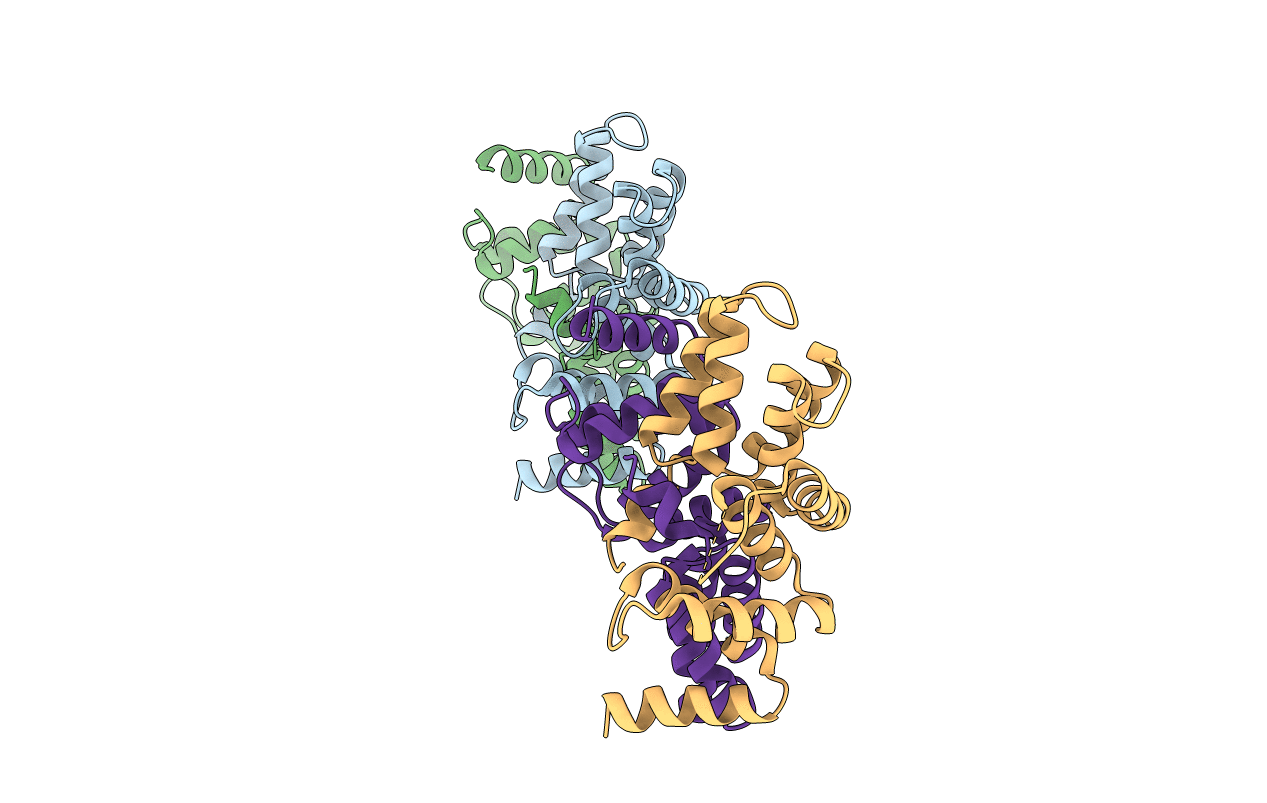
5B26 image
Deposition Date 2016-01-09
Release Date 2016-04-27
Last Version Date 2024-03-20
Entry Detail
PDB ID:
5B26
Title:
Crystal structure of mouse SEL1L
Biological Source:
Source Organism(s):
Mus musculus (Taxon ID: 10090)
Expression System(s):
Method Details:
Experimental Method:
Resolution:
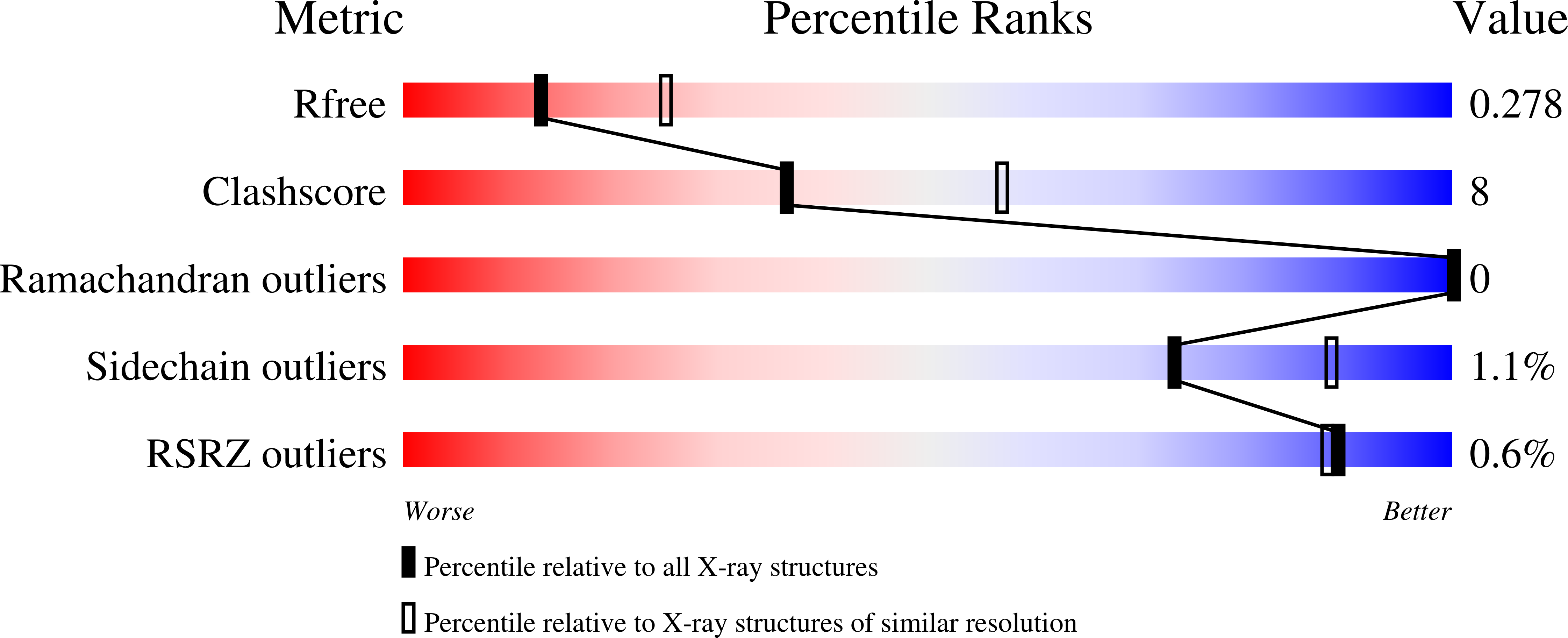
2.60 Å
R-Value Free:
0.28
R-Value Work:
0.20
R-Value Observed:
0.21
Space Group:
P 1 21 1
Macromolecular Entities
Structures with similar UniProt ID
Protein Blast
Polymer Type:polypeptide(L)
Molecule:Protein sel-1 homolog 1
Gene (Uniprot):Sel1l
Chain IDs:A, B, C, D
Chain Length:186
Number of Molecules:4
Biological Source:Mus musculus
Primary Citation
Crystal structure of SEL1L: Insight into the roles of SLR motifs in ERAD pathway
Sci Rep 6 20261 20261 (2016)
PMID: 27064360 DOI: 10.1038/srep20261

Abstact

Terminally misfolded proteins are selectively recognized and cleared by the endoplasmic reticulum-associated degradation (ERAD) pathway. SEL1L, a component of the ERAD machinery, plays an important role in selecting and transporting ERAD substrates for degradation. We have determined the crystal structure of the mouse SEL1L central domain comprising five Sel1-Like Repeats (SLR motifs 5 to 9; hereafter called SEL1L(cent)). Strikingly, SEL1L(cent) forms a homodimer with two-fold symmetry in a head-to-tail manner. Particularly, the SLR motif 9 plays an important role in dimer formation by adopting a domain-swapped structure and providing an extensive dimeric interface. We identified that the full-length SEL1L forms a self-oligomer through the SEL1L(cent) domain in mammalian cells. Furthermore, we discovered that the SLR-C, comprising SLR motifs 10 and 11, of SEL1L directly interacts with the N-terminus luminal loops of HRD1. Therefore, we propose that certain SLR motifs of SEL1L play a unique role in membrane bound ERAD machinery.

Legend

Protein

Chemical

Disease

Primary Citation of related structures
Feedback Form
Name
Email
Institute
Feedback