

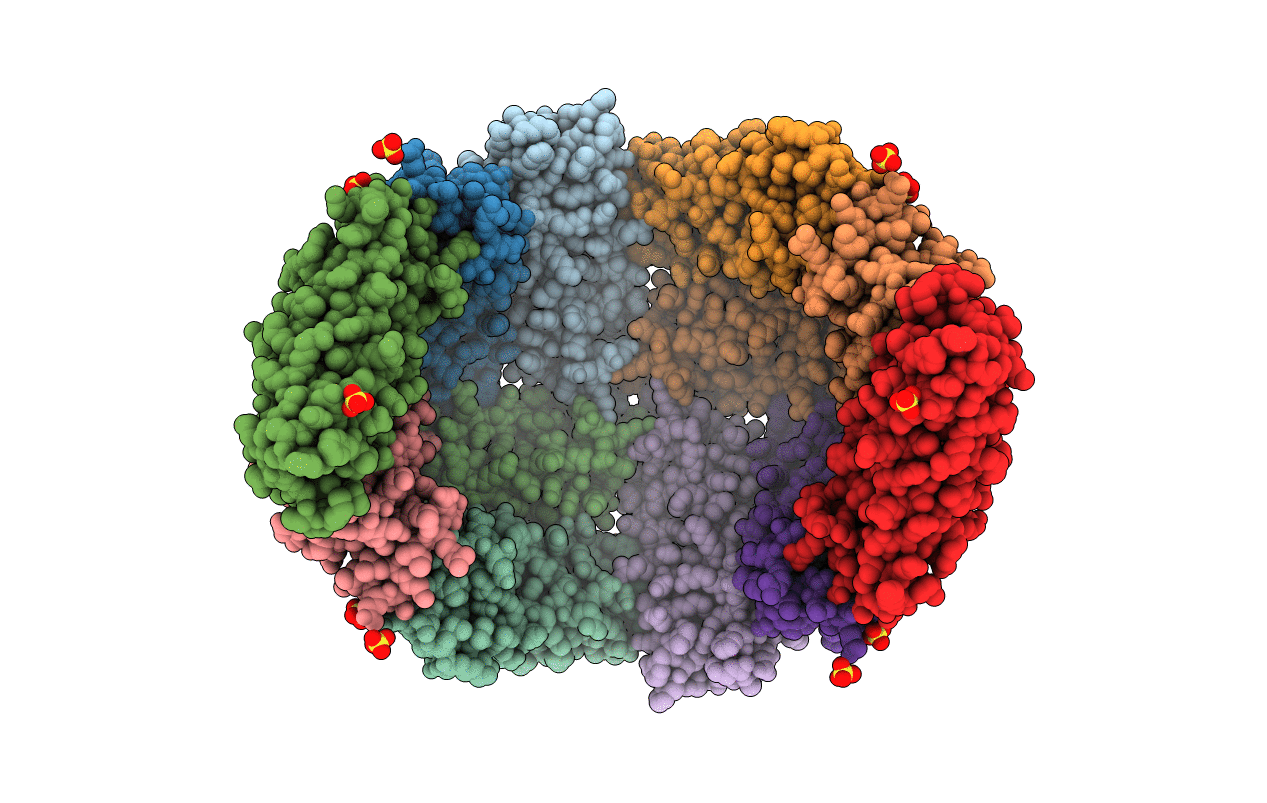
4XKU image
Deposition Date 2015-01-12
Release Date 2015-12-16
Last Version Date 2024-01-10
Entry Detail
PDB ID:
4XKU
Title:
E coli BFR variant Y114F
Biological Source:
Source Organism(s):
Expression System(s):
Method Details:
Experimental Method:
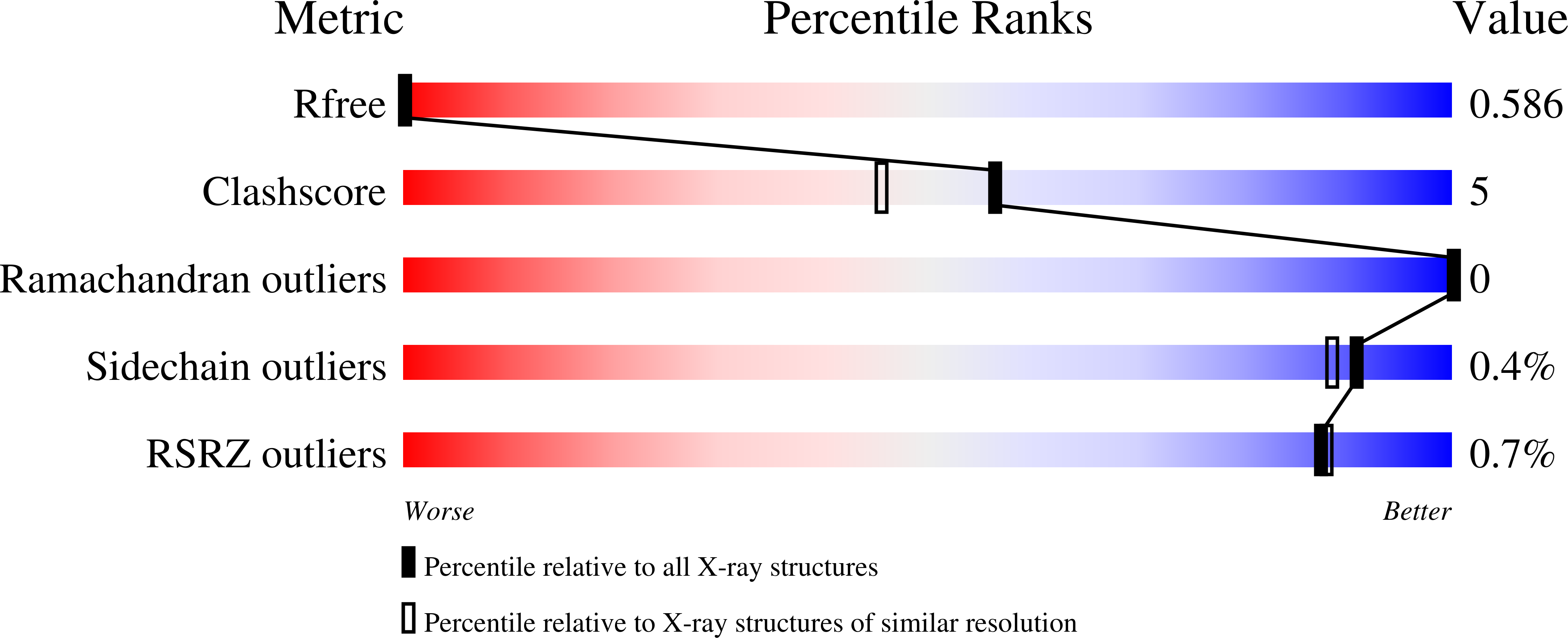
Resolution:
1.78 Å
R-Value Free:
0.21
R-Value Work:
0.18
R-Value Observed:
0.18
Space Group:
P 42 21 2
Macromolecular Entities
Structures with similar UniProt ID
Protein Blast
Polymer Type:polypeptide(L)
Molecule:Bacterioferritin
Gene (Uniprot):bfr
Mutagens:Y114F
Chain IDs:A, B, C, D, E, F, G, H, I, J, K, L
Chain Length:158
Number of Molecules:12
Biological Source:Escherichia coli (strain K12)
Ligand Molecules
Primary Citation
Three Aromatic Residues are Required for Electron Transfer during Iron Mineralization in Bacterioferritin.
Angew. Chem. Int. Ed. Engl. 54 14763 14767 (2015)
PMID: 26474305 DOI: 10.1002/anie.201507486

Abstact

Ferritins are iron storage proteins that overcome the problems of toxicity and poor bioavailability of iron by catalyzing iron oxidation and mineralization through the activity of a diiron ferroxidase site. Unlike in other ferritins, the oxidized di-Fe(3+) site of Escherichia coli bacterioferritin (EcBFR) is stable and therefore does not function as a conduit for the transfer of Fe(3+) into the storage cavity, but instead acts as a true catalytic cofactor that cycles its oxidation state while driving Fe(2+) oxidation in the cavity. Herein, we demonstrate that EcBFR mineralization depends on three aromatic residues near the diiron site, Tyr25, Tyr58, and Trp133, and that a transient radical is formed on Tyr25. The data indicate that the aromatic residues, together with a previously identified inner surface iron site, promote mineralization by ensuring the simultaneous delivery of two electrons, derived from Fe(2+) oxidation in the BFR cavity, to the di-ferric catalytic site for safe reduction of O2.

Legend

Protein

Chemical

Disease

Primary Citation of related structures
Feedback Form
Name
Email
Institute
Feedback