

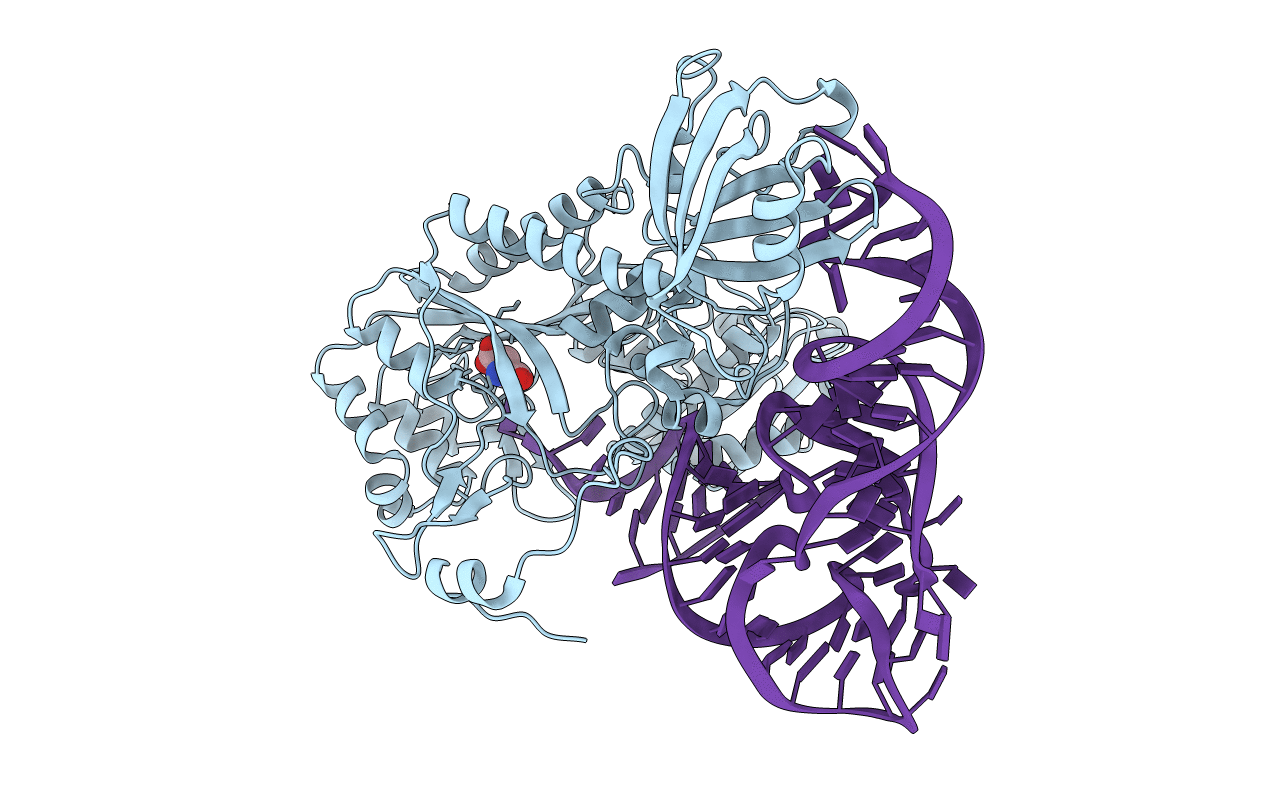
4WJ4 image
Deposition Date 2014-09-29
Release Date 2014-12-31
Last Version Date 2024-03-20
Entry Detail
PDB ID:
4WJ4
Keywords:
Title:
Crystal structure of non-discriminating aspartyl-tRNA synthetase from Pseudomonas aeruginosa complexed with tRNA(Asn) and aspartic acid
Biological Source:
Source Organism(s):
Expression System(s):
Method Details:
Experimental Method:
Resolution:
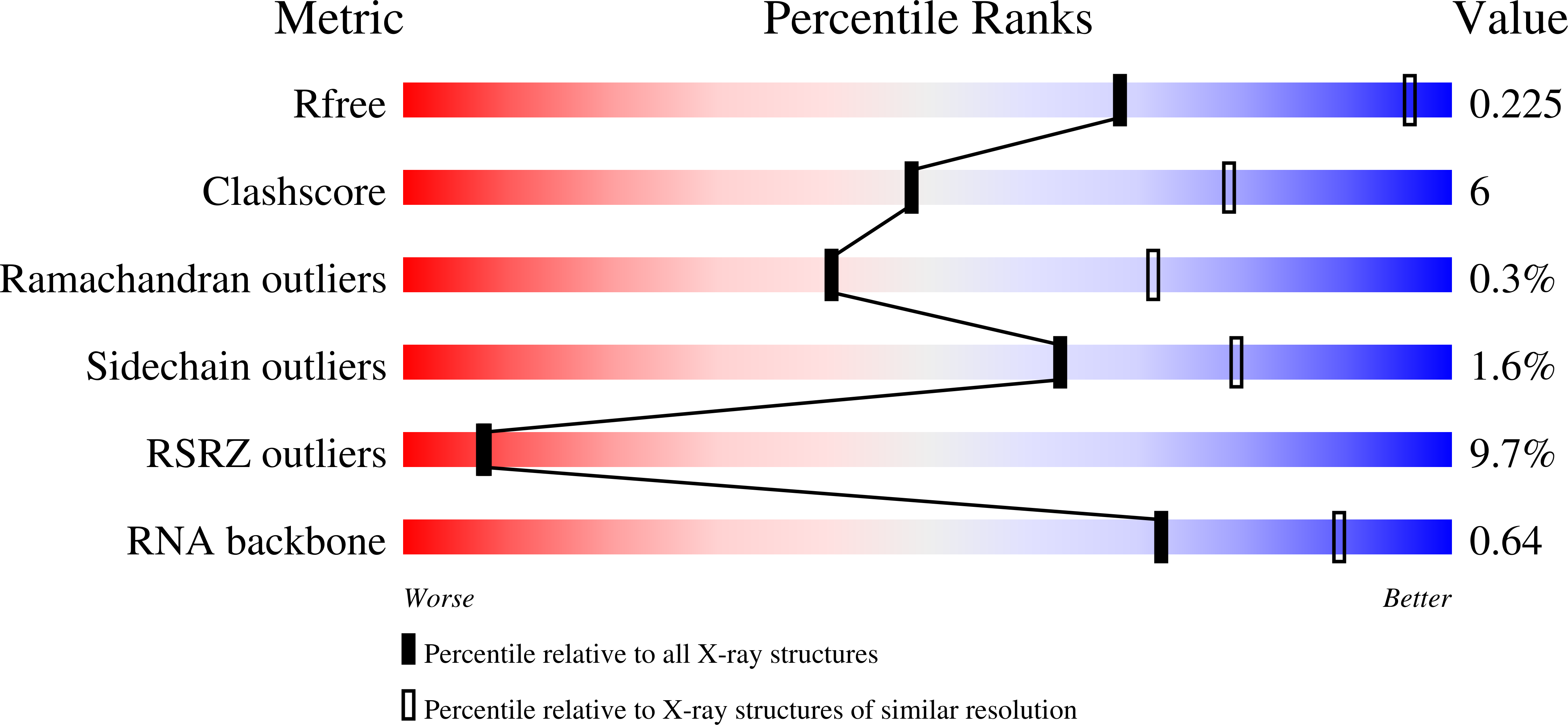
3.29 Å
R-Value Free:
0.22
R-Value Work:
0.18
R-Value Observed:
0.19
Space Group:
P 41 2 2
Macromolecular Entities
Structures with similar UniProt ID
Protein Blast
Polymer Type:polypeptide(L)
Molecule:Aspartate--tRNA(Asp/Asn) liga
Gene (Uniprot):aspS
Chain IDs:A
Chain Length:599
Number of Molecules:1
Biological Source:Pseudomonas aeruginosa PAO1
Polymer Type:polyribonucleotide
Molecule:76mer-tRNA
Chain IDs:B
Chain Length:76
Number of Molecules:1
Biological Source:Pseudomonas aeruginosa PAO1
Ligand Molecules
Primary Citation
Structure of the Pseudomonas aeruginosa transamidosome reveals unique aspects of bacterial tRNA-dependent asparagine biosynthesis
Proc. Natl. Acad. Sci. U.S.A. 112 382 387 (2015)
PMID: 25548166 DOI: 10.1073/pnas.1423314112

Abstact

Many prokaryotes lack a tRNA synthetase to attach asparagine to its cognate tRNA(Asn), and instead synthesize asparagine from tRNA(Asn)-bound aspartate. This conversion involves two enzymes: a nondiscriminating aspartyl-tRNA synthetase (ND-AspRS) that forms Asp-tRNA(Asn), and a heterotrimeric amidotransferase GatCAB that amidates Asp-tRNA(Asn) to form Asn-tRNA(Asn) for use in protein synthesis. ND-AspRS, GatCAB, and tRNA(Asn) may assemble in an ∼400-kDa complex, known as the Asn-transamidosome, which couples the two steps of asparagine biosynthesis in space and time to yield Asn-tRNA(Asn). We report the 3.7-Å resolution crystal structure of the Pseudomonas aeruginosa Asn-transamidosome, which represents the most common machinery for asparagine biosynthesis in bacteria. We show that, in contrast to a previously described archaeal-type transamidosome, a bacteria-specific GAD domain of ND-AspRS provokes a principally new architecture of the complex. Both tRNA(Asn) molecules in the transamidosome simultaneously serve as substrates and scaffolds for the complex assembly. This architecture rationalizes an elevated dynamic and a greater turnover of ND-AspRS within bacterial-type transamidosomes, and possibly may explain a different evolutionary pathway of GatCAB in organisms with bacterial-type vs. archaeal-type Asn-transamidosomes. Importantly, because the two-step pathway for Asn-tRNA(Asn) formation evolutionarily preceded the direct attachment of Asn to tRNA(Asn), our structure also may reflect the mechanism by which asparagine was initially added to the genetic code.

Legend

Protein

Chemical

Disease

Primary Citation of related structures
Feedback Form
Name
Email
Institute
Feedback