

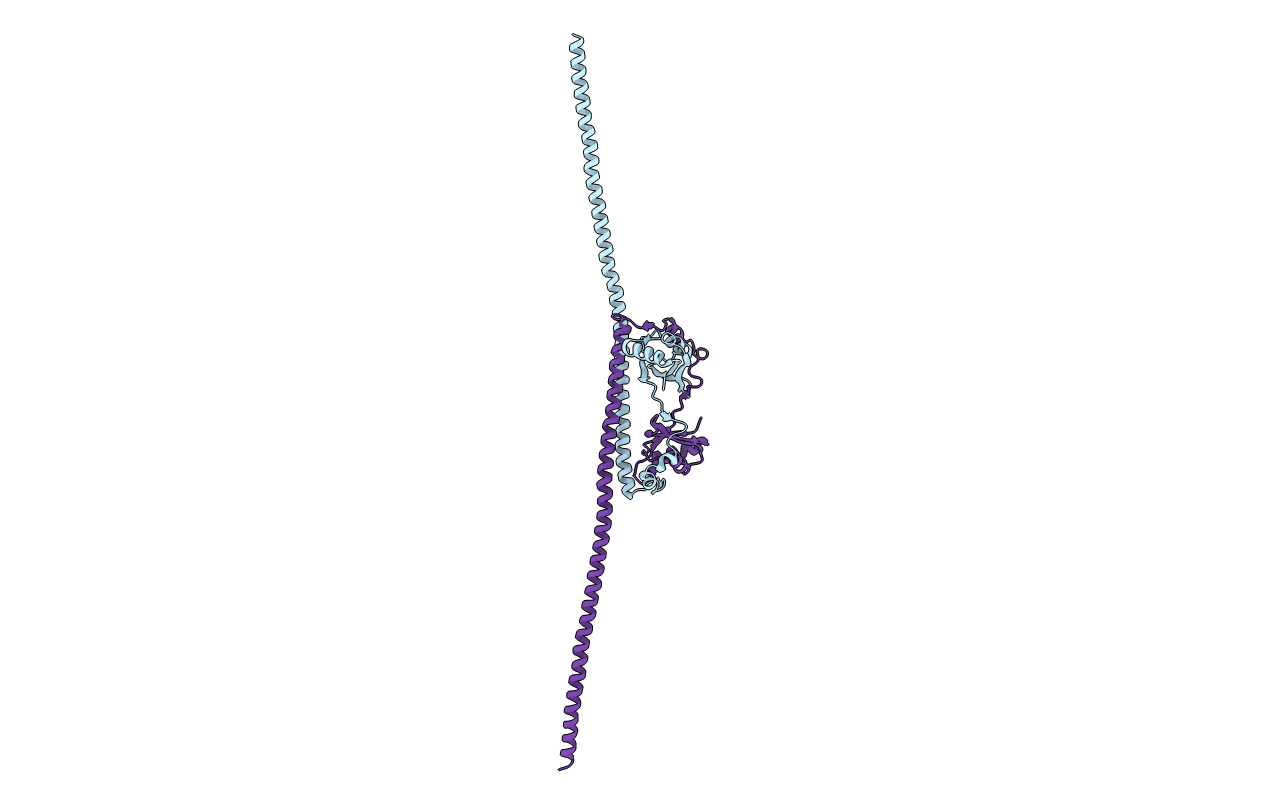
4WIK image
Deposition Date 2014-09-26
Release Date 2015-04-01
Last Version Date 2023-12-27
Entry Detail
PDB ID:
4WIK
Keywords:
Title:
HUMAN SPLICING FACTOR, CONSTRUCT 2
Biological Source:
Source Organism(s):
Homo sapiens (Taxon ID: 9606)
Expression System(s):
Method Details:
Experimental Method:
Resolution:
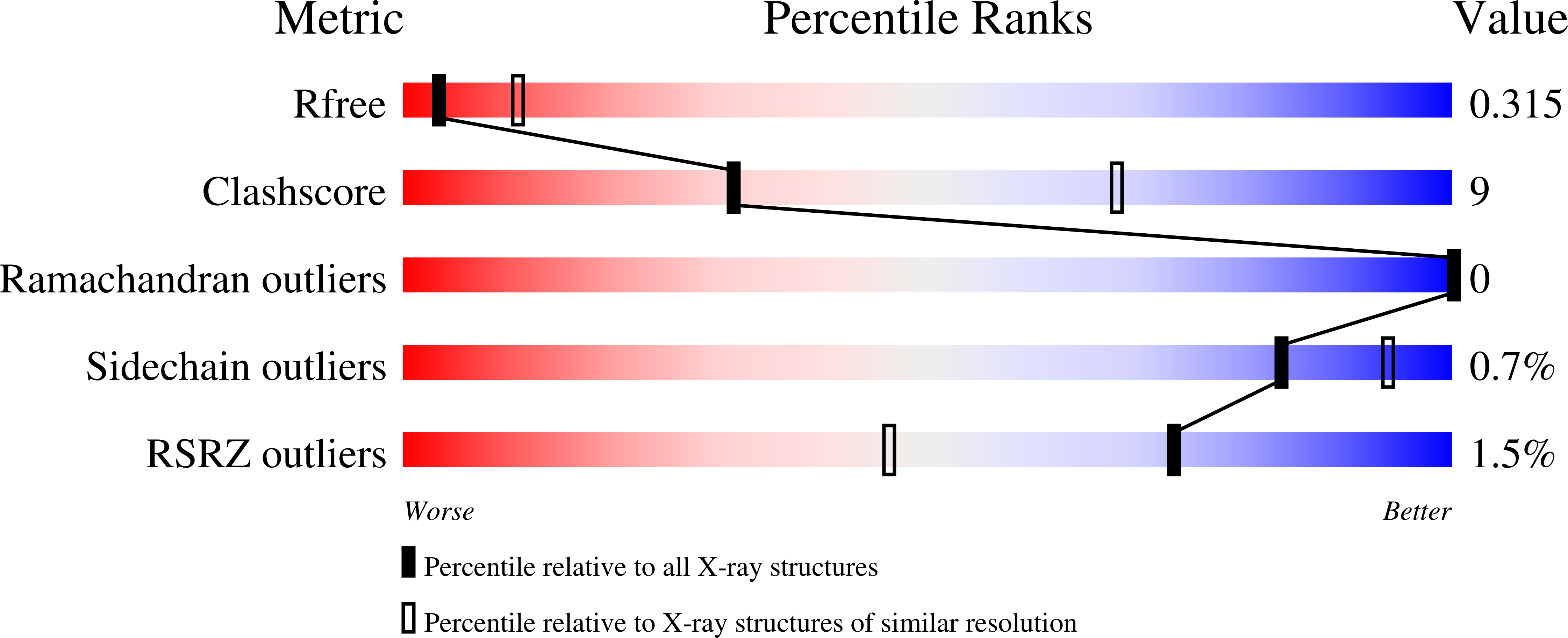
3.00 Å
R-Value Free:
0.29
R-Value Work:
0.24
R-Value Observed:
0.24
Space Group:
C 2 2 21
Macromolecular Entities
Structures with similar UniProt ID
Protein Blast
Polymer Type:polypeptide(L)
Molecule:Splicing factor, proline- and
Gene (Uniprot):SFPQ
Chain IDs:A, B
Chain Length:234
Number of Molecules:2
Biological Source:Homo sapiens
Ligand Molecules
Primary Citation
The structure of human SFPQ reveals a coiled-coil mediated polymer essential for functional aggregation in gene regulation.
Nucleic Acids Res. 43 3826 3840 (2015)
PMID: 25765647 DOI: 10.1093/nar/gkv156

Abstact

SFPQ, (a.k.a. PSF), is a human tumor suppressor protein that regulates many important functions in the cell nucleus including coordination of long non-coding RNA molecules into nuclear bodies. Here we describe the first crystal structures of Splicing Factor Proline and Glutamine Rich (SFPQ), revealing structural similarity to the related PSPC1/NONO heterodimer and a strikingly extended structure (over 265 Å long) formed by an unusual anti-parallel coiled-coil that results in an infinite linear polymer of SFPQ dimers within the crystals. Small-angle X-ray scattering and transmission electron microscopy experiments show that polymerization is reversible in solution and can be templated by DNA. We demonstrate that the ability to polymerize is essential for the cellular functions of SFPQ: disruptive mutation of the coiled-coil interaction motif results in SFPQ mislocalization, reduced formation of nuclear bodies, abrogated molecular interactions and deficient transcriptional regulation. The coiled-coil interaction motif thus provides a molecular explanation for the functional aggregation of SFPQ that directs its role in regulating many aspects of cellular nucleic acid metabolism.

Legend

Protein

Chemical

Disease

Primary Citation of related structures
Feedback Form
Name
Email
Institute
Feedback