

4TXO image
Deposition Date 2014-07-04
Release Date 2014-10-01
Last Version Date 2024-11-13
Entry Detail
PDB ID:
4TXO
Title:
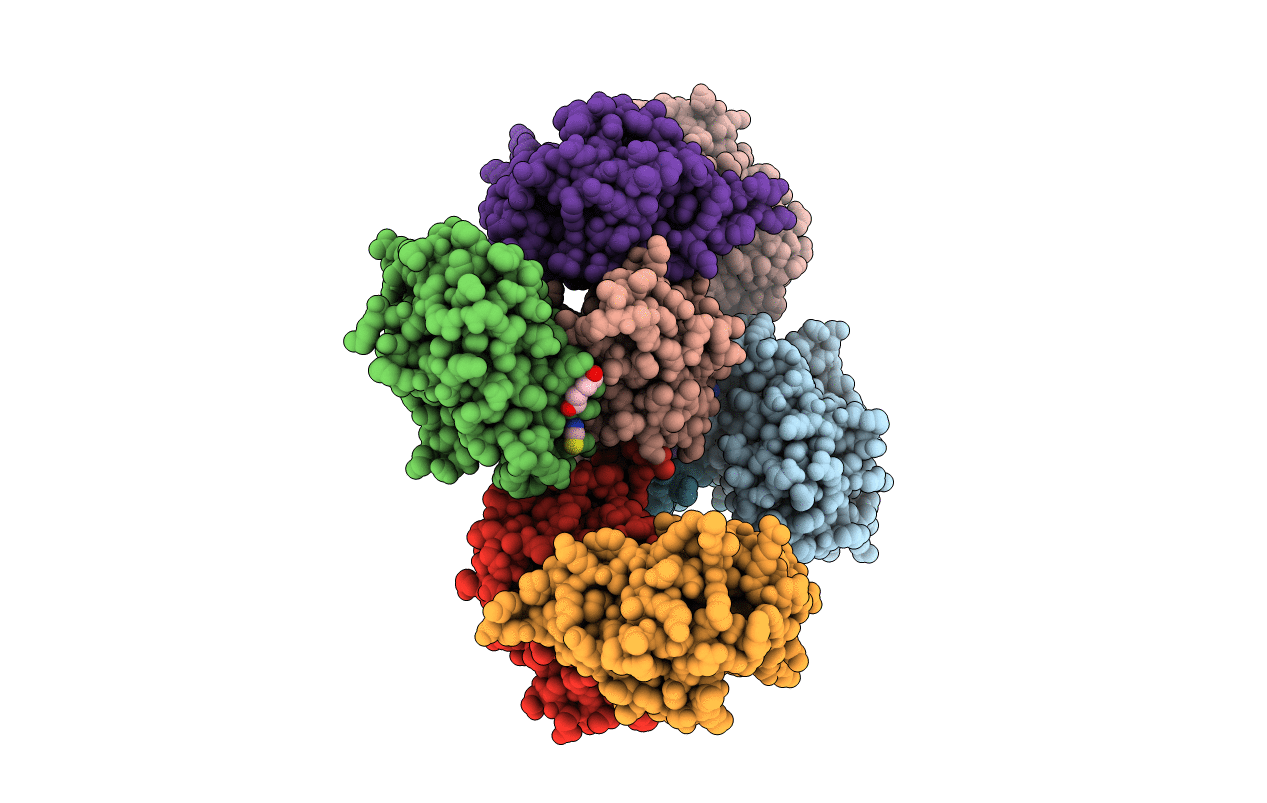
Crystal structure of the mixed disulfide complex of thioredoxin-like TlpAs(C110S) and copper chaperone ScoIs(C74S)
Biological Source:
Method Details:
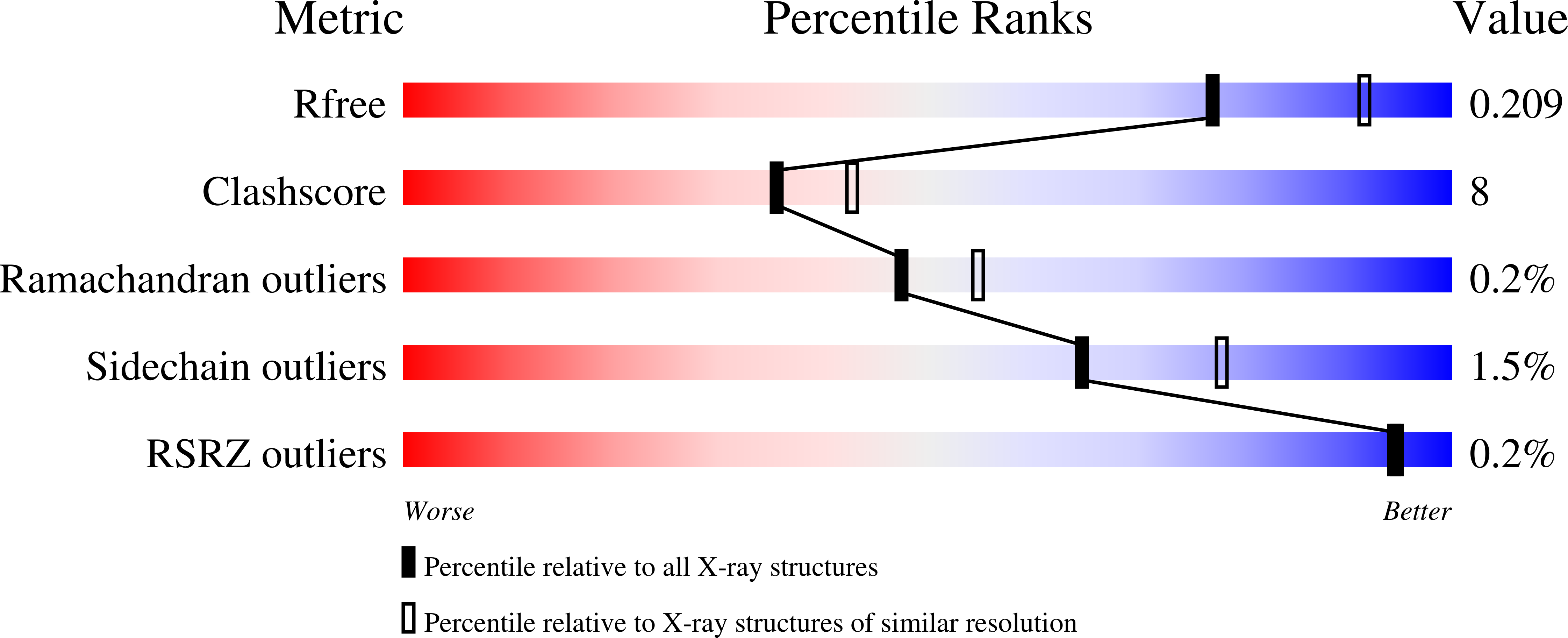
Experimental Method:
Resolution:
2.20 Å
R-Value Free:
0.20
R-Value Work:
0.17
R-Value Observed:
0.17
Space Group:
P 1 21 1
Macromolecular Entities
Structures with similar UniProt ID
Protein Blast
Polymer Type:polypeptide(L)
Molecule:Thiol:disulfide interchange p
Gene (Uniprot):tlpA
Mutagens:C110S
Chain IDs:A (auth: C), C (auth: A), E, G
Chain Length:184
Number of Molecules:4
Biological Source:Bradyrhizobium diazoefficiens USDA 110
Structures with similar UniProt ID
Protein Blast
Polymer Type:polypeptide(L)
Molecule:Blr1131 protein
Gene (Uniprot):blr1131
Mutagens:C74S, WSHPQFEK: StrepII purification tag
Chain IDs:B (auth: D), D (auth: B), F, H
Chain Length:175
Number of Molecules:4
Biological Source:Bradyrhizobium diazoefficiens USDA 110
Primary Citation
How Periplasmic Thioredoxin TlpA Reduces Bacterial Copper Chaperone ScoI and Cytochrome Oxidase Subunit II (CoxB) Prior to Metallation.
J. Biol. Chem. 289 32431 32444 (2014)
PMID: 25274631 DOI: 10.1074/jbc.M114.607127

Abstact

Two critical cysteine residues in the copper-A site (Cu(A)) on subunit II (CoxB) of bacterial cytochrome c oxidase lie on the periplasmic side of the cytoplasmic membrane. As the periplasm is an oxidizing environment as compared with the reducing cytoplasm, the prediction was that a disulfide bond formed between these cysteines must be eliminated by reduction prior to copper insertion. We show here that a periplasmic thioredoxin (TlpA) acts as a specific reductant not only for the Cu(2+) transfer chaperone ScoI but also for CoxB. The dual role of TlpA was documented best with high-resolution crystal structures of the kinetically trapped TlpA-ScoI and TlpA-CoxB mixed disulfide intermediates. They uncovered surprisingly disparate contact sites on TlpA for each of the two protein substrates. The equilibrium of CoxB reduction by TlpA revealed a thermodynamically favorable reaction, with a less negative redox potential of CoxB (E'0 = -231 mV) as compared with that of TlpA (E'0 = -256 mV). The reduction of CoxB by TlpA via disulfide exchange proved to be very fast, with a rate constant of 8.4 × 10(4) M(-1) s(-1) that is similar to that found previously for ScoI reduction. Hence, TlpA is a physiologically relevant reductase for both ScoI and CoxB. Although the requirement of ScoI for assembly of the Cu(A)-CoxB complex may be bypassed in vivo by high environmental Cu(2+) concentrations, TlpA is essential in this process because only reduced CoxB can bind copper ions.

Legend

Protein

Chemical

Disease

Primary Citation of related structures
Feedback Form
Name
Email
Institute
Feedback