

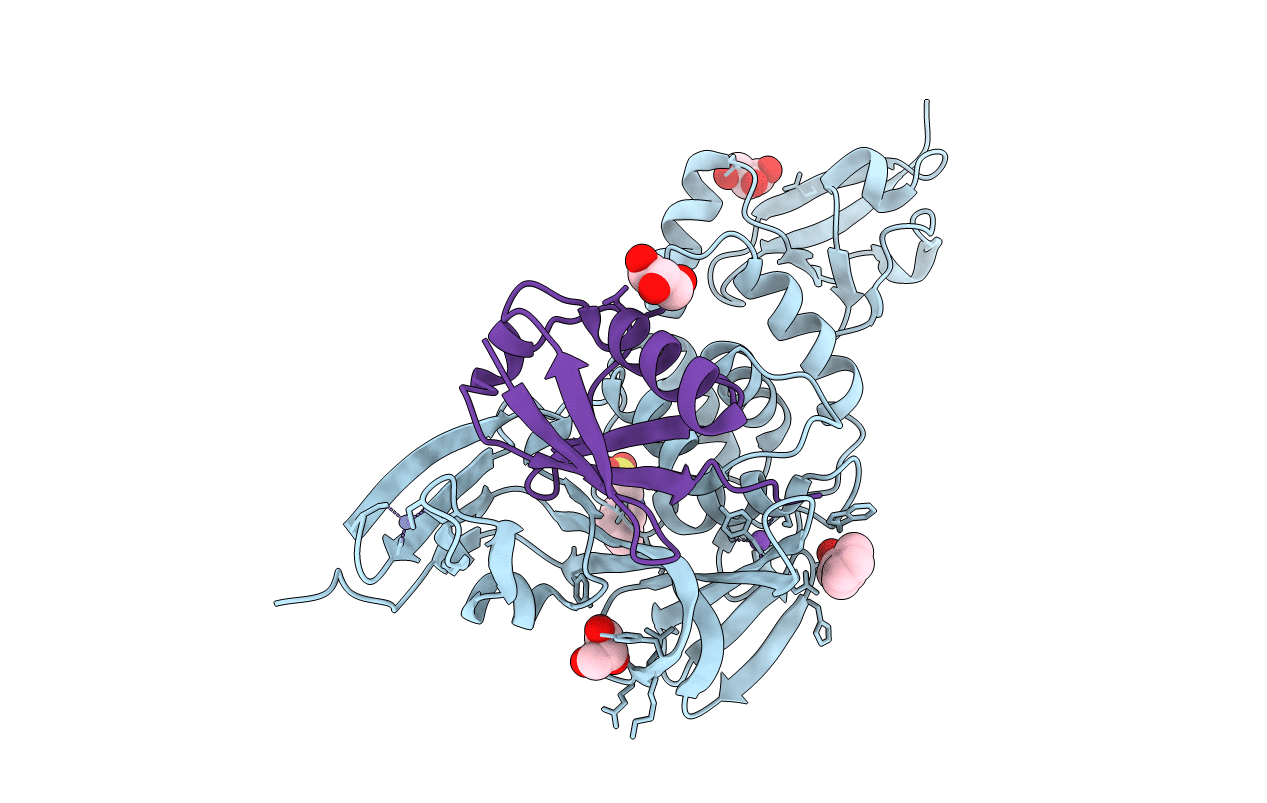
4M0W image
Deposition Date 2013-08-02
Release Date 2014-02-12
Last Version Date 2023-11-08
Entry Detail
PDB ID:
4M0W
Title:
Crystal Structure of SARS-CoV papain-like protease C112S mutant in complex with ubiquitin
Biological Source:
Source Organism(s):
SARS coronavirus (Taxon ID: 227859)
Bos taurus (Taxon ID: 9913)
Expression System(s):
Method Details:
Experimental Method:
Resolution:
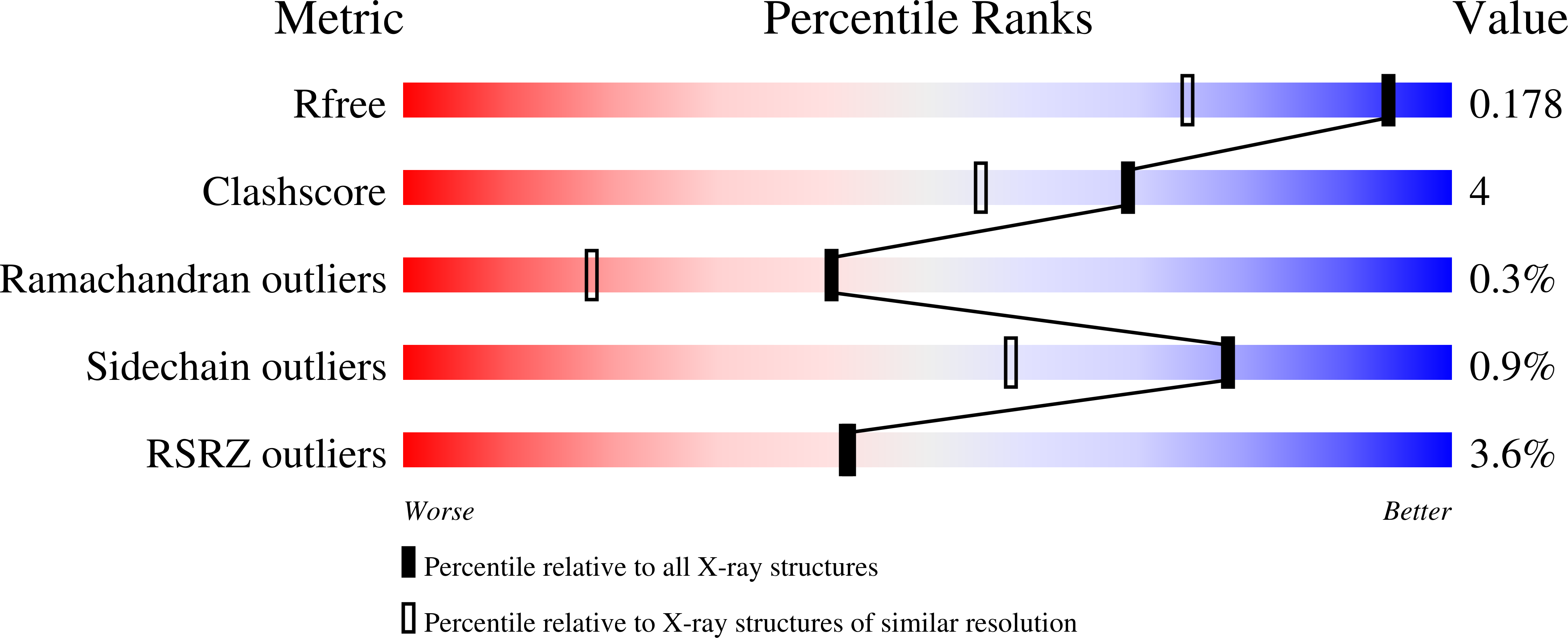
1.40 Å
R-Value Free:
0.17
R-Value Work:
0.15
R-Value Observed:
0.15
Space Group:
P 1 21 1
Macromolecular Entities
Structures with similar UniProt ID
Protein Blast
Polymer Type:polypeptide(L)
Molecule:Replicase polyprotein 1a
Gene (Uniprot):1a
Mutagens:C112S
Chain IDs:A
Chain Length:327
Number of Molecules:1
Biological Source:SARS coronavirus
Structures with similar UniProt ID
Protein Blast
Polymer Type:polypeptide(L)
Molecule:Ubiquitin
Gene (Uniprot):RPS27A
Chain IDs:B
Chain Length:76
Number of Molecules:1
Biological Source:Bos taurus
Primary Citation
Structural basis for catalysis and ubiquitin recognition by the severe acute respiratory syndrome coronavirus papain-like protease
Acta Crystallogr. D Biol. Crystallogr. 70 572 581 (2014)
PMID: 24531491 DOI: 10.1107/S1399004713031040

Abstact

Papain-like protease (PLpro) is one of two cysteine proteases involved in the proteolytic processing of the polyproteins of Severe acute respiratory syndrome coronavirus (SARS-CoV). PLpro also shows significant in vitro deubiquitinating and de-ISGylating activities, although the detailed mechanism is still unclear. Here, the crystal structure of SARS-CoV PLpro C112S mutant in complex with ubiquitin (Ub) is reported at 1.4 Å resolution. The Ub core makes mostly hydrophilic interactions with PLpro, while the Leu-Arg-Gly-Gly C-terminus of Ub is located in the catalytic cleft of PLpro, mimicking the P4-P1 residues and providing the first atomic insights into its catalysis. One of the O atoms of the C-terminal Gly residue of Ub is located in the oxyanion hole consisting of the main-chain amides of residues 112 and 113. Mutations of residues in the PLpro-Ub interface lead to reduced catalytic activity, confirming their importance for Ub binding and/or catalysis. The structure also revealed an N-cyclohexyl-2-aminethanesulfonic acid molecule near the catalytic triad, and kinetic studies suggest that this binding site is also used by other PLpro inhibitors. Overall, the structure provides a foundation for understanding the molecular basis of coronaviral PLpro catalysis.

Legend

Protein

Chemical

Disease

Primary Citation of related structures
Feedback Form
Name
Email
Institute
Feedback