

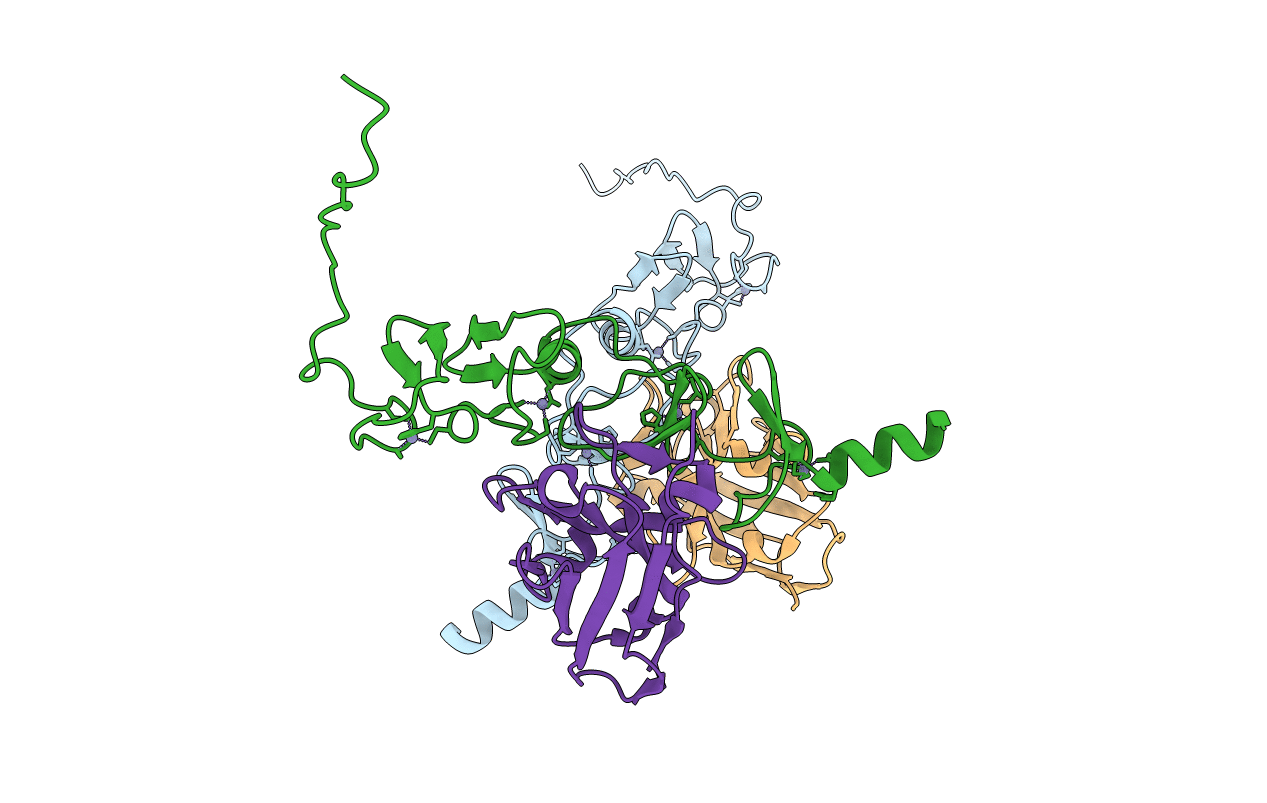
4KFZ image
Deposition Date 2013-04-28
Release Date 2014-01-22
Last Version Date 2023-09-20
Entry Detail
PDB ID:
4KFZ
Keywords:
Title:
Crystal structure of LMO2 and anti-LMO2 VH complex
Biological Source:
Source Organism(s):
Homo sapiens (Taxon ID: 9606)
Expression System(s):
Method Details:
Experimental Method:
Resolution:
2.80 Å
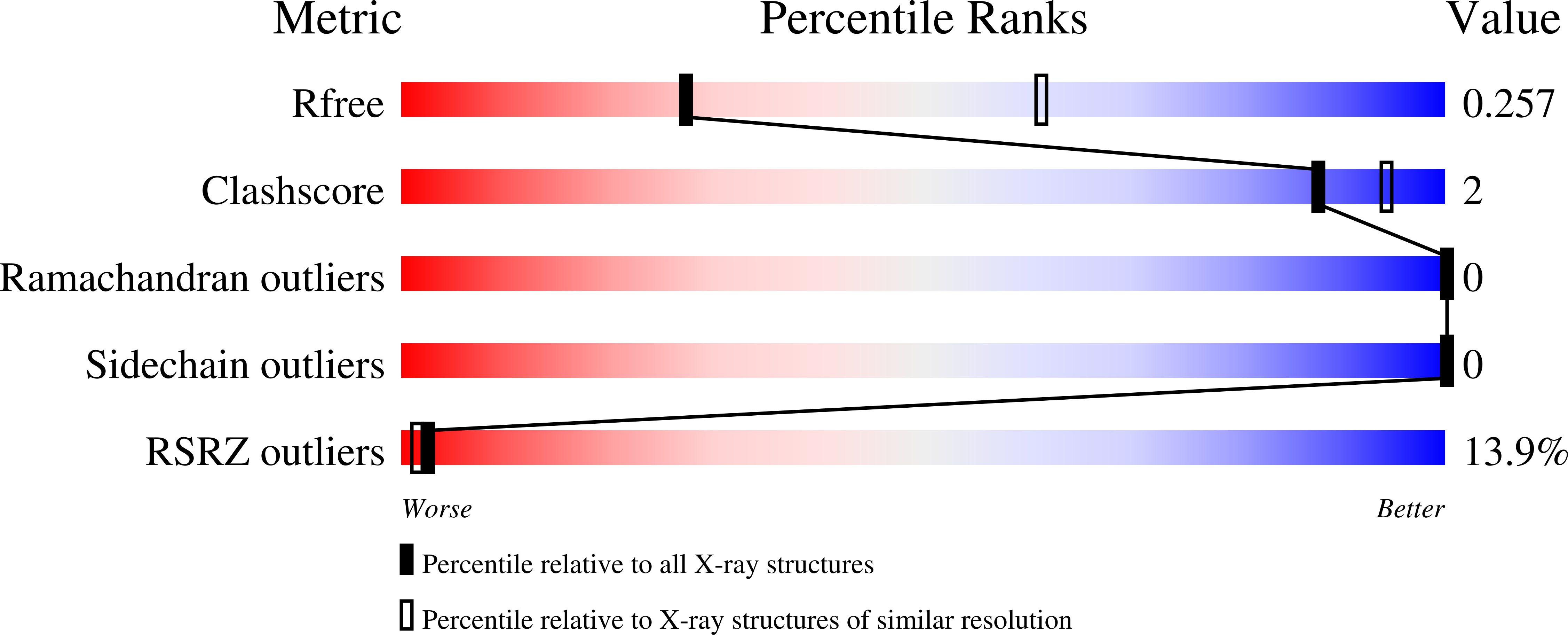
R-Value Free:
0.25
R-Value Work:
0.23
R-Value Observed:
0.23
Space Group:
P 6
Macromolecular Entities
Structures with similar UniProt ID
Protein Blast
Polymer Type:polypeptide(L)
Molecule:LMO-2
Gene (Uniprot):LMO2
Chain IDs:A, B
Chain Length:150
Number of Molecules:2
Biological Source:Homo sapiens
Structures with similar UniProt ID
Protein Blast
Polymer Type:polypeptide(L)
Molecule:Anti-LMO2 VH
Chain IDs:C, D
Chain Length:129
Number of Molecules:2
Biological Source:Homo sapiens
Ligand Molecules
Primary Citation
Conformational flexibility of the oncogenic protein LMO2 primes the formation of the multi-protein transcription complex.
Sci Rep 4 3643 3643 (2014)
PMID: 24407558 DOI: 10.1038/srep03643

Abstact

LMO2 was discovered via chromosomal translocations in T-cell leukaemia and shown normally to be essential for haematopoiesis. LMO2 is made up of two LIM only domains (thus it is a LIM-only protein) and forms a bridge in a multi-protein complex. We have studied the mechanism of formation of this complex using a single domain antibody fragment that inhibits LMO2 by sequestering it in a non-functional form. The crystal structure of LMO2 with this antibody fragment has been solved revealing a conformational difference in the positioning and angle between the two LIM domains compared with its normal binding. This contortion occurs by bending at a central helical region of LMO2. This is a unique mechanism for inhibiting an intracellular protein function and the structural contusion implies a model in which newly synthesized, intrinsically disordered LMO2 binds to a partner protein nucleating further interactions and suggests approaches for therapeutic targeting of LMO2.

Legend

Protein

Chemical

Disease

Primary Citation of related structures
Feedback Form
Name
Email
Institute
Feedback