

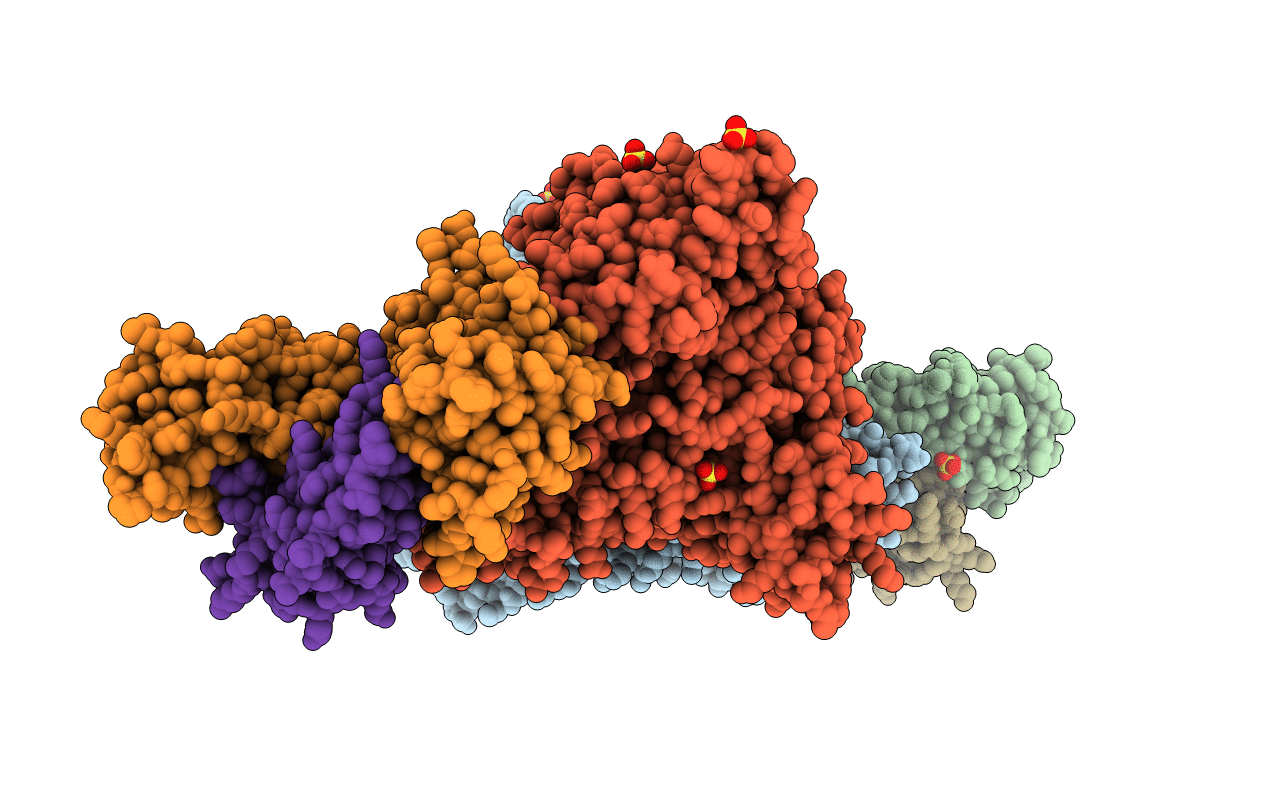
4K71 image
Deposition Date 2013-04-16
Release Date 2013-10-23
Last Version Date 2024-11-27
Entry Detail
PDB ID:
4K71
Keywords:
Title:
Crystal structure of a high affinity Human Serum Albumin variant bound to the Neonatal Fc Receptor
Biological Source:
Source Organism(s):
Homo sapiens (Taxon ID: 9606)
Expression System(s):
Method Details:
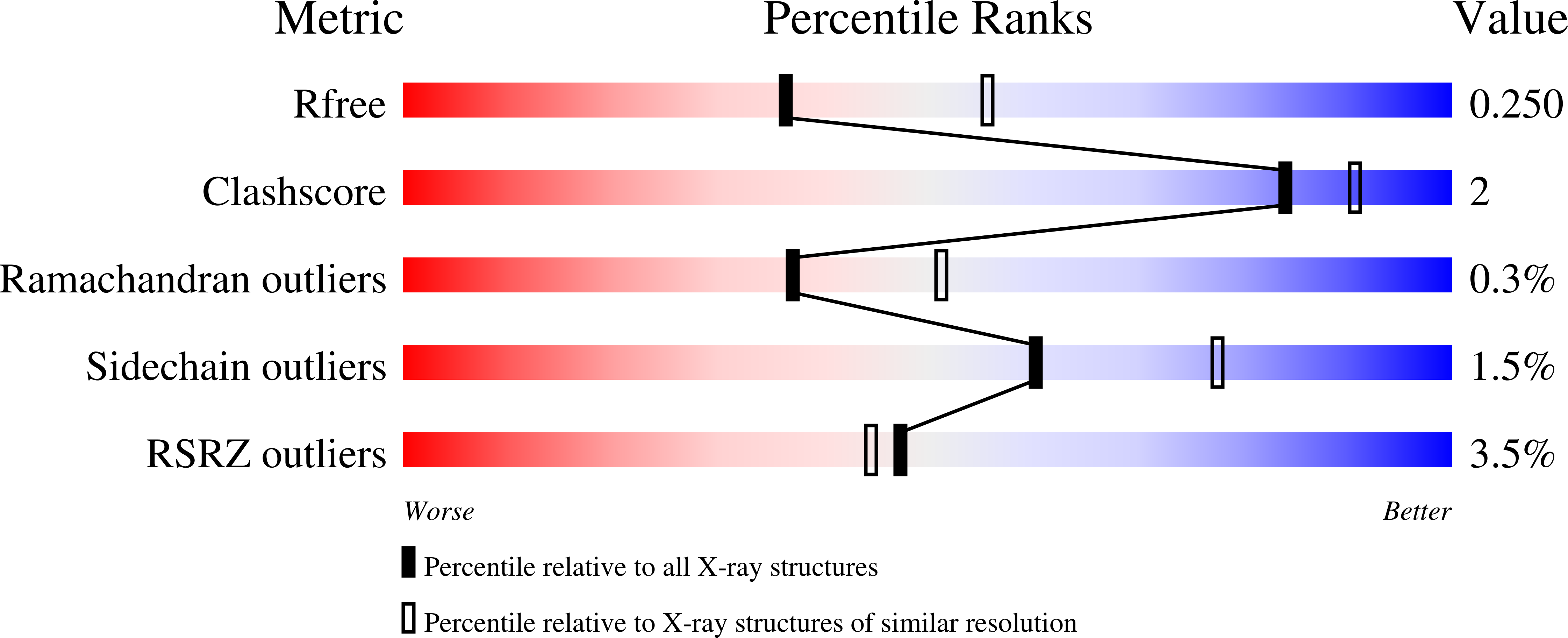
Experimental Method:
Resolution:
2.40 Å
R-Value Free:
0.25
R-Value Work:
0.21
R-Value Observed:
0.21
Space Group:
P 21 21 2
Macromolecular Entities
Structures with similar UniProt ID
Protein Blast
Polymer Type:polypeptide(L)
Molecule:Serum albumin
Gene (Uniprot):ALB
Mutagens:V418M, T420A, E505G, V547A
Chain IDs:A, D
Chain Length:585
Number of Molecules:2
Biological Source:Homo sapiens
Structures with similar UniProt ID
Protein Blast
Polymer Type:polypeptide(L)
Molecule:IgG receptor FcRn large subun
Gene (Uniprot):FCGRT
Chain IDs:B, E
Chain Length:274
Number of Molecules:2
Biological Source:Homo sapiens
Structures with similar UniProt ID
Protein Blast
Polymer Type:polypeptide(L)
Molecule:Beta-2-microglobulin
Gene (Uniprot):B2M
Chain IDs:C, F
Chain Length:99
Number of Molecules:2
Biological Source:Homo sapiens
Ligand Molecules
Primary Citation
Crystal structure of an HSA/FcRn complex reveals recycling by competitive mimicry of HSA ligands at a pH-dependent hydrophobic interface.
Structure 21 1966 1978 (2013)
PMID: 24120761 DOI: 10.1016/j.str.2013.08.022

Abstact

The long circulating half-life of serum albumin, the most abundant protein in mammalian plasma, derives from pH-dependent endosomal salvage from degradation, mediated by the neonatal Fc receptor (FcRn). Using yeast display, we identified human serum albumin (HSA) variants with increased affinity for human FcRn at endosomal pH, enabling us to solve the crystal structure of a variant HSA/FcRn complex. We find an extensive, primarily hydrophobic interface stabilized by hydrogen-bonding networks involving protonated histidines internal to each protein. The interface features two key FcRn tryptophan side chains inserting into deep hydrophobic pockets on HSA that overlap albumin ligand binding sites. We find that fatty acids (FAs) compete with FcRn, revealing a clash between ligand binding and recycling, and that our high-affinity HSA variants have significantly increased circulating half-lives in mice and monkeys. These observations open the way for the creation of biotherapeutics with significantly improved pharmacokinetics.

Legend

Protein

Chemical

Disease

Primary Citation of related structures
Feedback Form
Name
Email
Institute
Feedback