

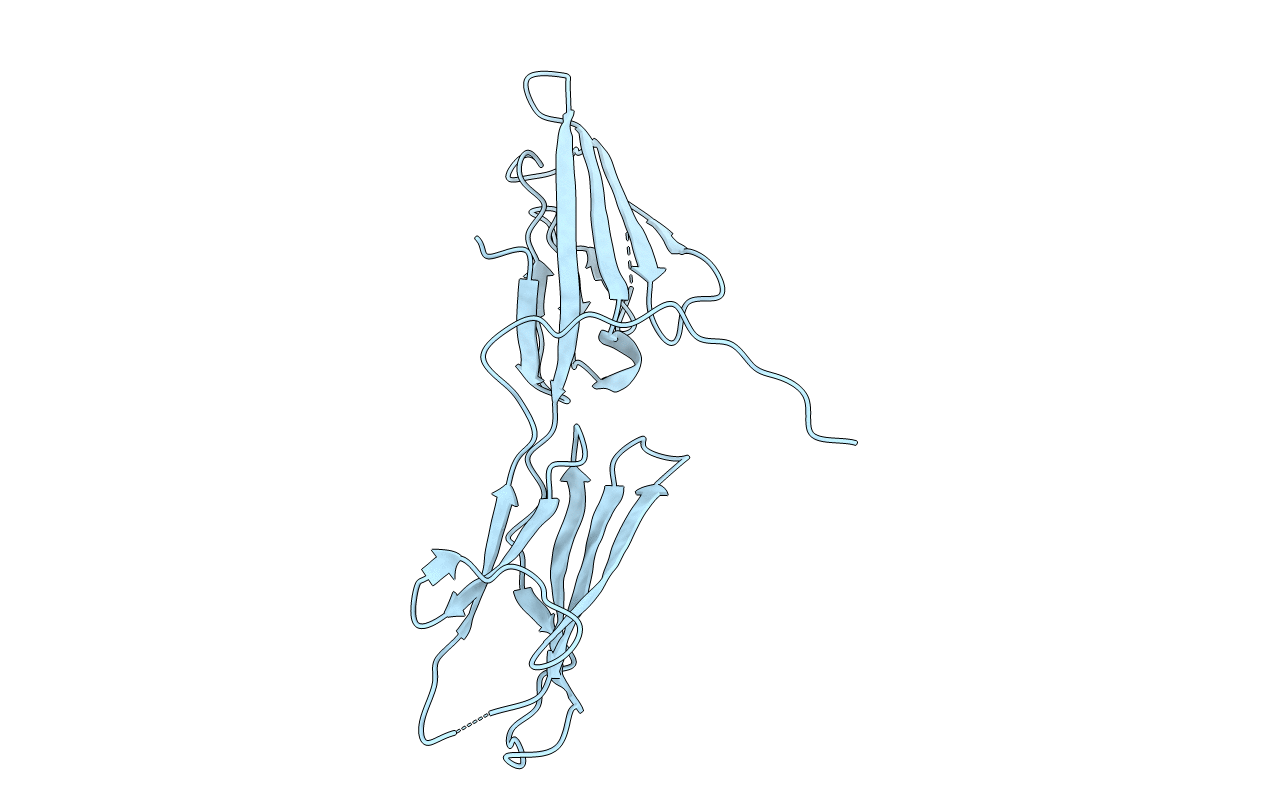
4IM8 image
Deposition Date 2013-01-02
Release Date 2013-08-14
Last Version Date 2024-11-20
Entry Detail
PDB ID:
4IM8
Title:
low resolution crystal structure of mouse RAGE
Biological Source:
Source Organism(s):
Mus musculus (Taxon ID: 10090)
Expression System(s):
Method Details:
Experimental Method:
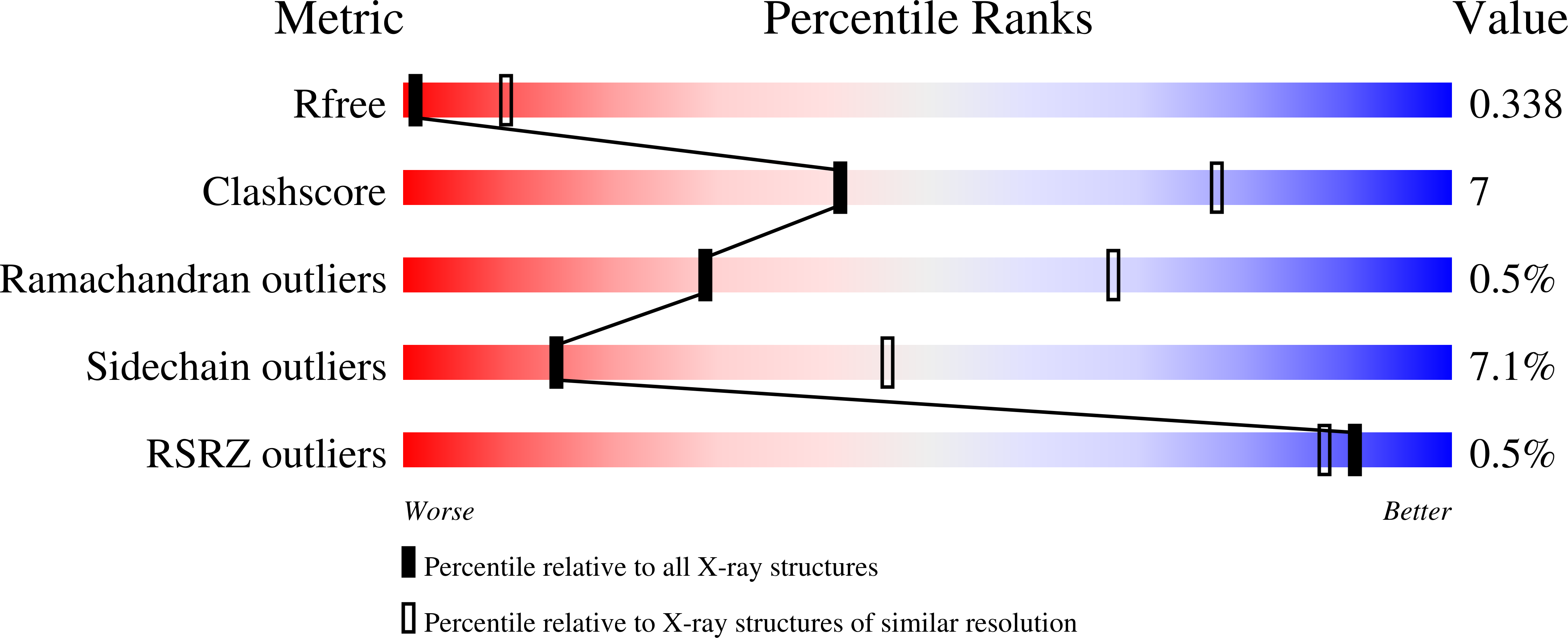
Resolution:
3.50 Å
R-Value Free:
0.33
R-Value Work:
0.25
R-Value Observed:
0.26
Space Group:
P 41 3 2
Macromolecular Entities
Structures with similar UniProt ID
Protein Blast
Polymer Type:polypeptide(L)
Molecule:Advanced glycation end-produc
Chain IDs:A
Chain Length:209
Number of Molecules:1
Biological Source:Mus musculus
Ligand Molecules
Primary Citation
Stable RAGE-Heparan Sulfate Complexes Are Essential for Signal Transduction.
ACS Chem. Biol. 8 1611 1620 (2013)
PMID: 23679870 DOI: 10.1021/cb4001553

Abstact

RAGE (Receptor for Advanced Glycation End-Products) has emerged as a major receptor that mediates vascular inflammation. Signaling through RAGE by damage-associated molecular pattern molecules often leads to uncontrolled inflammation that exacerbates the impact of the underlying disease. Oligomerization of RAGE is believed to play an essential role in signal transduction, but the molecular mechanism of oligomerization remains elusive. Here we report that RAGE activation of Erk1/2 phosphorylation on endothelial cells in response to a number of ligands depends on a mechanism that involves heparan sulfate-induced hexamerization of the RAGE extracellular domain. Structural studies of the extracellular V-C1 domain-dodecasaccharide complex by X-ray diffraction and small-angle X-ray scattering revealed that the hexamer consists of a trimer of dimers, with a stoichiometry of 2:1 RAGE:dodecasaccharide. Mutagenesis studies mapped the heparan sulfate binding site and the interfacial surface between the monomers and demonstrated that electrostatic interactions with heparan sulfate and intermonomer hydrophobic interactions work in concert to stabilize the dimer. The importance of oligomerization was demonstrated by inhibition of signaling with a new epitope-defined monoclonal antibody that specifically targets oligomerization. These findings indicate that RAGE-heparan sulfate oligomeric complexes are essential for signaling and that interfering with RAGE oligomerization might be of therapeutic value.

Legend

Protein

Chemical

Disease

Primary Citation of related structures
Feedback Form
Name
Email
Institute
Feedback