

4HJS image
Deposition Date 2012-10-14
Release Date 2013-12-04
Last Version Date 2024-12-25
Entry Detail
PDB ID:
4HJS
Title:
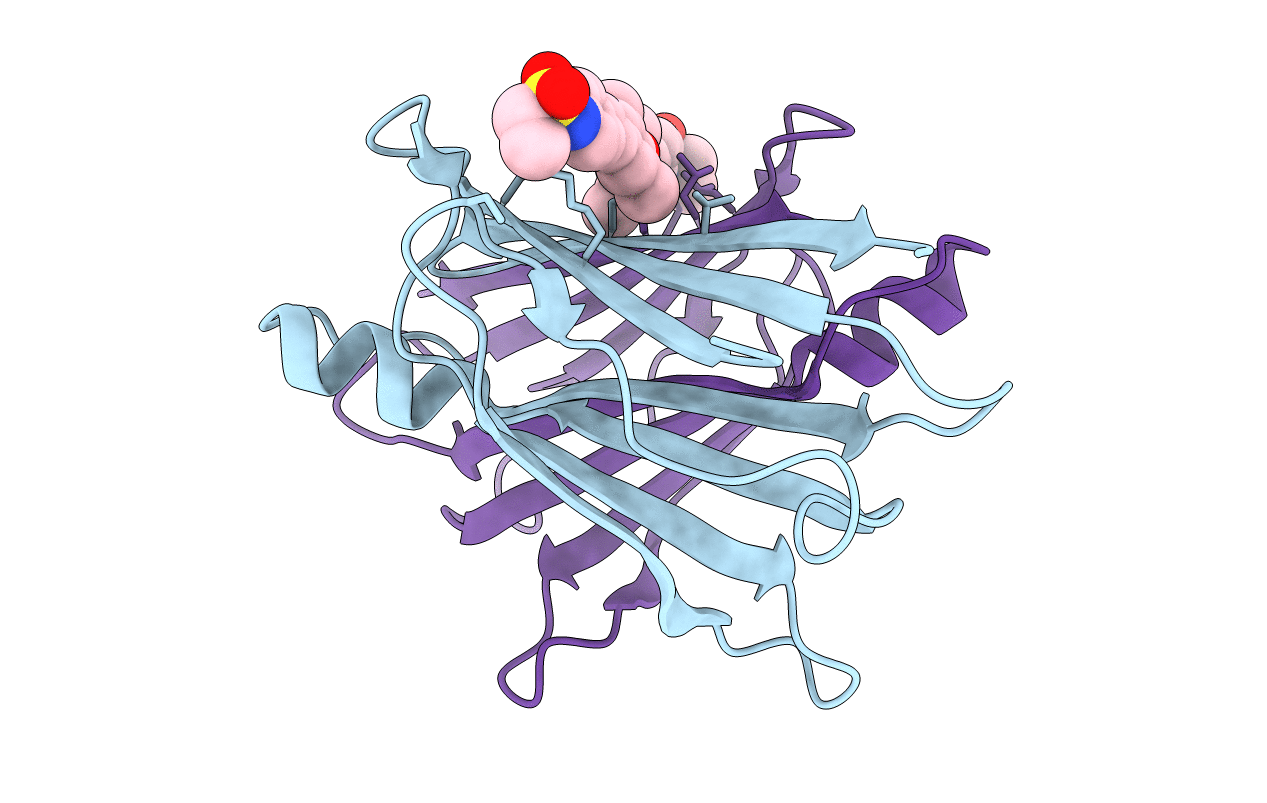
Kinetic stabilization of transthyretin through covalent modification of K15 by (E)-N-(4-(4-hydroxy-3,5-dimethylstyryl)ethanesulfonamide
Biological Source:
Source Organism(s):
Homo sapiens (Taxon ID: 9606)
Expression System(s):
Method Details:
Experimental Method:
Resolution:
1.22 Å
R-Value Free:
0.22
R-Value Work:
0.18
R-Value Observed:
0.19
Space Group:
P 21 21 2
Macromolecular Entities
Structures with similar UniProt ID
Protein Blast
Polymer Type:polypeptide(L)
Molecule:Transthyretin
Gene (Uniprot):TTR
Chain IDs:A, B
Chain Length:116
Number of Molecules:2
Biological Source:Homo sapiens
Ligand Molecules
Primary Citation
Stilbene vinyl sulfonamides as fluorogenic sensors of and traceless covalent kinetic stabilizers of transthyretin that prevent amyloidogenesis.
J. Am. Chem. Soc. 135 17869 17880 (2013)
PMID: 24180271 DOI: 10.1021/ja408230k

Abstact

Small molecules that react selectively with a specific non-enzyme drug-target protein in a complex biological environment without displacement of a leaving group (tracelessly) are rare and highly desirable. Herein we describe the development of a family of fluorogenic stilbene-based vinyl amides and vinyl sulfonamides that covalently modify transthyretin (TTR) tracelessly. These small molecules bind selectively to TTR in complex biological environments and then undergo a rapid and chemoselective 1,4-Michael addition with the pKa-perturbed Lys-15 ε-amino group of TTR. Replacing the vinyl amide in 2 with the more reactive vinyl sulfonamide in 4 hastens the conjugation kinetics. X-ray cocrystallography verified the formation of the secondary amine bond mediating the conjugation in the case of 2 and 4 and confirmed the expected orientation of the stilbene within the TTR binding sites. Vinyl amide 2 and vinyl sulfonamide 4 potently inhibit TTR dissociation and amyloid fibril formation in vitro. The TTR binding selectivity, modification yield, and reaction chemoselectivity of vinyl sulfonamide 4 are good enough in human plasma to serve as a starting point for medicinal chemistry efforts. Moreover, vinyl sulfonamide 4 is fluorogenic: it exhibits minimal background fluorescence in complex biological environments, remains dark upon binding to TTR, and becomes fluorescent only upon reaction with TTR. The fluorogenicity of 4 was utilized to accurately quantify the native TTR concentration in Escherichia coli lysate using a fluorescence plate reader.

Legend

Protein

Chemical

Disease

Primary Citation of related structures
Feedback Form
Name
Email
Institute
Feedback