

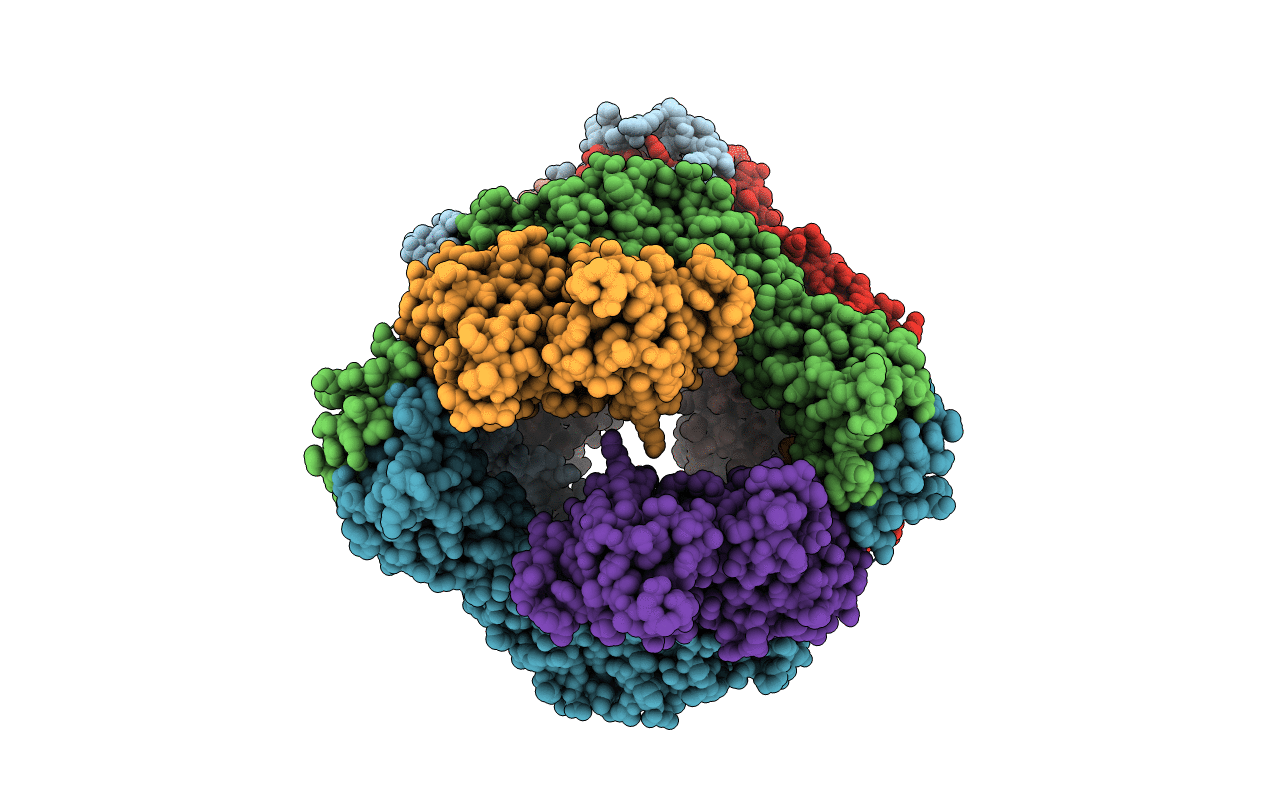
4EAH image
Deposition Date 2012-03-22
Release Date 2012-12-12
Last Version Date 2024-02-28
Entry Detail
PDB ID:
4EAH
Keywords:
Title:
Crystal structure of the formin homology 2 domain of FMNL3 bound to actin
Biological Source:
Source Organism(s):
Expression System(s):
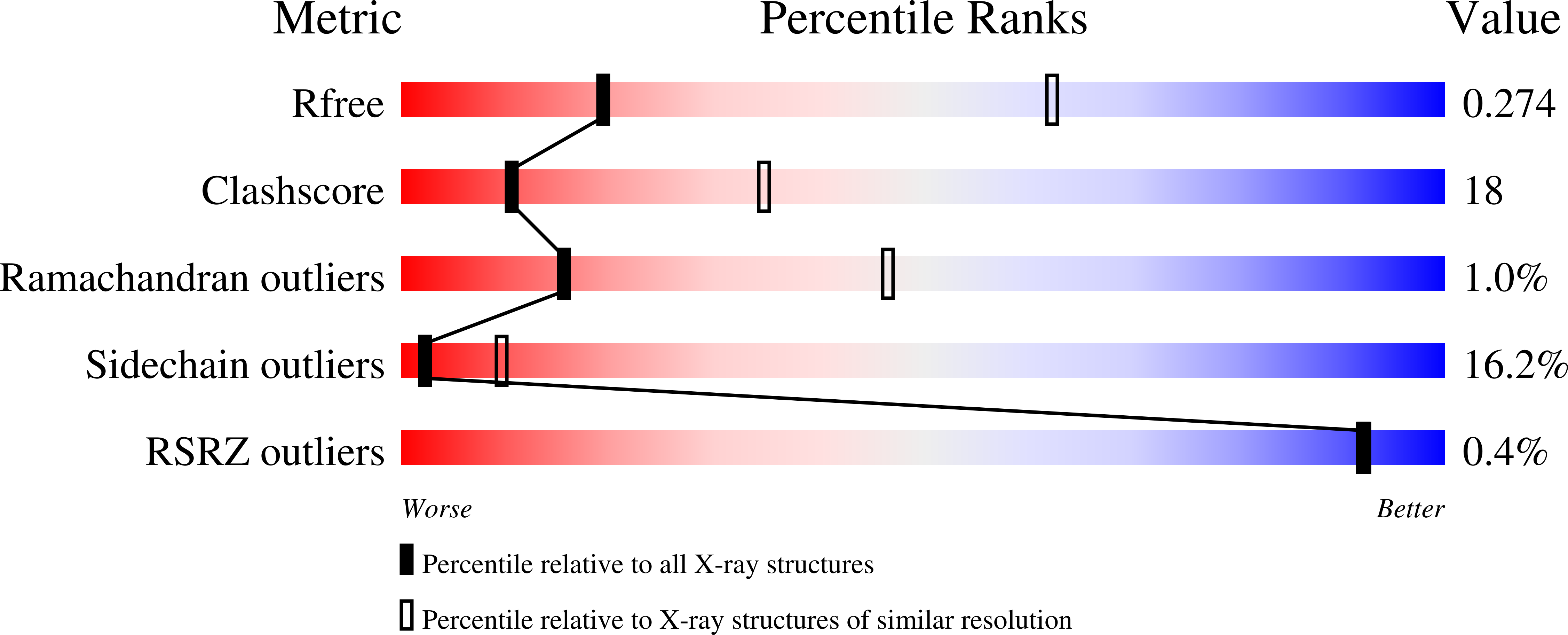
Method Details:
Experimental Method:
Resolution:
3.40 Å
R-Value Free:
0.27
R-Value Work:
0.23
R-Value Observed:
0.23
Space Group:
P 1 21 1
Macromolecular Entities
Structures with similar UniProt ID
Protein Blast
Polymer Type:polypeptide(L)
Molecule:Formin-like protein 3
Gene (Uniprot):Fmnl3
Chain IDs:B (auth: A), C (auth: E), D (auth: C), E (auth: B)
Chain Length:402
Number of Molecules:4
Biological Source:Mus musculus
Structures with similar UniProt ID
Protein Blast
Polymer Type:polypeptide(L)
Molecule:Actin, alpha skeletal muscle
Gene (Uniprot):ACTA1
Chain IDs:A (auth: D), F (auth: H), G, H (auth: F)
Chain Length:377
Number of Molecules:4
Biological Source:Oryctolagus cuniculus
Primary Citation
FMNL3 FH2-actin structure gives insight into formin-mediated actin nucleation and elongation.
Nat. Struct. Mol. Biol. 20 111 118 (2013)
PMID: 23222643 DOI: 10.1038/nsmb.2462

Abstact

Formins are actin-assembly factors that act in a variety of actin-based processes. The conserved formin homology 2 (FH2) domain promotes filament nucleation and influences elongation through interaction with the barbed end. FMNL3 is a formin that induces assembly of filopodia but whose FH2 domain is a poor nucleator. The 3.4-Å structure of a mouse FMNL3 FH2 dimer in complex with tetramethylrhodamine-actin uncovers details of formin-regulated actin elongation. We observe distinct FH2 actin-binding regions; interactions in the knob and coiled-coil subdomains are necessary for actin binding, whereas those in the lasso-post interface are important for the stepping mechanism. Biochemical and cellular experiments test the importance of individual residues for function. This structure provides details for FH2-mediated filament elongation by processive capping and supports a model in which C-terminal non-FH2 residues of FMNL3 are required to stabilize the filament nucleus.

Legend

Protein

Chemical

Disease

Primary Citation of related structures
Feedback Form
Name
Email
Institute
Feedback