

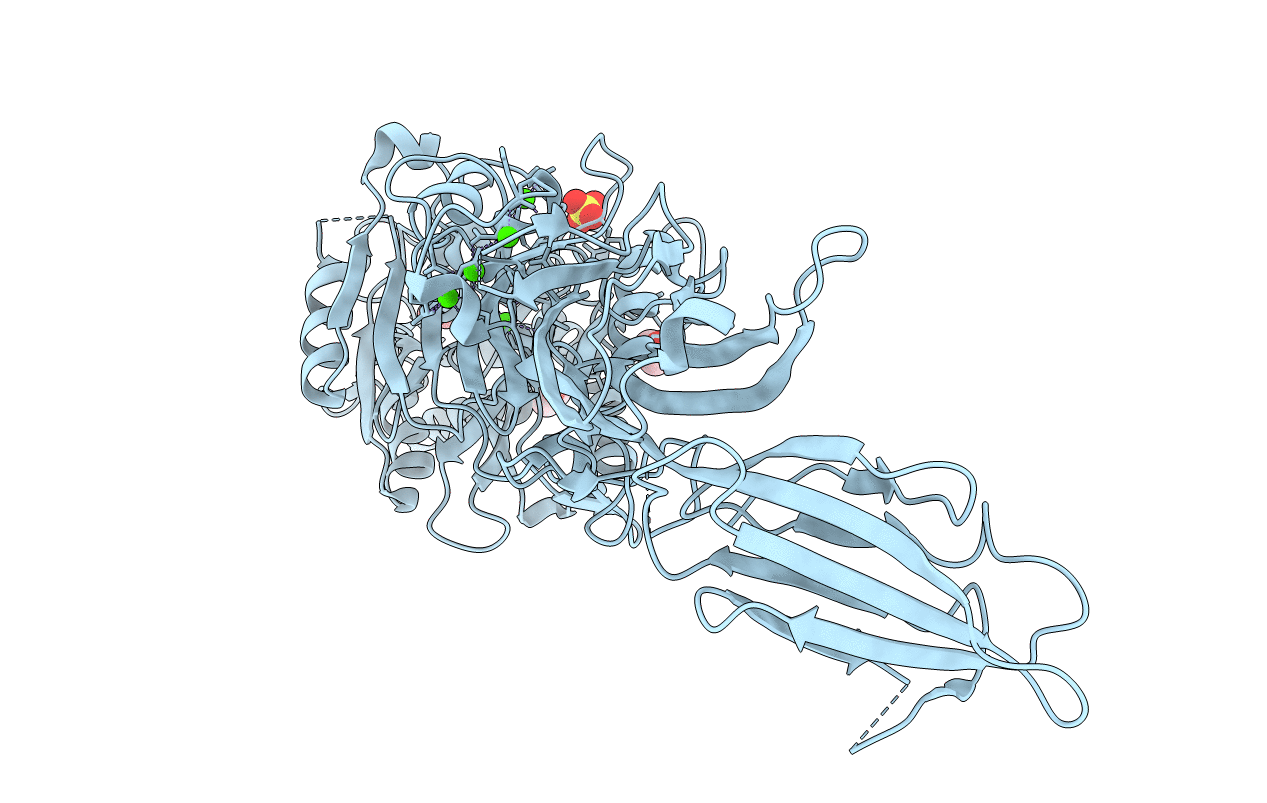
4DKT image
Deposition Date 2012-02-04
Release Date 2012-02-29
Last Version Date 2023-11-15
Entry Detail
PDB ID:
4DKT
Title:
Crystal structure of human peptidylarginine deiminase 4 in complex with N-acetyl-L-threonyl-L-alpha-aspartyl-N5-[(1E)-2-fluoroethanimidoyl]-L-ornithinamide
Biological Source:
Source Organism(s):
Homo sapiens (Taxon ID: 9606)
Expression System(s):
Method Details:
Experimental Method:
Resolution:
2.98 Å
R-Value Free:
0.22
R-Value Work:
0.19
R-Value Observed:
0.19
Space Group:
C 1 2 1

Macromolecular Entities
Structures with similar UniProt ID
Protein Blast
Polymer Type:polypeptide(L)
Molecule:Protein-arginine deiminase ty
Gene (Uniprot):PADI4
Chain IDs:A
Chain Length:668
Number of Molecules:1
Biological Source:Homo sapiens
Modified Residue
Compound ID Chain ID Parent Comp ID Details 2D Image
FIO B ARG ?
Peptide-like Molecules
PRD_000781
Primary Citation
Synthesis and Screening of a Haloacetamidine Containing Library To Identify PAD4 Selective Inhibitors.
ACS Chem. Biol. 7 160 165 (2012)
PMID: 22004374 DOI: 10.1021/cb200258q

Abstact

Protein arginine deiminase activity (PAD) is increased in cancer, rheumatoid arthritis, and ulcerative colitis. Although the link between abnormal PAD activity and disease is clear, the relative contribution of the individual PADs to human disease is not known; there are 5 PAD isozymes in humans. Building on our previous development of F- and Cl-amidine as potent pan-PAD irreversible inhibitors, we describe herein a library approach that was used to identify PAD-selective inhibitors. Specifically, we describe the identification of Thr-Asp-F-amidine (TDFA) as a highly potent PAD4 inactivator that displays >/=15-fold selectivity for PAD4 versus PAD1 and >/=50-fold versus PADs 2 and 3. This compound is active in cells and can be used to inhibit PAD4 activity in cellulo. The structure of the PAD4.TDFA complex has also been solved, and the structure and mutagenesis data indicate that the enhanced potency is due to interactions between the side chains of Q346, R374, and R639. Finally, we converted TDFA into a PAD4-selective ABPP and demonstrated that this compound, biotin-TDFA, can be used to selectively isolate purified PAD4 in vitro. In total, TDFA and biotin-TDFA represent PAD4-selective chemical probes that can be used to study the physiological roles of this enzyme.

Legend

Protein

Chemical

Disease

Primary Citation of related structures
Feedback Form
Name
Email
Institute
Feedback