

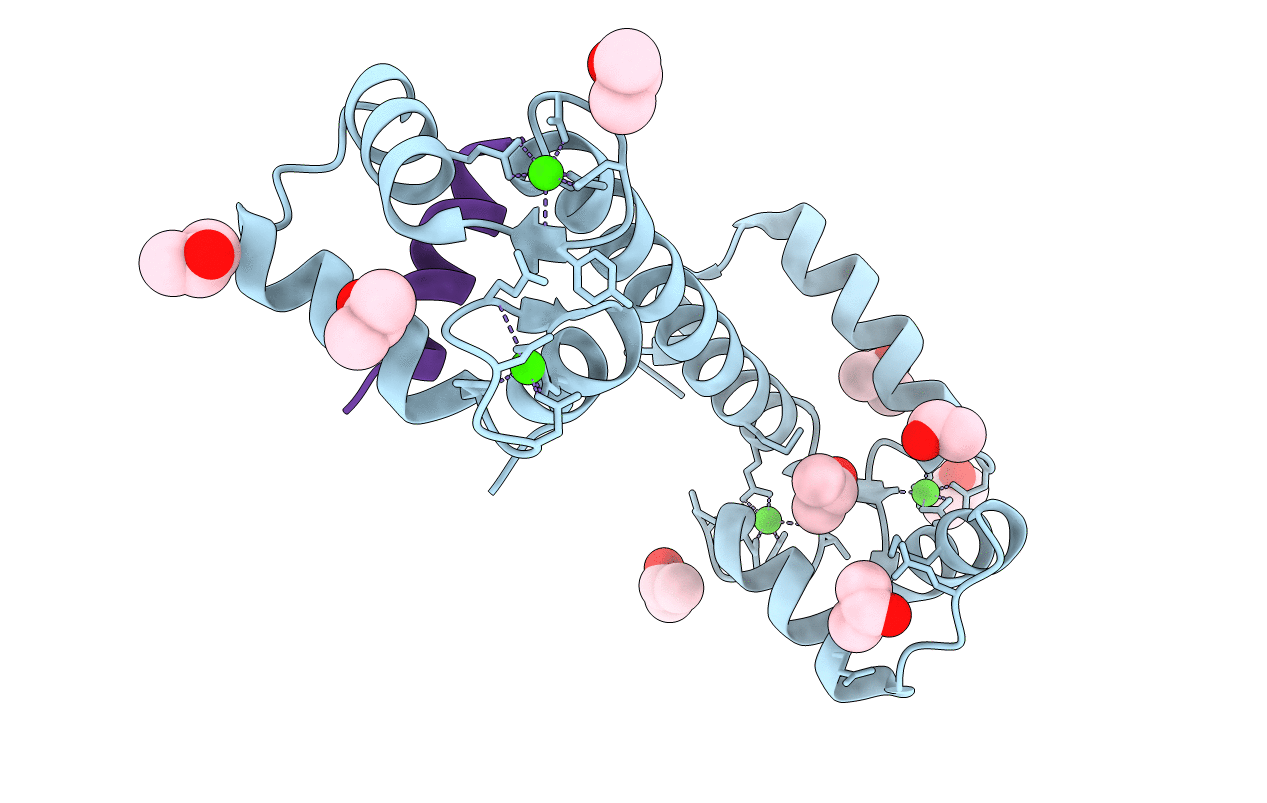
4DJC image
Deposition Date 2012-02-01
Release Date 2012-02-22
Last Version Date 2024-02-28
Entry Detail
PDB ID:
4DJC
Title:
1.35 A crystal structure of the NaV1.5 DIII-IV-Ca/CaM complex
Biological Source:
Source Organism(s):
Homo sapiens (Taxon ID: 9606)
Expression System(s):
Method Details:
Experimental Method:
Resolution:
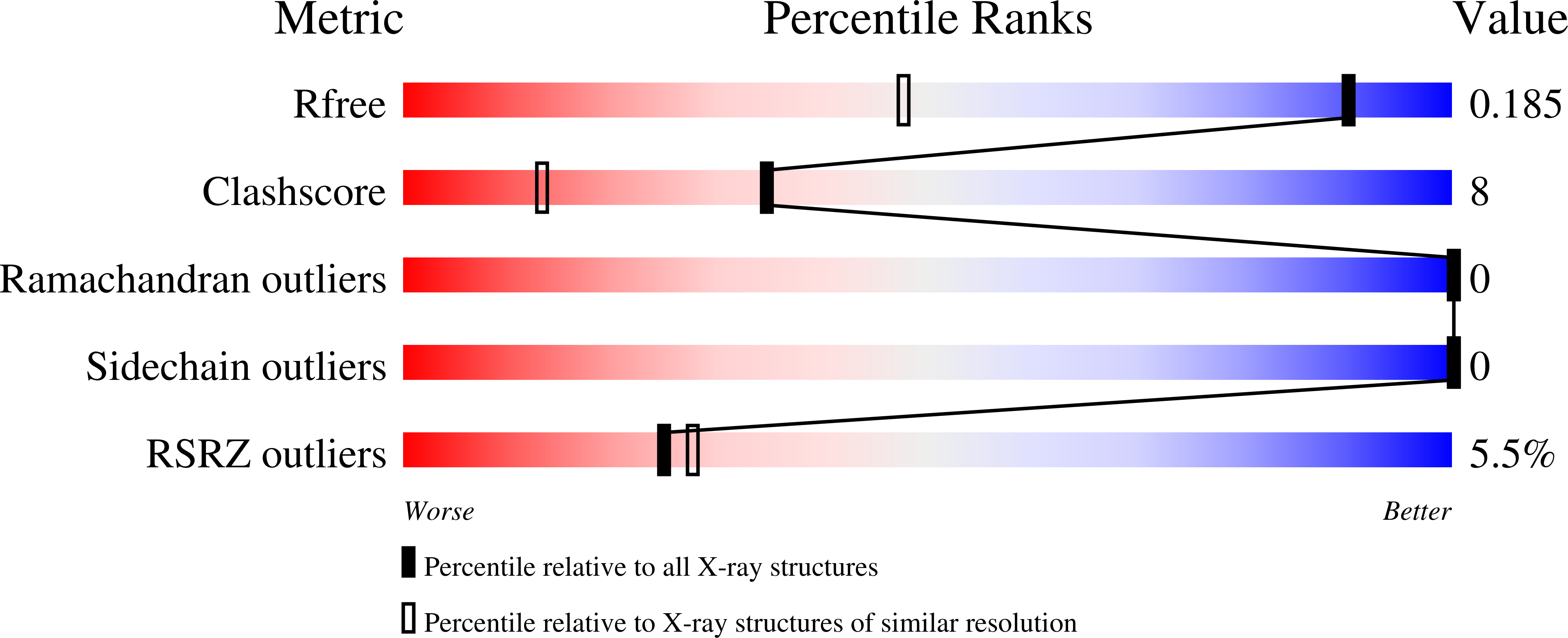
1.35 Å
R-Value Free:
0.17
R-Value Work:
0.15
R-Value Observed:
0.15
Space Group:
P 21 21 21
Macromolecular Entities
Structures with similar UniProt ID
Protein Blast
Polymer Type:polypeptide(L)
Molecule:Calmodulin
Chain IDs:A
Chain Length:152
Number of Molecules:1
Biological Source:Homo sapiens
Structures with similar UniProt ID
Protein Blast
Polymer Type:polypeptide(L)
Molecule:Sodium channel protein type 5
Gene (Uniprot):SCN5A
Chain IDs:B
Chain Length:35
Number of Molecules:1
Biological Source:Homo sapiens
Primary Citation
Crystallographic basis for calcium regulation of sodium channels.
Proc. Natl. Acad. Sci. U.S.A. 109 3558 3563 (2012)
PMID: 22331908 DOI: 10.1073/pnas.1114748109

Abstact

Voltage-gated sodium channels underlie the rapid regenerative upstroke of action potentials and are modulated by cytoplasmic calcium ions through a poorly understood mechanism. We describe the 1.35 Å crystal structure of Ca(2+)-bound calmodulin (Ca(2+)/CaM) in complex with the inactivation gate (DIII-IV linker) of the cardiac sodium channel (Na(V)1.5). The complex harbors the positions of five disease mutations involved with long Q-T type 3 and Brugada syndromes. In conjunction with isothermal titration calorimetry, we identify unique inactivation-gate mutations that enhance or diminish Ca(2+)/CaM binding, which, in turn, sensitize or abolish Ca(2+) regulation of full-length channels in electrophysiological experiments. Additional biochemical experiments support a model whereby a single Ca(2+)/CaM bridges the C-terminal IQ motif to the DIII-IV linker via individual N and C lobes, respectively. The data suggest that Ca(2+)/CaM destabilizes binding of the inactivation gate to its receptor, thus biasing inactivation toward more depolarized potentials.

Legend

Protein

Chemical

Disease

Primary Citation of related structures
Feedback Form
Name
Email
Institute
Feedback